When a tool supports both regular expressions and literal strings, which should be the default?
If you default to regex, users can match more strings than they realise (e.g. `foo.txt`) or less (e.g. `foo(bar)`).
I typically see regex as the default, but I prefer the opposite.
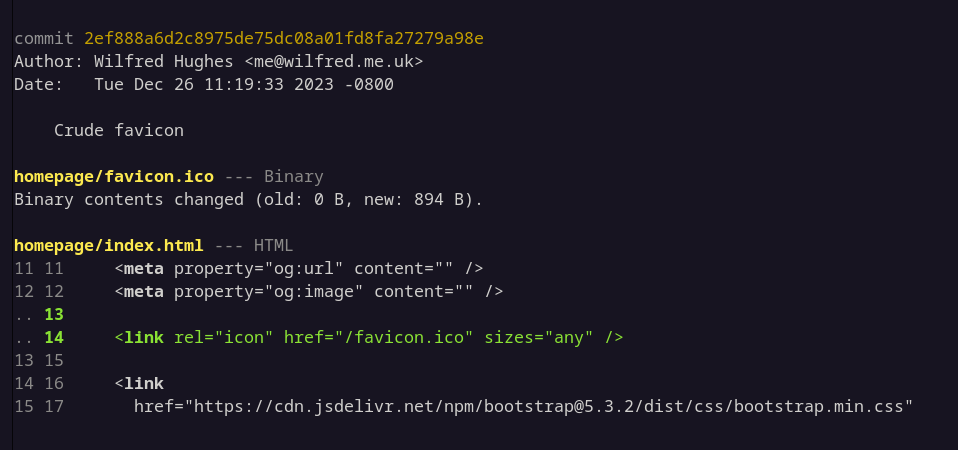
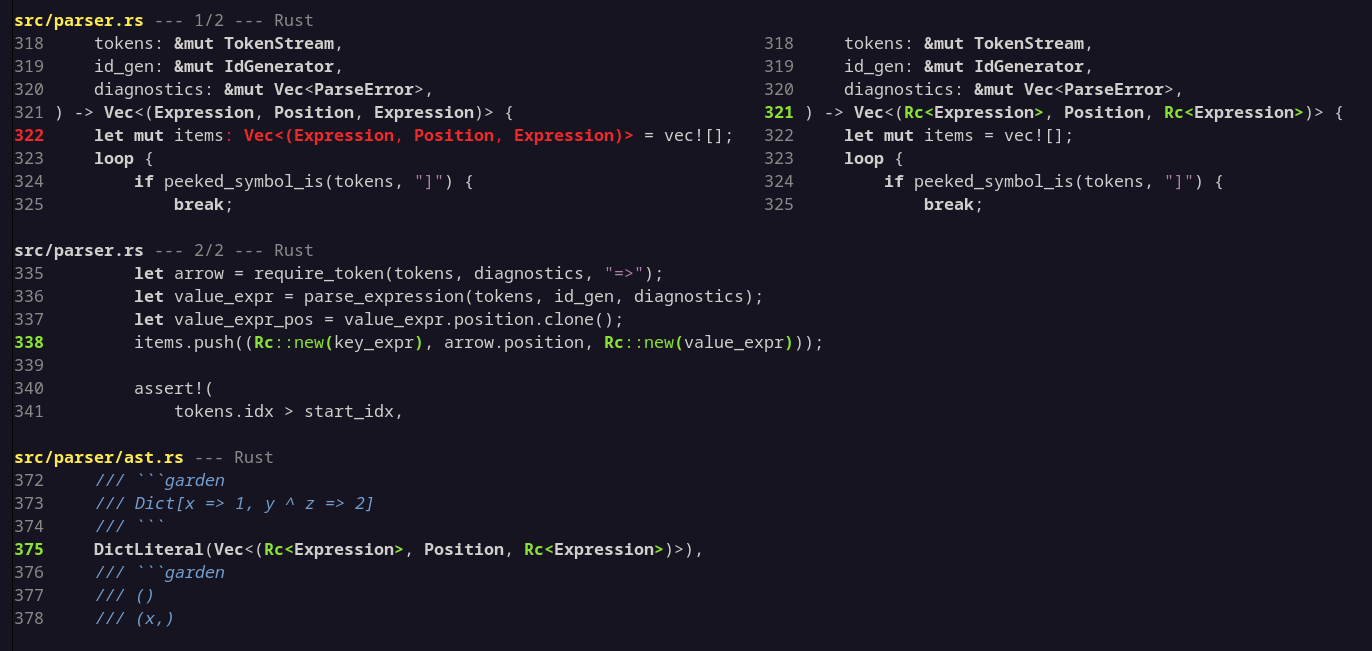
I've released difftastic 0.65! Highlights of this release:
* Better parsing of Clojure, Common Lisp, Kotlin, Rust and Zig.
* Quality of life improvements for binary files.
https://github.com/Wilfred/difftastic/releases/tag/0.65.0
Sometimes programming tools are so good that you miss them when using other languages. I see these mentioned the most frequently:
* IntelliJ (for Java)
* Slime+Emacs (for Common Lisp)
* Pharo (for Smalltalk)
I'm struck that they all have bespoke UIs.