WireGuard: a wonderful example if newer protocols having simpler designs and learning lessons from old systems!
https://arstechnica.com/gadgets/2018/08/wireguard-vpn-review-fast-connections-amaze-but-windows-support-needs-to-happen/
(An alternative to OpenVPN in this case. Cf. wayland.)
miniblog.

Shower thought: Smalltalk (and to some extent other OO languages) replace pattern matching with dynamic dispatch.
I miss pattern matching in Lisp dialects without a good implementation, but I haven't noticed its absence in Smalltalk.
This is really elegant idea: provide a tool for rewriting graphQL queries so you can change your schema without breaking clients!
https://github.com/ef-eng/graphql-query-rewriter
(Reminds me of programming languages that provide automatic upgrade tools, such as `go fix`.)
Delightfully, docs for text adventure game libraries offer choices in the structure that match text game UIs!
https://inform7.com/extensions/Jon Ingold/Interactive Parsing/index.html
(I suppose it makes total sense for the target audience.)
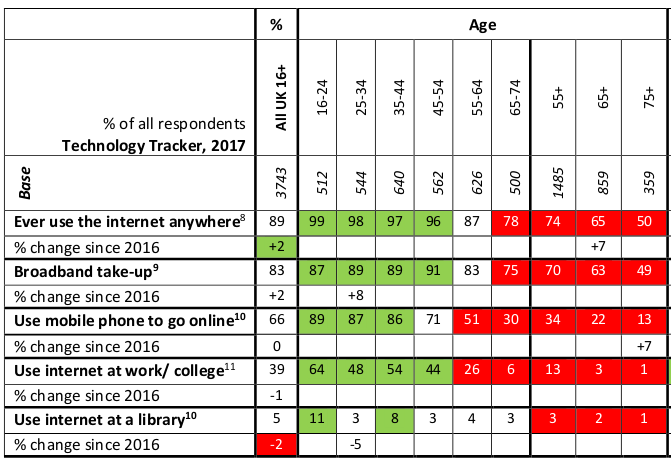
11% of Brits don't use the Internet!
From Internet use and attitudes 2017 by Ofcom: https://www.ofcom.org.uk/__data/assets/pdf_file/0018/105507/internet-use-attitudes-bulletin-2017.pdf (page 9, colour represents above/below UK overall)
I would not want to run https://example.com/: any large service probably has buggy automated systems hammering it, but https://example.com/ is almost certainly worse.
On the plus side, I suppose they have no paying customers or SLA to worry about.
It's amazing to me that Smalltalk has only six reserved words: nil, true, false, self, super and thisContext. When you go all-in on a unifying principle you can really keep the language small.
It's amazing to me that Smalltalk has only six reserved words: nil, true, false, self, super and thisContext. When you go all-in on a unifying principle you can really keep the language small.
GitHub now offers free private repos! https://techcrunch.com/2019/01/07/github-free-users-now-get-unlimited-private-repositories/
I completely missed this when it was announced. I have a few private repos (e.g. my CV) that I've previously been keeping on other services.
Developing a 4D platformer, and doing indie development slowly without alienating your fan base: https://www.vice.com/en_us/article/9kmknd/what-happened-to-miegakure-the-game-that-promised-the-4th-dimension
Choice, parsers, and open world designs in text adventure games: https://threeedgedsword.wordpress.com/2013/12/05/parser-as-prototype-why-choice-based-games-are-more-interesting/
I've started reading Construction of Thinned Gated Single-Assignment Form by Paul Havlak, because I hear this SSA form is way underrated.
It uses a crazy archaic 3-way IF from Fortran as a motivating example:
IF (I) 10, 20, 30
This goes to 10/20/30 based on i being +ve/-ve/0!
One reason I love working in tech is that programming skills are valued in many different domains. I've worked in marketing, social media, finance and fashion.
It requires grace (you don't want https://xkcd.com/793/) but you can explore fascinating fields.

Missing methods, resilient software and failing gracefully:

Swift is exploring a cute idea for library transparency: you can distinguish between "this ABI is guaranteed to keep working" and "I want an extra layer of indirection so I can add to data structures without breaking downstream users".
https://forums.swift.org/t/pitch-library-evolution-for-stable-abis/23026
Showing 2,161-2,175 of 7,653 posts