Much has been said about JS fatigue, but the upside is that there's tons of creative experimentation.
For example, eslint has a whole range of different 3rd-party output formatters. You can try them all out, and you tend to converge on a good solution.
miniblog.
The complexity of USB C, with a diverse range of features supported (or not) by different cables that can't be visually distinguished: https://www.extremetech.com/computing/257684-usb-c-chasing-unachievable-goal
One comment I saw @jack make recently was that they didn't expect displaying follower counts to motivate users to increase the number.
Do we need to show this number on Twitter at all?
The new iphone is shipping with x86 chips for the baseband processor!
Babel is dropping the 'stage-N' presets in favour of specific plugins for features: https://babeljs.io/blog/2018/07/27/removing-babels-stage-presets
Iterating on PL features, especially with new syntax, is hard! Seems like they're striking a good balance.
Finding bugs in LLVM IR optimisers: programmatically generate small (loop free, no control flow) functions, run your favourite middle end passes, and verify the output is equivalent!
https://blog.regehr.org/archives/1510
(Uses Alive to verify and 4000 CPUs of compute.)
Awesome, there's a whole miniKanren implementation in emacs lisp! https://github.com/nickdrozd/reazon
This gives you logic programming somewhat like Prolog or Clojure's core.logic.
Fn lightning talk on using provenance data to improve Haskell type errors:
https://youtu.be/rdVqQUOvxSU
A growing range of useful collection data types for Pharo! https://pharoweekly.wordpress.com/2018/05/04/containers-now-on-github/
Good examples of Smalltalk best code practices too.

Interesting @lambda_conf talk showing how Dialyzer ('discrepancy analyzer') offers gradual typing for Erlang and Elixir: https://youtu.be/FXCMiQWnWu0
It's a neat type system: it uses 'success typing', (it assumes you're correct) and exotic features like ranges and non-empty lists!
Type signatures are optional in Haskell, but in OCaml you can even specify partial signatures (e.g. just one parameter).
Maybe return types are more valuable to annotate? I can often guess params based on the name, but I have to read the function body for the result.
Exploring making websites faster by preloading pages that an ML algorithm thinks they're likely to visit next: https://github.com/guess-js/guess/blob/master/README.md
A fun Racket library that allows you to express different retry patterns (higher-order function calls really) for unreliable functions: https://docs.racket-lang.org/retry/retry-guide.html
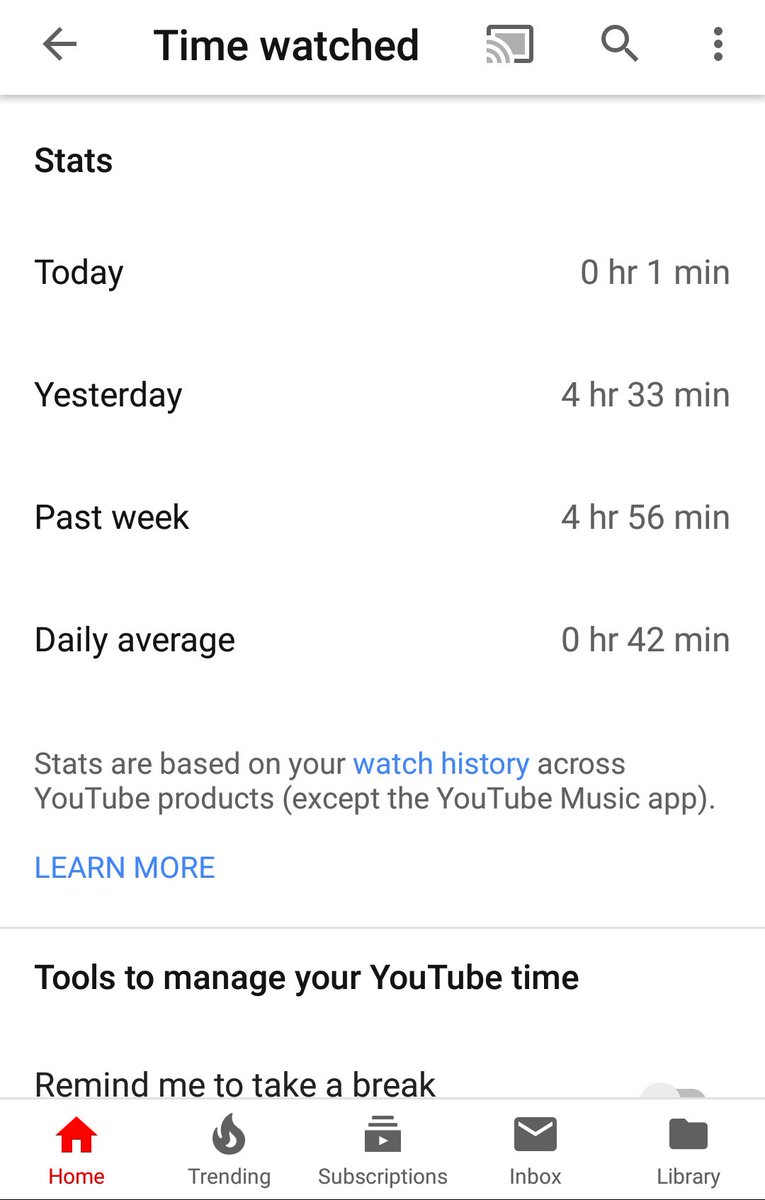
Really interesting to see that YouTube has shipped 'time spent' feature. However, it's out by one order of magnitude!
Fabulous article on benchmarking JIT optimised VMs: performance can vary massively, warmups can be unpredictable, optimisation sometimes hurts perf and you may not even reach a steady state!
Showing 2,656-2,670 of 7,653 posts