Arrays being truthy in JS still catches me out sometimes.
In Python or Lisp, empty lists are falsey and truthiness is safe and idiomatic.
miniblog.
Building VaccinateCA, a website developed by volunteers to make vaccination information widely available.
It's a long read, but it explores a bunch of larger policy / organisational challenges they encountered in the public sector.
https://www.worksinprogress.co/issue/the-story-of-vaccinateca/
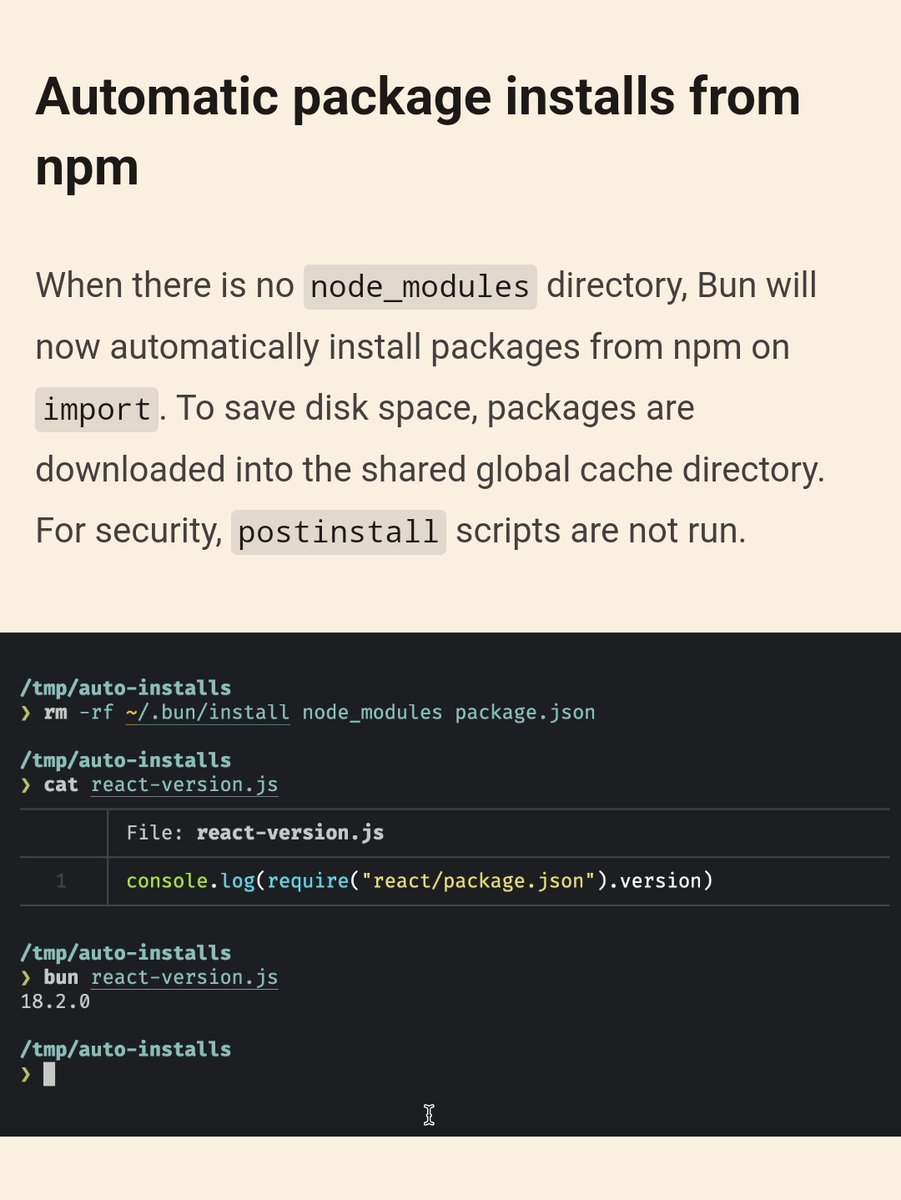
Bun 0.3 will automatically install packages for you, rather than requiring an explicit install step. It's an interesting approach, and they've disabled install scripts to help security.
Linux historically used magic numbers to recognise structs being used incorrectly with void pointers. These have been increasingly replaced with type-safe macros: https://lwn.net/SubscriberLink/915163/ba83480903b82cb8/
Some of the original files were unchanged from the 90s!
REPL driven development in Python, contrasting with TDD and Clojure workflows:
Reflections on the challenges and relevance of Gnu Autotools after the first release in eight years:
I really like interpreters that allow you to inspect values, such as the JS console in a browser or Common Lisp with sly.
Otherwise you end up repeatedly pretty printing values. It's unnecessary.
@louis@emacs.ch Low level stuff needs a language without a GC (C/C++/Rust) and Android has been Java based throughout its history. I don't think they have much choice without rebuilding major components.
This article discusses how you often need #'foo rather than foo in Clojure code so you can redefine foo whilst testing your app interactively: https://srasu.srht.site/var-evaluation.html
Perhaps function pointers should evaluate to themselves? I wonder if there's a language solution here.
Every programming language attempts to expand until it has an effect system.
As Android moves away from C/C++ to a larger proportion of Java and Rust, its security vulnerabilities are measurably decreasing!
Benchmarking the cost of array bounds checks in Rust code: https://blog.readyset.io/bounds-checks/
The author even patches rustc to make sure *all* bounds checks are gone, in order to compare the performance!

I really like "zero cost abstractions" as a programming language motto. It's really effective for evaluating design decisions.
I've heard it for both C++ and Rust. Are there other PL mottos that are equally helpful?
TIOBE considered misleading: https://blog.nindalf.com/posts/stop-citing-tiobe/
It claims that iOS + macOS is less than half the size of Visual Basic!
TIL you can express pretty much all typescript type syntax in JSDoc comments: https://www.typescriptlang.org/docs/handbook/jsdoc-supported-types.html
This gives you all the IDE benefits of typescript, but you don't need a compile step to run your code.
Showing 661-675 of 7,652 posts