A common UI antipattern is to make the structure directly reflect the implementation.
If you have 4 database tables, you build 4 screens. This may not reflect how users want to get things done.
Does this happen outside of software? I suspect it does, but I can't find examples.
miniblog.
Related Posts
44
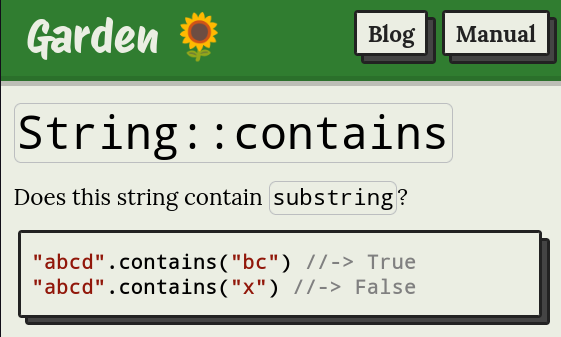
I'm experimenting with syntax in examples. I don't really like Rust's `assert(inc(1) == 2)` syntax, I find it a little distracting.
I'm trying `inc(1) //-> 2`. The comment is rendered differently, and there's nothing before the sample code. What do you think?

Go has an elegant approach to defining example functions, which are shown in docs as `main()` with the output:
Some delightful examples of good compiler error messages in the latest Gleam release: