The proper way to solve an X-Y problem is to provide a solution for both X and Y.
Y: because there might be a good reason for it and you risk being condescending otherwise.
X: to steer people towards best practices and because it's probably what they wanted.
miniblog.
Related Posts
You can often estimate the age of a website based on how well it displays on mobile.
All my sites end up with media queries in the CSS for narrow screens. It's so hard to design a single UI that scales from phone to desktop otherwise.
I really like interpreters that allow you to inspect values, such as the JS console in a browser or Common Lisp with sly.
Otherwise you end up repeatedly pretty printing values. It's unnecessary.
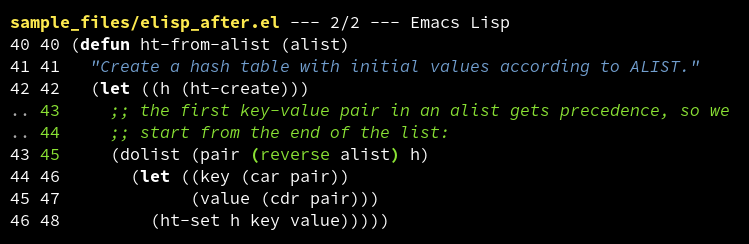
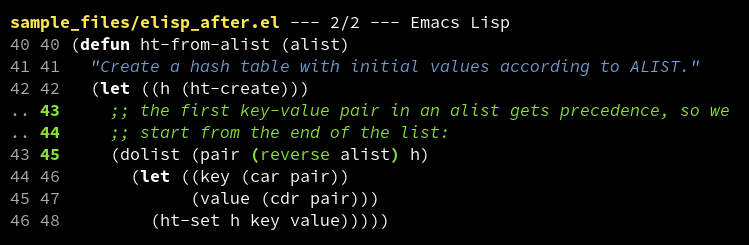
I'm experimenting with line number styling in difftastic. The first screenshot is the old version, and the second screenshot shows the new.
I want line numbers to be visually distinct from content. The new version is using dim text for unchanged lines, and bold otherwise.