If you download an Emacs source tarball, it comes with .elc files so you don't need to byte compile anything.
This enables you to compile the remaining (much smaller) C parts quickly: I've seen installs take under a minute!
miniblog.
Related Posts
I'm impressed and slightly surprised that I can browse the web even when my local library's wifi blocks detectportal.firefox.com ("Download sites are banned").
It seems that Firefox only requires the website to be redirected when there's a captive portal.
61
One advantage I've come to appreciate about Dash/Zeal docsets: it's really nice having focused search.
The text search is constrained to the languages I care about enough to download the docset, substantially increasing the relevance. In Google I'd need to specify the language.
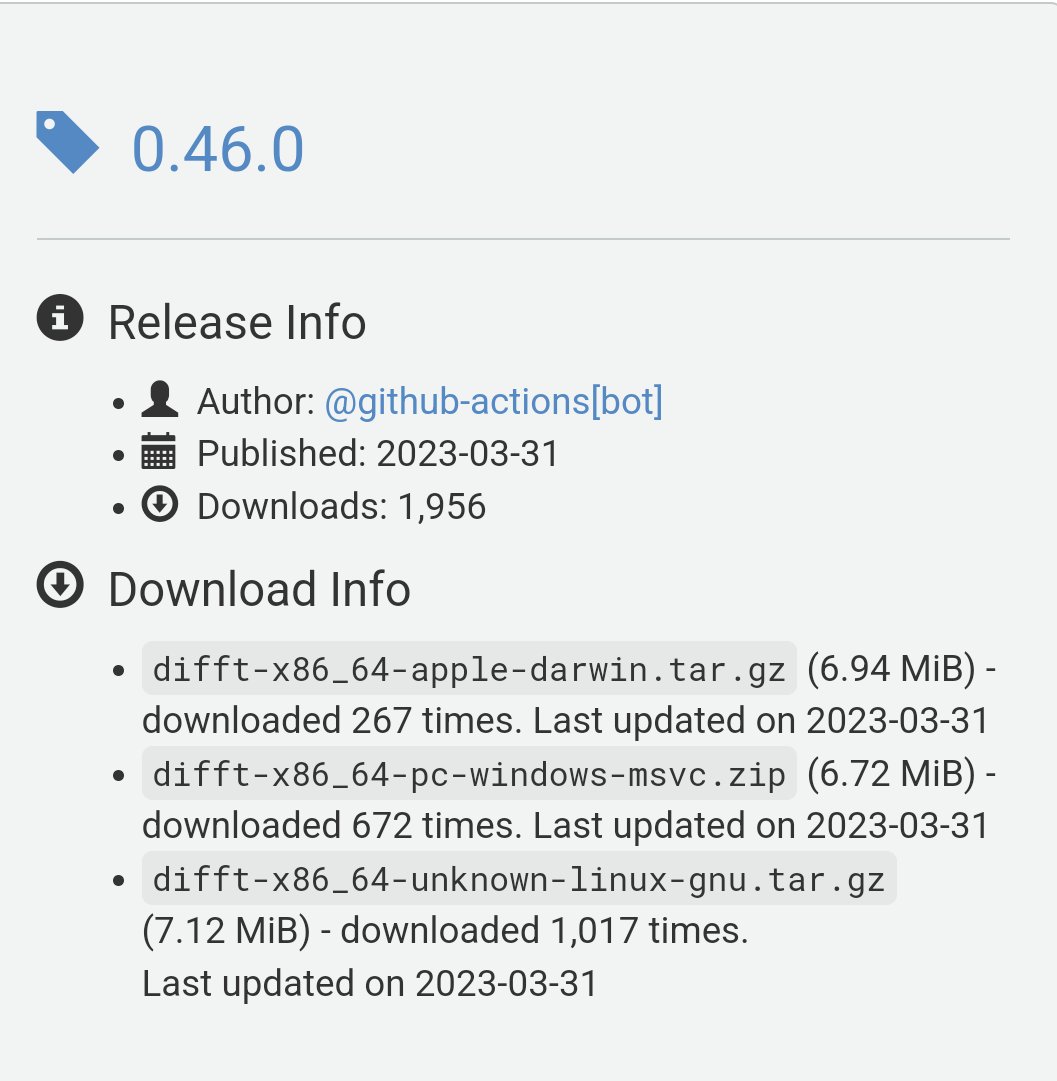
GitHub tracks download counts for releases, so I can see that macOS releases of difftastic downloaded are downloaded much less frequently!
I don't know if it's proportional to usage though. All these operating systems have several package managers.