Neat elisp feature I learnt today: because closures are just lists, you can manually construct them and call them as functions:
(mapcar '(closure (t) (x) (1+ x)) '(1 2 3)) ;; => '(2 3 4)
miniblog.
Related Posts
Snorkel is a project that encourages you to build heuristic functions to train a ML model on. It's a clever alternative to manually labelling data.
https://www.snorkel.org/use-cases/01-spam-tutorial
A significant part of development practice is trying to work out "should I manually change this, or should I write a complex editor macro / sed/awk script / program using an AST and refactoring library?".
It's easy to make the wrong decision in both directions IME.
Do you ever find yourself doing something manually, even if the computer could do it with a bit of programming?
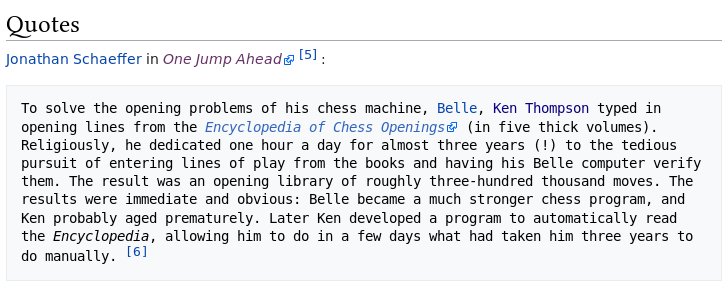
Even Ken Thompson has done this at times!
From