"It also helps that they have a logo. Most languages don't, and they wonder why nobody's using their language." http://t.co/khF3pCAX
miniblog.
Related Posts
Structs are great in Rust, but sometimes I find them a bit heavyweight. There's a little more syntax than e.g. OCaml, for type definitions and usages.
I end up using more structs (records) in OCaml as a result.
rust-analyzer has "convert tuple to named struct", which helps.
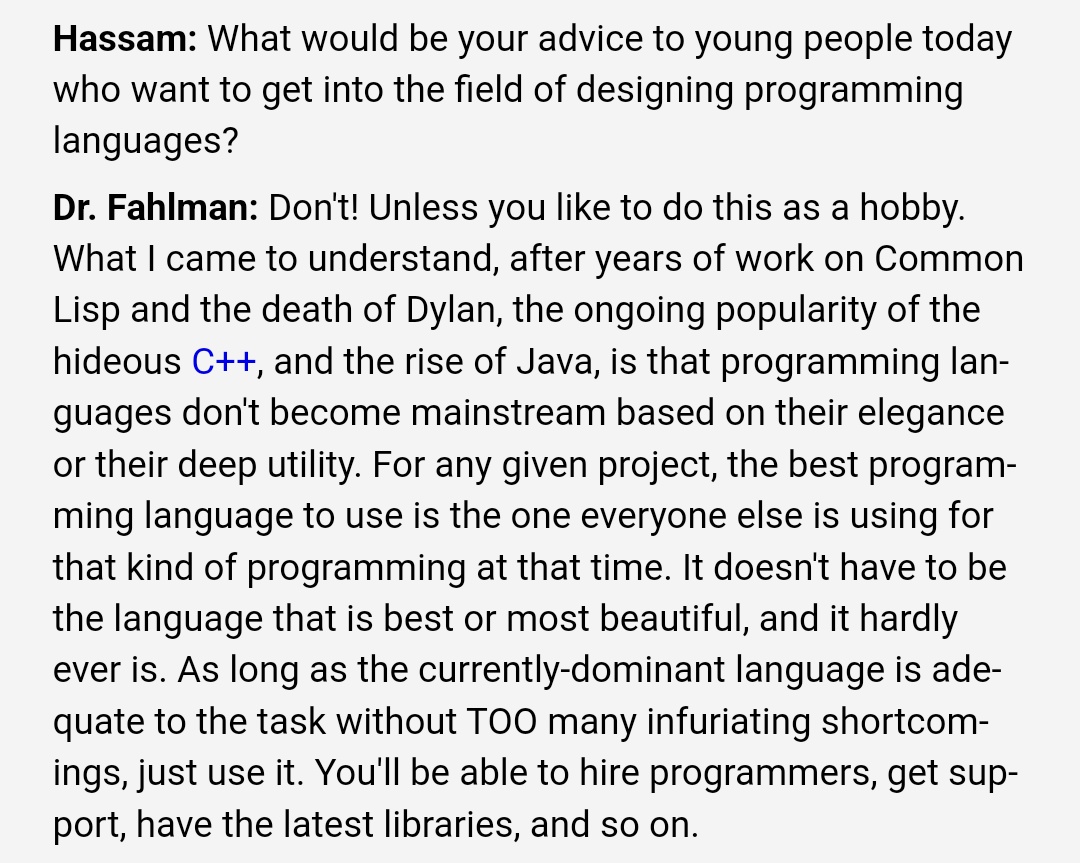
Advice from one of the authors of Common Lisp on PL work: established languages tend to win in their domain. It really helps if you enjoy working in this space.
(There is a ton of PL skill and insight in the smaller languages IME.)
https://pldb.com/posts/scottFalhmanInterview.html
Compile times of 30-60 seconds are particularly challenging: they're too short to do something else, but too long to get into a flow state.
I find music helps avoid context switching at least.