All the spectre/meltdown hardening techniques have a significant CPU overhead.
I imagine CPU manufacturers have had to invest significantly in redesigns recently. Still, the additional overhead might force me to buy new hardware, and I guess others will too.
miniblog.
Related Posts
I'm delighted that so many people are getting value in difftastic, but there has been a significant increase in new issues recently! Hopefully this is a temporary bump from HN.
It's a genuine risk from creating a generic tool: if 1% of devs use it, that's a huge userbase.
Wow, Android is throwing significant weight behind RISC-V:

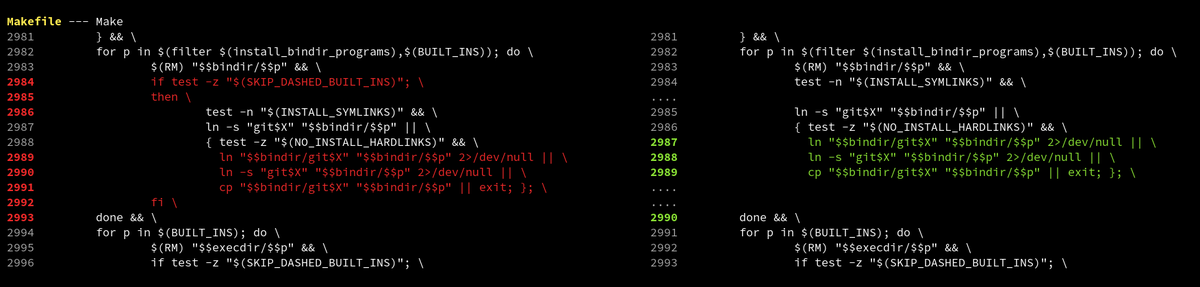
Difftastic now handles tab characters precisely! This sounds like a small thing, but it's crucial when parsing Makefile syntax.
Makefiles look way better now.
(Technically tabs are also syntactically significant inside string literals, and that case is fixed too.)