@rocx If it's built in to the language and pervasively used, I'd consider Optional<T> to include the null value. However, optional types prevent the mistake, since the compiler checks ☺️
miniblog.
Related Posts
51
I really like base-2 prefixes in writing, e.g. 1 KiB, 2 MiB, 3 GiB and so on. It's way more explicit.
However, SI units are k M G and so on. Switching between lowercase k and uppercase Ki keeps tripping me up.
It's really satisfying to use a profiler for the first time on a project. I always find a big performance win with only a small code change.
It's never the code that I expected to be slow, however!
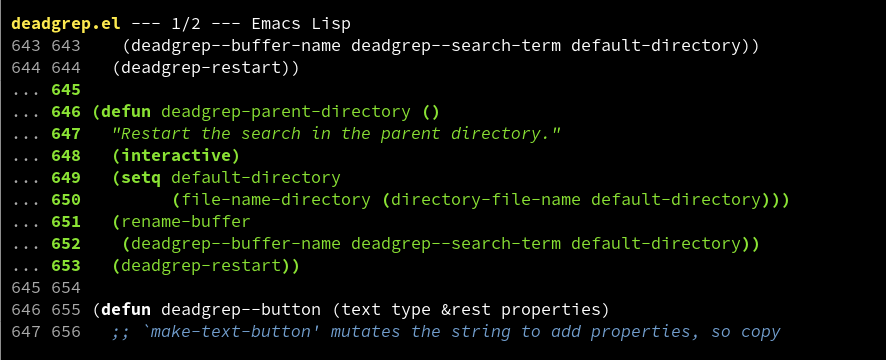
I've been thinking about making difftastic smarter about context. In principle it understands structure, so I could limit context to the enclosing definition.
However, sometimes it's nice to see surrounding code. Line 644 isn't useful, but maybe 655 is. Opinions?