I still can't make my mind up about using lists for representing syntax. It's great for macros, but ASTs often need more (eg line numbers).
miniblog.
Cuis is the only image-based Smalltalk dialect that supports a PR workflow. https://github.com/Cuis-Smalltalk/Cuis-Smalltalk-Dev I'm hopeful more will exist in future.
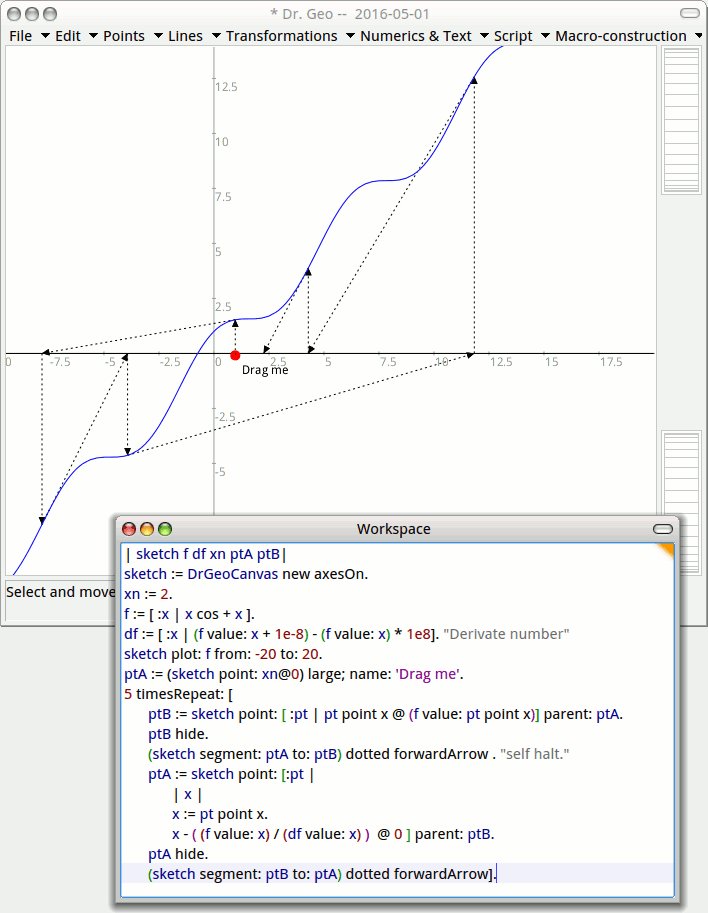
Really neat example of using Smalltalk to interactively explore numeric differentiation:

I've just discovered @emacs_gifs by @ocodo -- superb Emacs demos, highly recommended.
TIL about an incredible Microsoft tool that automatically writes code that works with the examples provided:
I happily use GIMP, it's mature, but it looks like it's being developed more actively than ever! 2.9.4 is out:

Blogged: Example Driven Development: https://www.wilfred.me.uk/blog/2016/07/30/example-driven-development/ #emacs
Turns out that it's possible to configure ivy to use exactly the same keybindings as ido! Made my day.
Smoke tests are definitely useful, but they can really throw off code coverage metrics. Showing the number of times executed is a big help.
I've been kicking the tires on webpack recently. Works very well! In spite of its popularity, it seems to have a single maintainer though.
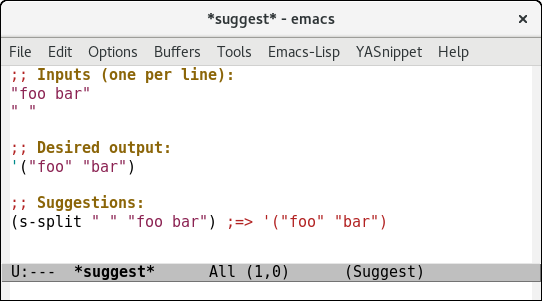
I've written a nifty Emacs package for discovering elisp functions! https://github.com/Wilfred/suggest.el (MELPA coming soon)
Need to look like a rockstar programmer? There's an Emacs package for that: https://github.com/tarsius/magit-rockstar/blob/master/magit-rockstar.el#L25 (with a genuinely useful purpose!)
TIL Emacs searches for keybindings in nine different places!

Elisp data types are *weird*. Strings with properties, a/plists, symbols with slots, improper lists: fun, but takes some getting used to.
That satisfying feeling when you write a to to help with development and you start using the tool when working on it. Dogfooding!
Showing 376-390 of 922 posts