Very true! This is why tools that generate code from diagrams/specs don't allow you to ignore the fine details. They feel like coding. https://twitter.com/KevlinHenney/status/3361631527
miniblog.
Defining a lisp with 6 primitives is neat, but it's not enough to be general purpose. No I/O. Are there minimalist PLs that are usable?
Great point: the big difference between futuristic visions and their results is often how well things work.


Fun blog post on implementing a small programming language, including a tiny and readable type checker!
https://blog.mgechev.com/2017/08/05/typed-lambda-calculus-create-type-checker-transpiler-compiler-javascript/
How do different text editors represent the file being edited? CodeMirror has interesting tree structure of lines:
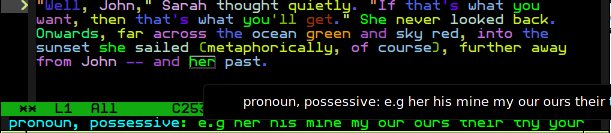
There's now an Emacs plugin for highlighting prose according to the part of speech!
Great thread: what if you allow enemy bullets to go offscreen and pass through arbitrary memory on a gameboy?
I'm impressed how often ancient elisp code just works. For example, here's some Smalltalk narrowing from 1991!
Interesting, candid discussion on when you might want to change the class of an object, focusing on Common Lisp:
The problem with programming is that it's fun to make things. How do we incentivise reuse and collaboration?
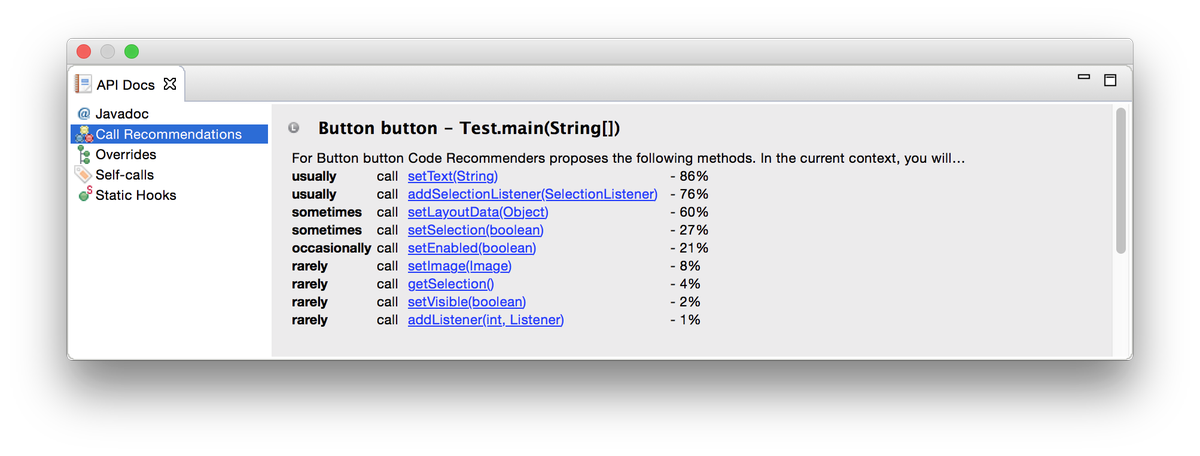
A wonderful code completion tool in Eclipse: suggest completions, sorting them by popularity in context!

Tracking Flash's decline with Stack Overflow question trends, and looking at tech with similar trends: https://stackoverflow.blog/2017/08/01/flash-dead-technologies-might-next/
Fascinating discussion of effective comment style in GHC (see both the thread and the wiki link)
macroexpand is itself a macro rather than a function in Julia. Seems odd to me: saves quoting, but makes expanding forms in vars trickier.
Dynamically defining properties on Python objects: https://gist.github.com/Wilfred/49b0409c6489f1bdf5a5c98a488b31b5 (forced me to use some crazy metaprogramming!)

Showing 346-360 of 885 posts