AlphaZero is interesting, but the paper lacks replication details and was not necessarily a fair test against Stockfish: https://medium.com/@josecamachocollados/is-alphazero-really-a-scientific-breakthrough-in-ai-bf66ae1c84f2
miniblog.
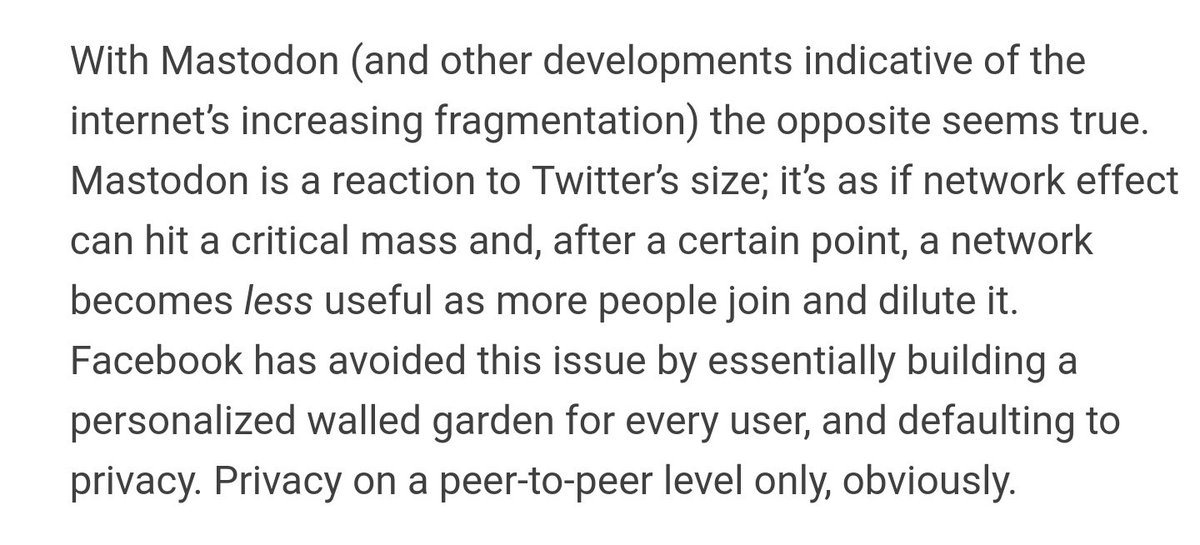
Food for thought: are there diseconomies of scale for social networks? https://secretcave.co/decentralized-social-media/
Mastodon definitely has a different social vibe, but I struggle to put my finger on it. Perhaps it feels more like a digital village.

Great overview of file local variables in Emacs: https://jblevins.org/log/file-local-variables
This gives you file-specific settings.
I love that lambda is just another macro in Emacs lisp: https://github.com/Wilfred/remacs/blob/master/lisp/subr.el#L95-L119 -- you could have defined it yourself!
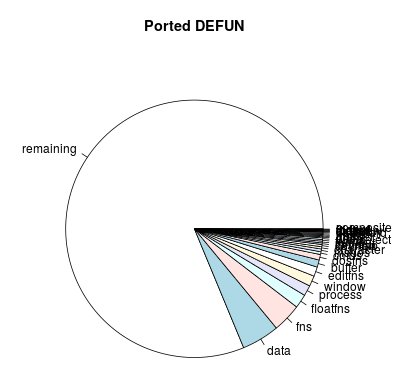
Wondering how many elisp primitive functions have been ported to Rust in Remacs? Here's a plot (from https://github.com/Wilfred/remacs/wiki/Progress).
Free monad considered harmful https://markkarpov.com/post/free-monad-considered-harmful.html
Excellent, pragmatic blog post discussing usage of free monads, performance, and when you can simply use typeclasses.
If you're not using helpful to explore Emacs functions, you're missing out!
It's now possible to set, toggle and customise variables from within helpful! Helpful will even pull out source code of functions have been redefined by edebug!
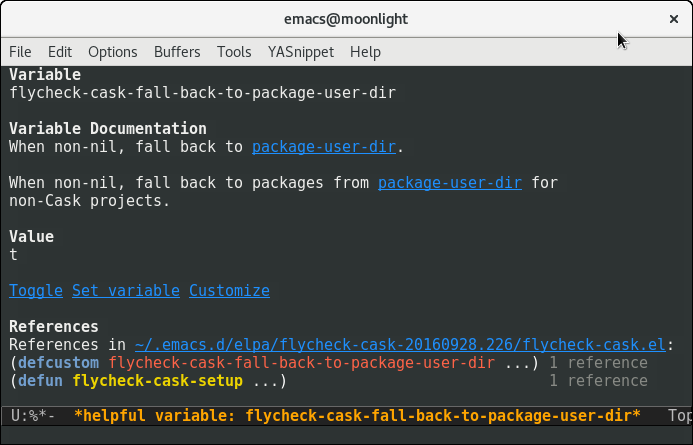
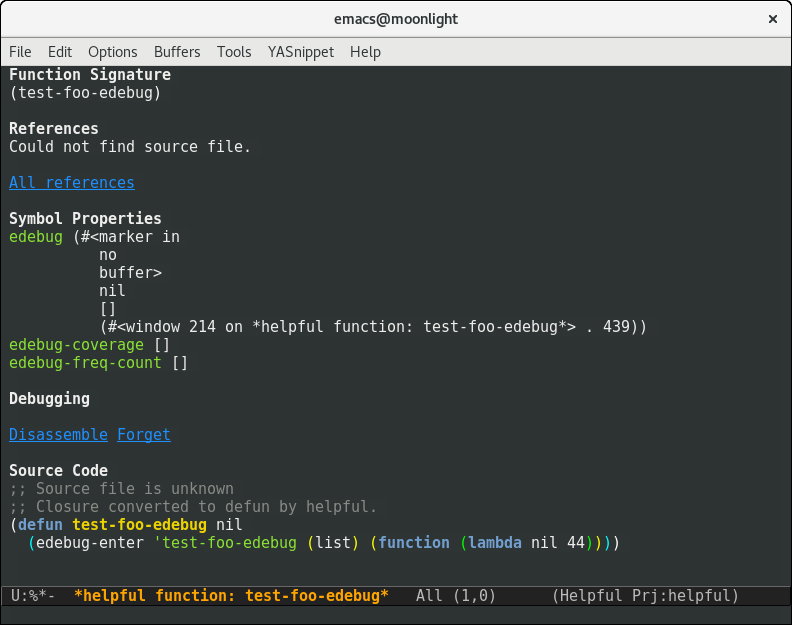
If you have a CLI tool that outputs more than ~10 lines of info, it should really use bold and colour. It makes a huge difference to readability!
I've learnt a lot from comparing notes with other #AdventOfCode people. I end up going back to old solutions and refactoring to be more idiomatic (and shorter)!
The history of T: https://www.paulgraham.com/thist.html
A remarkable Scheme predecessor with an optimising compiler, a pioneering tagged pointer implementation and a remarkable self-hosting GC!
Positional arguments work well, as do keyword arguments. I think it's a mistake to support both though.
In e.g. Python it's hard to control how people will call you, and you may have differing views on the API you're exposing.
Astounding: plastic (3D printed) devices that can communicate with wi-fi devices by reflecting signals:

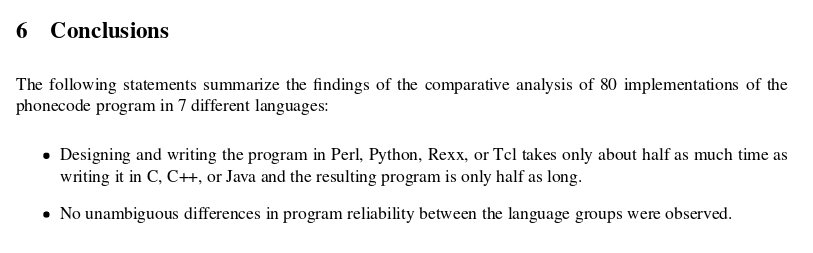
If you can afford the performance cost of a higher level language, it's probabably worth it. Great empirical study:
Great blog post discussing how Remacs' design has evolved: https://shanavas.org/rust/2017/11/08/remacs-the-journey-so-far.html
I have never regretted time spent learning more about jq: https://stackoverflow.com/q/26701538/509706 .
There's a definite learning curve, but it's really powerful. Large blobs of JSON are ubiquitous in many REST APIs and nothing comes close to jq's convenience.

Showing 46-60 of 885 posts