There's an eslint plugin for extracting JS from HTML, so you can catch issues even when using inline JS!
miniblog.
Great talk by Bozhidar on the evolution of Clojure tooling in Emacs: https://youtu.be/4X-1fJm25Ww
(covers an impressive range of features, explores the tooling landscape and has some entertaining Emacs metaphors!)
Now available on MELPA! https://twitter.com/_wilfredh/status/965745451055099904
Great, readable paper by Romain Robbes and Michele Lanza: Improving Code Completion with Program History
It's a quantitative analysis of code completion tools, covering both static and dynamically typed languages!
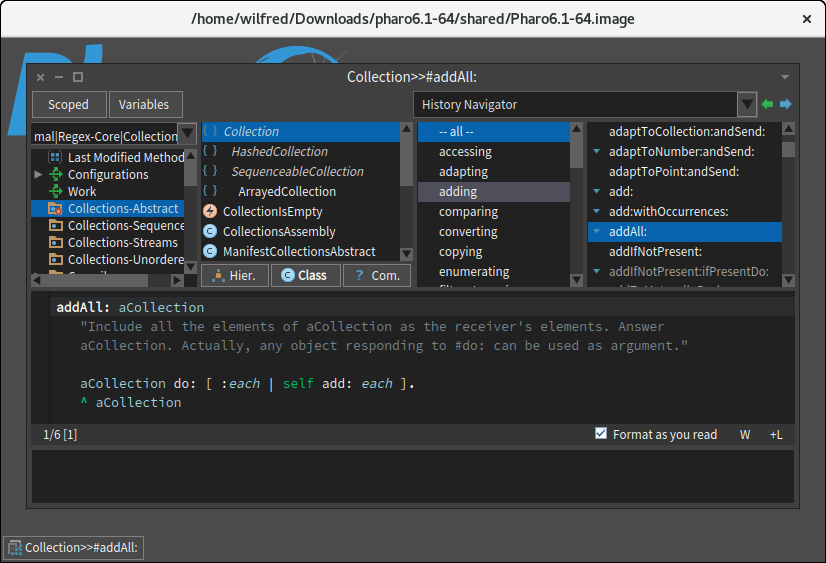
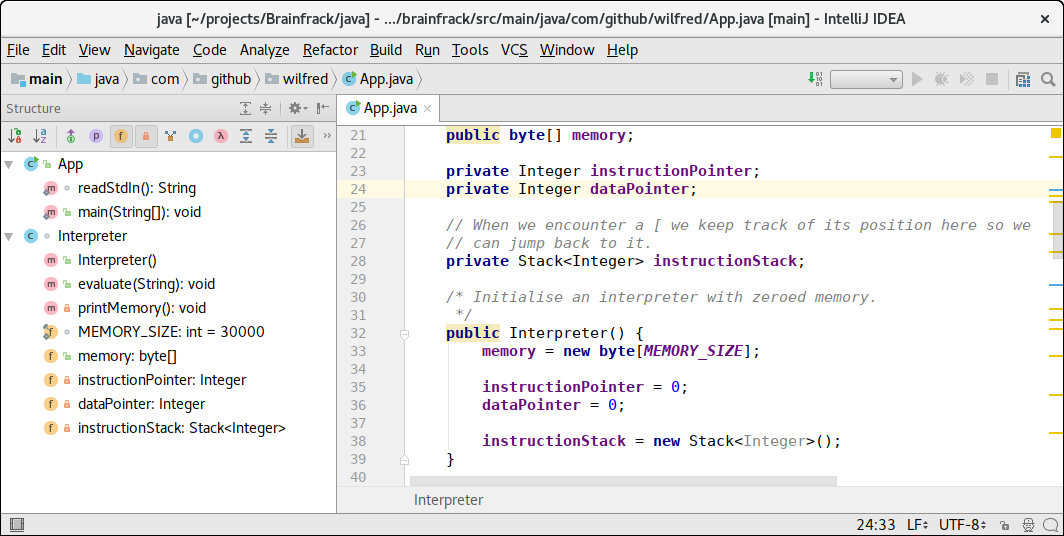
Lots of IDEs provide a way of viewing the structure of a project: the directory structure, the package organisation, or the methods and fields of classes.
Scaling these visualisations remains a hard problem. Large projects are hard to navigate in any tool.
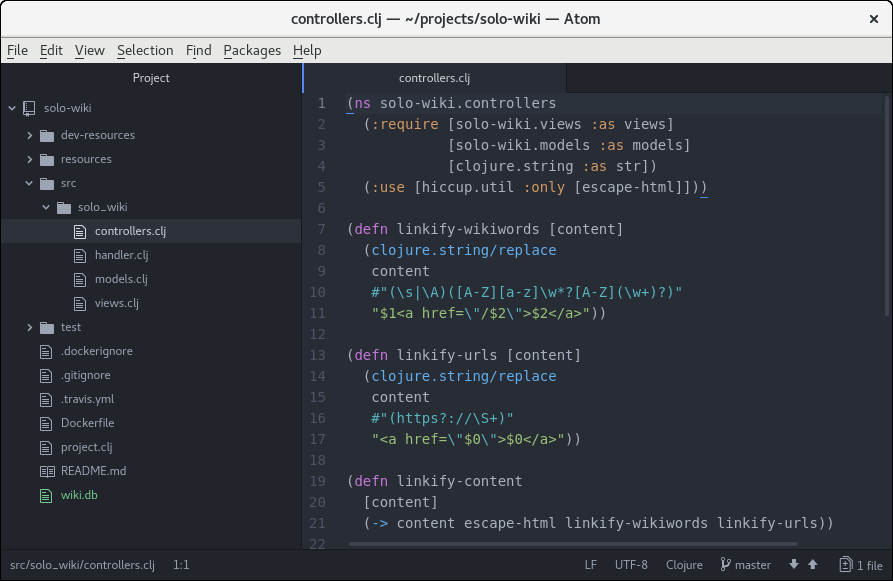
A big appeal of Emacs, the infinitely customisable editor, is that you can mold it to perfectly fix your workflow.
I have a sneaking suspicion that the Ikea Effect https://en.m.wikipedia.org/wiki/IKEA_effect increases the appeal too though.

Interesting, candid article exploring what happens when you try to build a high performance conservative GC:
I really like frameworks that provide a skeleton project generator. It means the initial impression shows a working project, and helps promote best practices!
Exercism has a really good summary of what great code reviews look like: https://tinyletter.com/exercism/letters/exercism-behind-the-scenes-unhelpful-insulting-and-rude-feedback-antipatterns
Cyclic graphs are hard in Rust. A lovely post demonstrating how to use arenas in Rust to build mutable graphs whilst managing lifetimes correctly:
It is profoundly confusing writing a debugger. You're accustomed to seeing a stacktrace as a sign that you've screwed up, but it means that your debugger is working correctly!
Really neat code completion tool that combines program synthesis with a debugger, so you can set a break point and ask it to generate snippets using the values available! https://youtu.be/SnkskEgcbuQ
Quicktype is a nifty project that generates type definitions from sample JSON examples: https://github.com/quicktype/quicktype
It's often easy to overlook parts of software development that can be automated.
Clojure provides a mechanism for early termination from reduce expressions with 'reduced': https://clojuredocs.org/clojure.core/reduced
It's unusual to see a special early termination function: most PLs only provide general control flow constructs like exceptions.
Where static analysis can't work, the JS community is exploring libraries declaring that they're pure: https://github.com/webpack/webpack/blob/master/examples/side-effects/README.md
Showing 556-570 of 657 posts