miniblog.

This is a neat idea (alias works in zsh, bash needs a script). Even better, perhaps our websites need to exclude $ from being copied the way line numbers are usually excluded. https://twitter.com/brandon_rhodes/status/1050570678032850944
Websites designed for desktop often don't work well on mobile. I've started noticing sites where the opposite happens: they've gone mobile-first, and the desktop UI suffers. It probably makes sense to prioritise mobile, but it's hard to do a good job on such diverse platforms.
Travis CI is adding Windows support! https://blog.travis-ci.com/2018-10-11-windows-early-release (Article also includes some interesting statistics on Windows popularity and Travis popularity in the npm community.)
OpenBSD adds unveil(), a new syscall for restricting filesystem access. Like pledge(), it aims to maximise adoption through having a limited (but very comprehensible) API. https://lwn.net/Articles/767137/
I'm really impressed with the Grasshopper app for teaching coding to complete beginners. In this typo, it tells me the code is incorrect even though it would be a valid JS program!
Photo
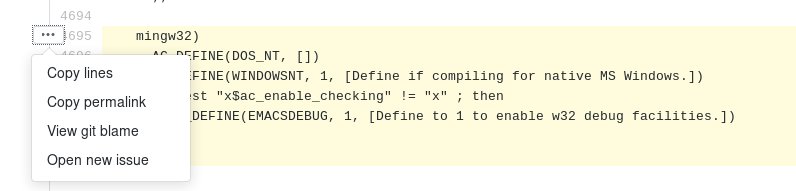
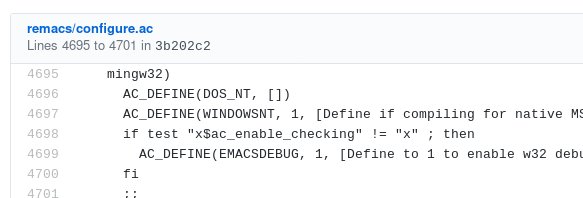
Rust Remacs 2018: https://db48x.net/rust-remacs-2018/
On making parsers more human-friendly by adding grammar prodctions to make the parser total: https://duriansoftware.com/joe/Constructing-human-grade-parsers.html (allow everything in the AST, but mark errors)
Code quality metrics are very subjective and depend on the domain and the programming language. They can add value, but I rarely see tools that work well without initial configuration.
GitLab has an excellent, candid discussion of how they're doing 'open core' development, and resolving the tensions that occur: https://about.gitlab.com/stewardship/
A remarkable short story and thought experiment on charitable giving in a smart contract system: https://breakermag.com/kchain-science-fiction-premiere-byzantine-empathy/
One nice thing about JIRA is that it encourages separate namespaces for IDs. You can have FOO-123 and BAR-123. Too many tools want to own #123 and it becomes harder to know what others are talking about.
A thoughtful post arguing that the read function is more important than homoiconicity in lisps: https://calculist.org/blog/2012/04/17/homoiconicity-isnt-the-point/
Success! I've mirrored Versor (a fascinating Emacs project to give semantic meaning to cursor movement) from Sourceforge CVS to git: https://github.com/Wilfred/versor
Trying to import an interesting old CVS project into git. Even the import tools have bitrotted! git-cvsimport relies on cvsps before 3.10, which came out in 2013.
Wacky, intriguing idea: automatically commit code on when a test run passes, and automatically revert when tests fail! https://medium.com/@kentbeck_7670/test-commit-revert-870bbd756864
@khady@framapiaf.org Yep, it was indeed! :)
I really like Clojure's let syntax. It works well when you only have a single variable. In other lisps, this feels a little verbose: (let ((my-var (foo))) (bar foo)) I've seen a let1 macro used in books, but not in the wild.
Browser tab sync between phones and laptops is pretty good these days, but I've not found a good equivalent for the clipboard. Are workflows too different? It seems like it could be really handy.
It's fascinating that older lisps let you adjust the load factor in hash maps yet few newer languages expose this setting. For example, Rust doesn't have it yet: https://github.com/rust-lang/rust/blob/70073ec61d0d56bca45b9bd40659bb75799cd273/src/libstd/collections/hash/map.rs#L121-L124
I paid £8 for an ebook today that was 1.25 MiB. I think that's most I've ever paid for content per byte.
Showing 141-160 of 657 posts