Challenges in Pharo 7: https://www.slideshare.net/pharoproject/pharo-7-the-key-challenges
Includes screenshots of the new class browser and message browser!
miniblog.
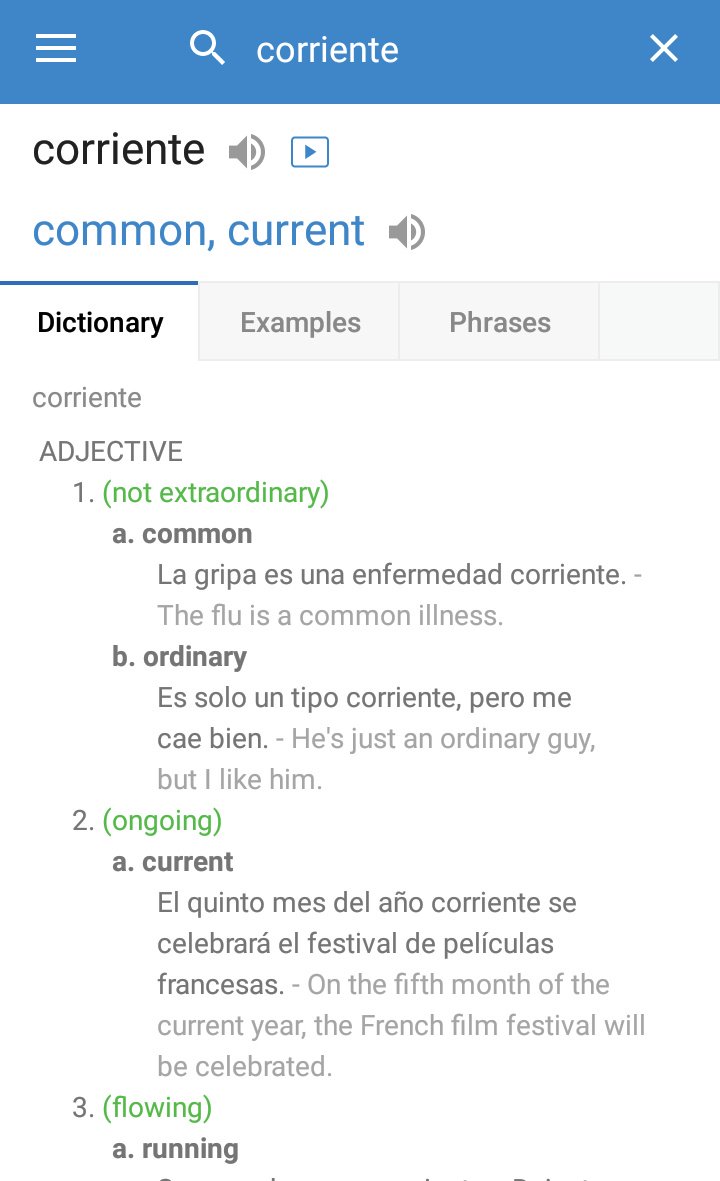
Hopefully it's only a matter of time before we start integrating corpus data and NLP analysis into dictionaries. I'd love to know: how often is each meaning used?
I am really excited to see more Pharo projects move to GitHub. Smalltalkers have a great culture of dogfooding, and pull requests will help the positive cycle of improvement!
For example, even the installer is a Pharo project:
Whilst the concept of a web portal seems very dated now, some aspects still exist. Google has doodles and Bing has different photos, so you get new content when you visit regularly.
How is the content you're consuming? How does that impact your worldview and ideas? https://www.perell.com/blog/never-ending-now
Deno is an interesting sandboxed Typescript VM that uses URLs for dependencies: https://deno.land/
It's created by Ryan Dahl (who created node.js) and tries to fix what he sees as design issues/complexities in node.
Metalinks in Pharo:
https://www.slideshare.net/mobile/MarcusDenker/lecture-advanced-reflection-metalinks
This is an elegant way of taking the AST of running code and attaching modifiers to it: logging, tracing, override (think advice or AOP).
Pharo feels like the most open, dynamic language I've seen outside of f-expression based PLs.
The evolution of communication styles when machine learning can do the simple stuff: https://www.overcomingbias.com/2017/03/better-babblers.html
Should we be fearful of the net cultural impact of the Internet? https://www.netfamilynews.org/juvenoia-part-1-why-internet-fear-is-overrated
I've been enjoying using Mercurial overall: I've found its abstractions pretty straightforward to learn, and it has all the staging, squashing features I like in git.
I do miss git's Committer vs Author though. Mercurial doesn't show who rebased your commit and modified it.
In the book Sapiens: A Brief History of Humankind, the author talks about the point in history when societies were no longer isolated from each other. E.g. they knew of and traded with others.
Computing is similar. We could think of a single connected computer system now.
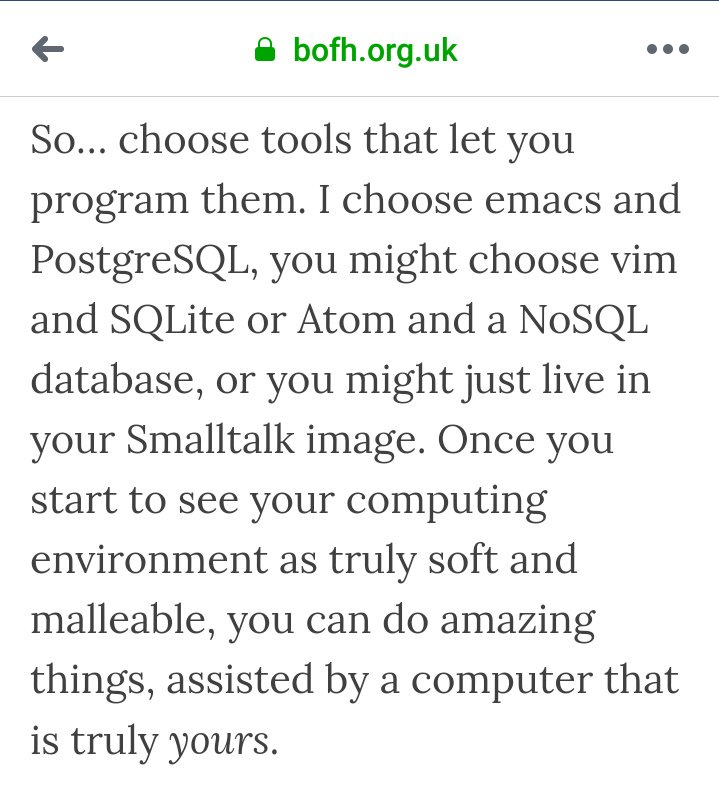
What makes a computer system personal? Malleability.
From a fun post about running a bakery with Emacs and SQL:
The Humane Representation of Thought, a talk by Brett Victor:
https://vimeo.com/115154289
I've not seen Brett talk before, and he raises interesting points about the influence of the medium on our analytical thoughts.
On instant gratification versus memory forming in the Internet age: https://www.bloomberg.com/opinion/articles/2019-02-25/yes-the-internet-can-make-us-happier
I have fond memories of meeting Internet friends in person, learning new skills, and even games I enjoyed a teen. I'm not sure whether Internet activities are less memory forming.
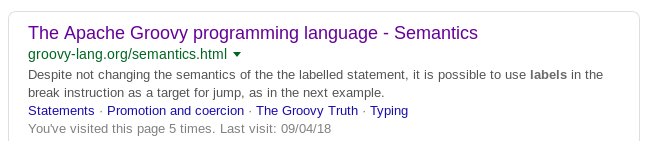
Are you spending a lot of time looking at this content, or are you just forgetful? I'm never quite sure how to react to Google's visit counts when I search for things.
Showing 616-630 of 736 posts