gcc 9.1: better diagnostics, better optimisations (faster to optimise and faster at runtime), a new D frontend, and more!
miniblog.
A neat demo of the importance of good tracebacks in asynchronous code: https://vorpus.org/blog/beautiful-tracebacks-in-trio-v070/
BitBlox, an alternative to breadboards that uses colour to help students understand the connections:

Command line code review of git pull requests: an elegant approach that considers the dependency tree and a heatmap of which files are changed the most often!
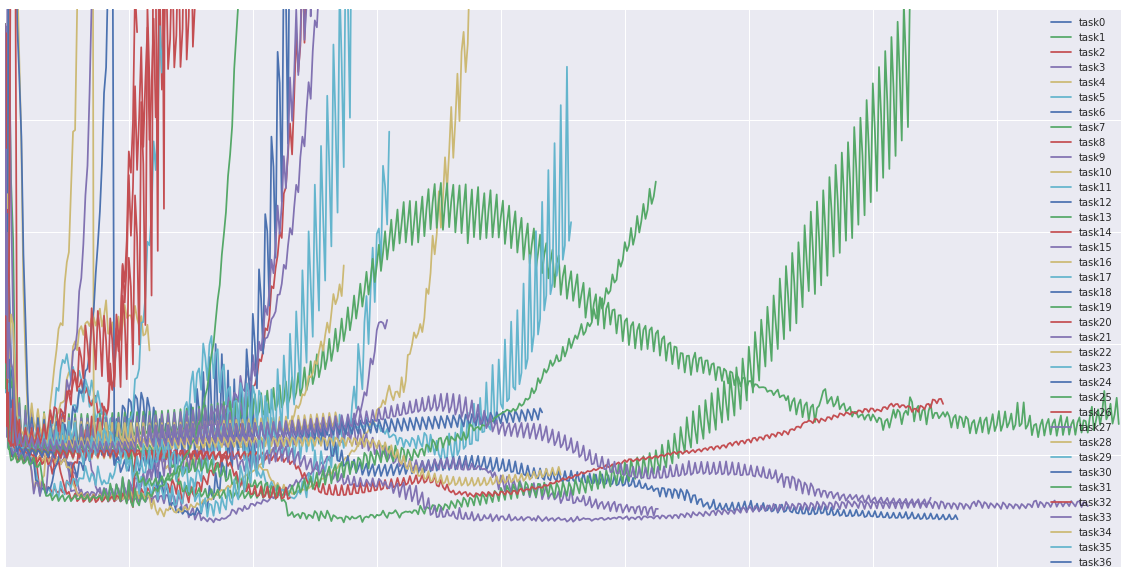
An excellent overview of the different gradient descent algorithms, and a nice example of content that is available as both a responsive website and a PDF on arXiv:
JavaScript libraries have fabulous opportunities to include demos in their documentation. Here's a machine learning library that has a demo of agents exploring the home page!
"the emoji for 🤦 Person Facepalming - if sent from iOS to Android at present, it would change from what appears to be a Man (on iOS) to a Woman (on Android)" https://blog.emojipedia.org/googles-three-gender-emoji-future/
A really fun read of the YouTube team quietly rebelling against supporting IE6 in 2009: https://blog.chriszacharias.com/a-conspiracy-to-kill-ie6
Purchasing expired domains that are linked from well known sites, then redirecting to your content: https://detailed.com/expired-domain-seo/
(I don't condone the technique, but the cat and mouse dynamic of SEO is interesting.)

Purchasing expired domains that are linked from well known sites, then redirecting to your content: https://detailed.com/expired-domain-seo/
(I don't condone the technique, but the cat and mouse dynamic of SEO is interesting.)
Patrons, newsletters, and building relationships with your followers: https://nadiaeghbal.com/perks
One crucial skill in programming is knowing how to get answers to small, well defined questions.
When I started writing code I'd sometimes get completely stuck with syntax. These days I'd hop on IRC or Stack Overflow.
When I've been a mentor, I try to show where I get answers.
Single line comments nicely avoid the nesting problem. I can write:
# # foo
without any issues, enabling me to comment out a region that contains a comment.
Multiline comments are much more awkward, as many languages don't support nesting:
/* /* foo */ */
I'm not yet convinced that 5G will enable many new services. If my internet speed increased by 2x or even 10x (at home or on my phone when travelling) I'm struggling to think of interesting things that it would enable for me.
What would you do with a 10x speedup?
Showing 2,221-2,235 of 7,653 posts