A specialist app and social network for anglers!
miniblog.
An interesting discussion of different ways of funding volunteer-run FOSS projects, and which boring tasks more amenable to charging: https://blog.tidelift.com/open-source-has-a-working-for-free-problem
If reverse engineering is black box analysis of how something works, the original development is apparently 'forward engineering'!
On building explainable ML models:
https://towardsdatascience.com/why-model-explainability-is-the-next-data-science-superpower-b11b6102a5e0
I'm comfortable choosing sorting algorithms for a computer. Choosing a sorting algorithm for a human seems much harder.
For example, suppose you want to sort a shuffled deck cards. Quicksort seems too fiddly for a manual process with a relatively small (52) quantity.
Emacs support for Java is improving by leaps and bounds. The last time I was doing paid Java work I had to drive a headless Eclipse from Emacs!
Nomic, a neat GitHub repo/game where you win points or change the rules with pull requests:
Apparently startups will claim they do AI in order to generate VC interest!
https://www.theregister.co.uk/AMP/2019/03/05/eu_startups_no_ai/
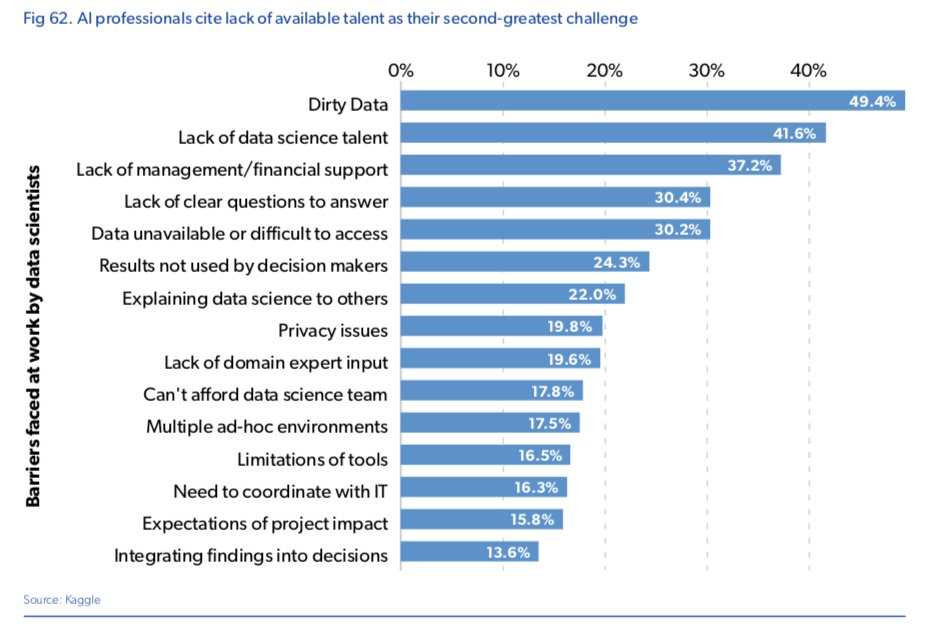
I'm also fascinated to learn how many reported that they have a shortage of data scientists. Machine learning is so visible now that I'd assumed expertise was widely available.
I've seen lots of metrics to decide if an open source project is alive: age of bugs, number of pull requests open, number of commits in a time period.
When choosing libraries, I've realised I only look at the last commit time. That's sufficient activity IME.
Snaps are self-contained (i.e. bundling dependencies), sandboxed applications that work across different linux distros: https://arstechnica.com/information-technology/2016/06/goodbye-apt-and-yum-ubuntus-snap-apps-are-coming-to-distros-everywhere/
This is the first I've heard about them. They seem to be more popular in the area of proprietary software on linux.

Really nice move by Flickr: if your images are CC licensed, they won't limit how much you can upload with a free account! https://twitter.com/creativecommons/status/1104067700119216129
Wikipedia discussing talk pages and the challenges of unstructured communication.

Several interesting approaches to GC in Rust:
JS using SpiderMonkey: https://github.com/asajeffrey/josephine
Tracing GC with intrusive pointers: https://github.com/withoutboats/shifgrethor
A whole Lua implementation!
The thing about memory ownership is that it's intrinsic (not incidental) complexity on a physical computer. If you don't want GC, you need ownership.
Not all languages provide ownership tooling though (e.g. C). Following Rust's success I suspect we'll see more ownership tools. https://twitter.com/migueldeicaza/status/1103427307451035648
Showing 2,326-2,340 of 7,653 posts