Ever thought that the AGPL was too weak and didn't encourage sharing source code? The SSPL is a viral copyleft license that requires you to share all the other software supporting your service!
https://lwn.net/Articles/768670/
(I'm struggling to imagine anyone who would use this.)
miniblog.
1
Internet software decays: https://utcc.utoronto.ca/~cks/space/blog/tech/InternetSoftwareDecay
(Software is dependent on the environment, and that's changing! You also have to stay on top of evolving security concerns.)
Tech skills missing in today's high school students interested in programming: https://nullprogram.com/blog/2018/10/31/
(And general purpose computing is becoming more niche! Don't buy a tablet without a Raspberry Pi too.)
2
Writing a tracing macro in Elixir: https://www.theerlangelist.com/article/macros_5
Lovely non-trivial example of where macros shine!
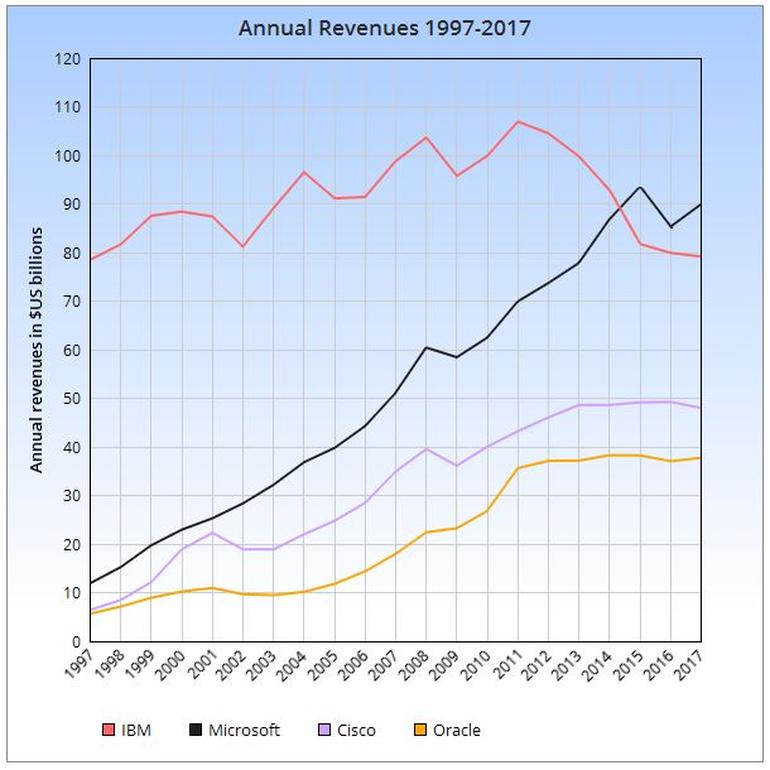
A discussion of IBM's revenue also shows the remarkable trajectory of Microsoft. MS may not have a foothold in mobile, and Windows is at saturation, but they're still growing!
https://www.zdnet.com/article/ibm-shows-growth-after-22-straight-quarters-of-declining-revenues-but-has-it-turned-the-corner/
I believe this is largely Azure.
22
A wonderful talk on a Common Lisp implementation (CCL), language community dynamics, and how things evolve: https://thisoldlisp.com/talks/els-2018/
Excellent overview of what WebAssembly enables today, and the features it will enable in future: https://hacks.mozilla.org/2018/10/webassemblys-post-mvp-future/
(High performance sandboxed execution! Better dev tools!)
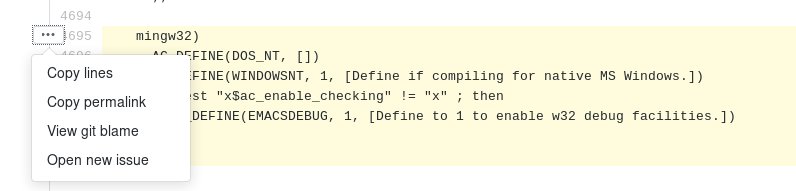
Interestingly, Emacs lisp considers the literal 1. to be an integer literal, whereas most languages consider a decimal point to always mean a floating point number.
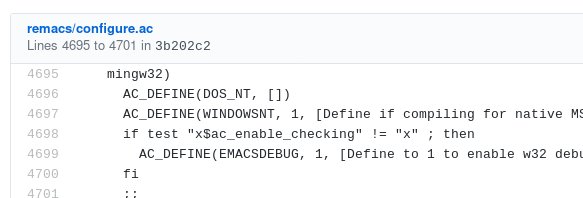
Awesome GitHub feature: if you link to a line of code at a specific commit, it will render as a little code preview!
Relevant docs:

104
People running successful open source projects: what do you do when the rate of PRs grows beyond what you can handle? How do you ensure that PRs have had at least one collaborator respond, without being drowned in notifications/emails yourself?
Please RT for reach.
4
The problem with being a software developer is that you stop seeing software as a fixed artifact that you can take or leave.
Instead you start noticing things like 'this input would be better with type=email' and it's harder to accept poor designs.
1
Hyde: https://github.com/adobe/hyde generates C++ docs by parsing source code and generating separate docs for users to add to. Example output: https://stlab.cc/libraries/stlab2Fcopy_on_write.hpp/copy_on_write3CT3E/
They're absolutely right that inline docs can eventually become overwhelming when you're trying to read code.
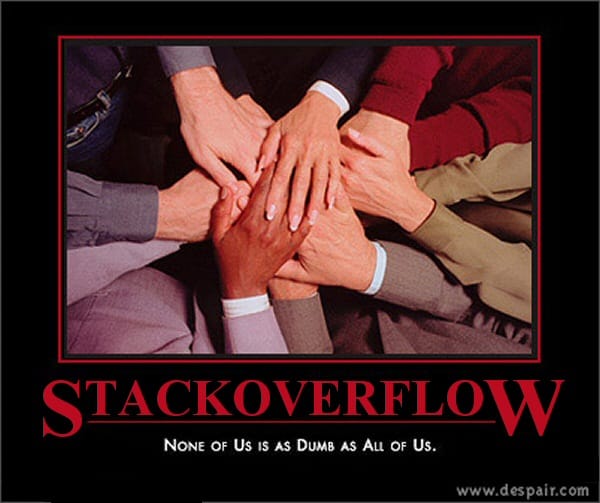
An excellent retrospective on the design of Stack Overflow and the fundamental challenges in its purpose:
32
I love the idea of an AST level blame tool. I'd like to ask questions like "who added this function call?"
Showing 2,581-2,595 of 7,653 posts