Scheme and Common Lisp are much more different than I realised.
They have very different error handling models, object systems, approaches to documentation (e.g. use of docstrings), not to mention conventions on iteration, recursion and early termination.
miniblog.
Lentic is a cute Emacs project that lets you have different views of the same buffer content.
Video demo: https://vimeo.com/116078853 with the author viewing elisp comments as org-mode syntax and editing like a normal org-mode buffer! Think multiple-major-mode on steroids.
Wikipedia has had hoax articles on it, some lasting over a decade: https://en.wikipedia.org/wiki/Wikipedia:List_of_hoaxes_on_Wikipedia
Fictional devices, fictional TV series, even fictional people!
Visualising the execution of functional programming languages by stepping through a graphical AST representation:
Jedi, the excellent Python code completion library used by many editors and even ipython, now supports mypy annotations in Python 2! https://github.com/davidhalter/jedi/issues/946 🎉
Given an abundance of information (especially online), we need to be more skilled at verifying the sources and the reputation of the chain of outlets: https://aeon.co/ideas/say-goodbye-to-the-information-age-its-all-about-reputation-now
Really cute Clojure project that builds a full parse tree (i.e including whitespace), allows code to transform the _abstract_ syntax tree, then splices the changed sexp whilst preserving source comments! https://vimeo.com/45695419
Enables code transformations that look like macros.
Viewing 25 year old files authored in desktop publishing tools on today's software (e.g. Word, Wordperfect): https://archives.govt.nz/resources/information-management-research/rendering-matters-report-results-research-digital-object-0
When people talk about federated systems, they frequently compare with email. Email has been successfully distributed, but I think it's an outlier. It's rare, especially today, for popular tech to be distributed with multiple implementations.
Clever vim plugin: given a series of string literals containing an interpolated variables, prompt the user for values and send the query to a real DB! https://www.vim.org/scripts/script.php?script_id=356
(convenient, but I hope it doesn't promote code vulnerable to SQL injection)
Realised today that one of my sites has been broken because a popular adblocker blocks any file called pageview.js: https://github.com/easylist/easylist/blob/6c17106ea9480b35e972aa183ded90e2252880f0/easyprivacy/easyprivacy_general.txt#L2195
I'd recently factored out a file with this name. It's a dev site that tries to have readable file names, but this incentivises minifying!
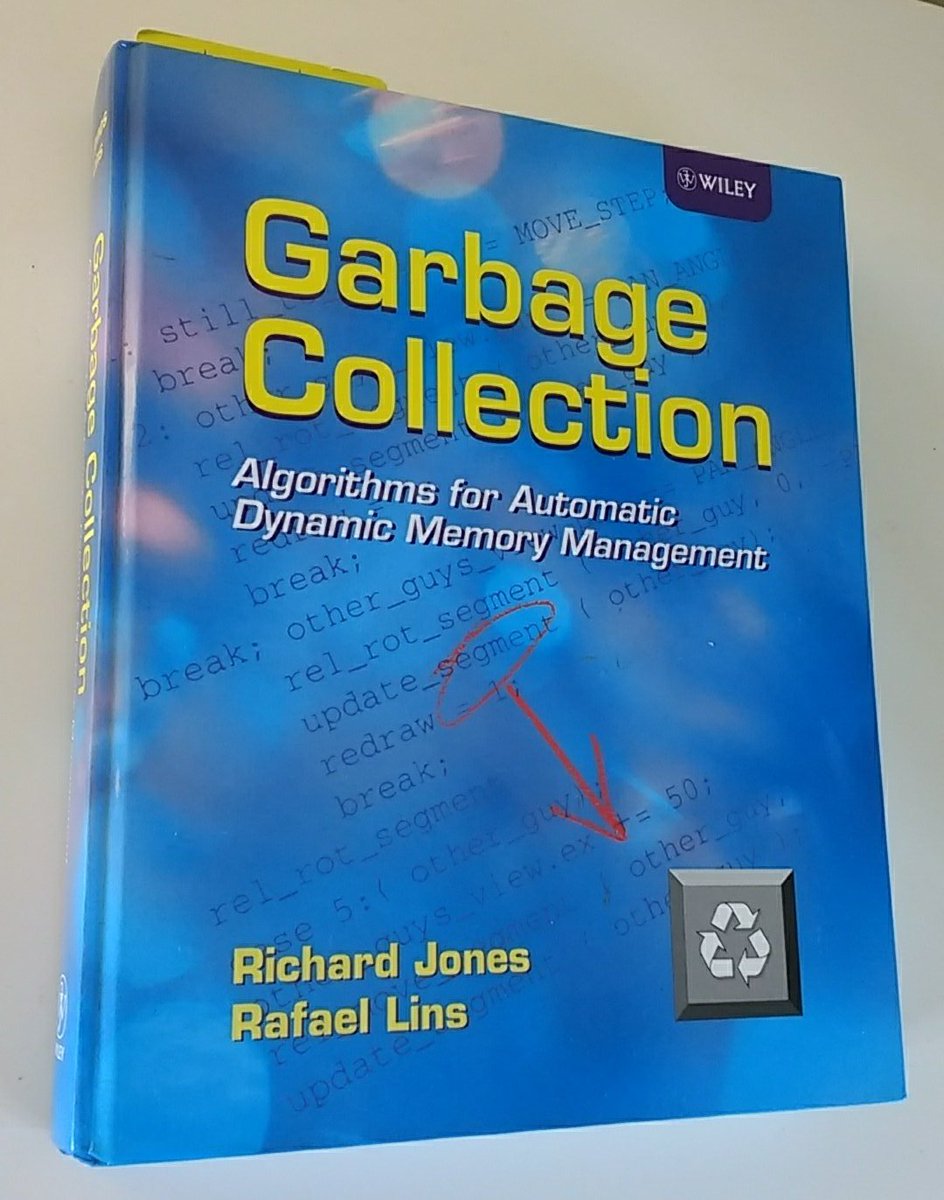
I've started reading this 1996 book on GC algorithms.
A lot of the first chapter is just defending the value of GC! It's much less controversial today.
I wonder whether the 90s rise of OO languages can be partly attributed to the increased productivity of automatic memory mgmt.
Interesting to see that WhasApp is exploring business accounts on the service: https://techcrunch.com/2018/01/18/whatsapp-officially-launches-its-app-for-businesses-in-select-markets/
After using Monzo (superb integrated chat support) and Telegram (allows groups to be publically visible) I've wondered how WhatsApp could be extended.

Fun post on implementing a JIT for elisp, with a great introduction to calling conventions on elisp primitives: https://tromey.com/blog/?p=999
Implementing the eval function in Rust in Remacs! 🎉
Showing 3,016-3,030 of 7,654 posts