If you're new to #python programming, welcome aboard! I've spotted a few techniques that newcomers miss out on and thus learn more slowly.
miniblog.
I've seen test runners that report the number of assertions checked, not just the number of tests. Is this useful?
I understand if you have non-fatal assertions (like EXPECT_TRUE in googletest), but I think this is a rare feature in testing libraries.
It's unfortunate that '# foo' can mean "here's a command you need to run as root" or can mean "here's a comment about the next command". It's a recipe for confusion.
When a language has some central design principles, you can spot projects that work really well because they go well with that design.
There's an eslint plugin for extracting JS from HTML, so you can catch issues even when using inline JS!
Great talk by Bozhidar on the evolution of Clojure tooling in Emacs: https://youtu.be/4X-1fJm25Ww
(covers an impressive range of features, explores the tooling landscape and has some entertaining Emacs metaphors!)
Now available on MELPA! https://twitter.com/_wilfredh/status/965745451055099904
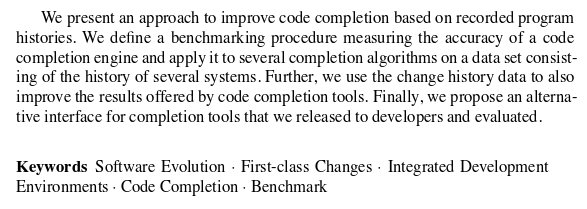
Great, readable paper by Romain Robbes and Michele Lanza: Improving Code Completion with Program History
It's a quantitative analysis of code completion tools, covering both static and dynamically typed languages!
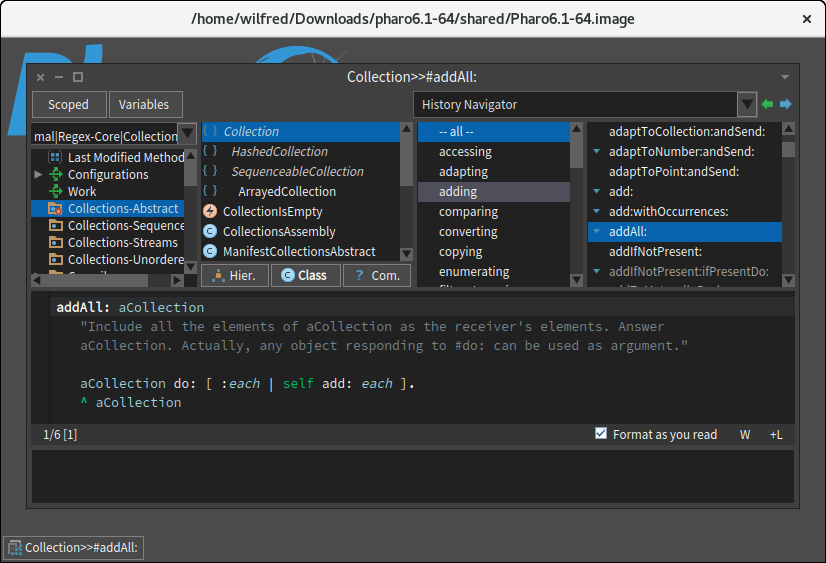
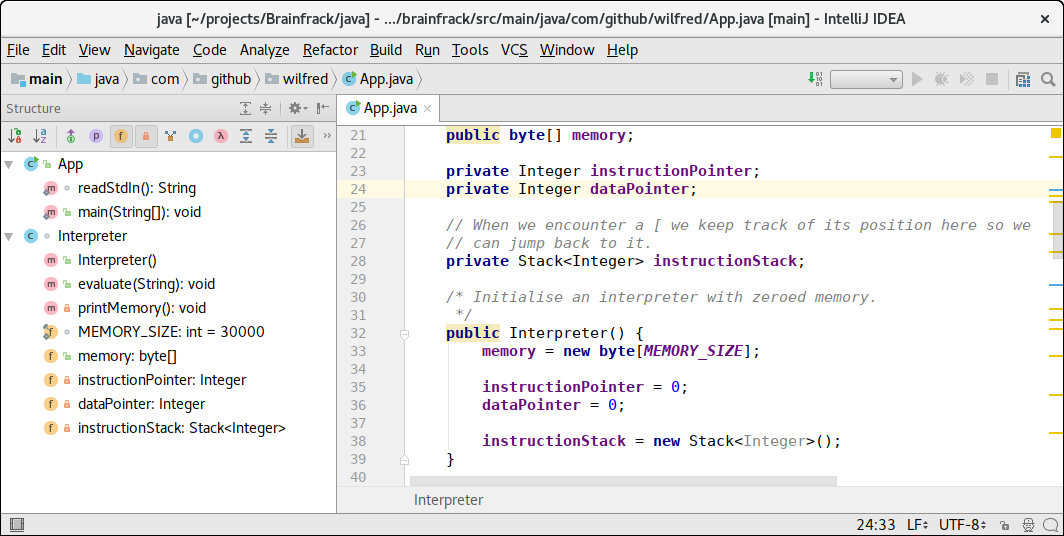
Lots of IDEs provide a way of viewing the structure of a project: the directory structure, the package organisation, or the methods and fields of classes.
Scaling these visualisations remains a hard problem. Large projects are hard to navigate in any tool.
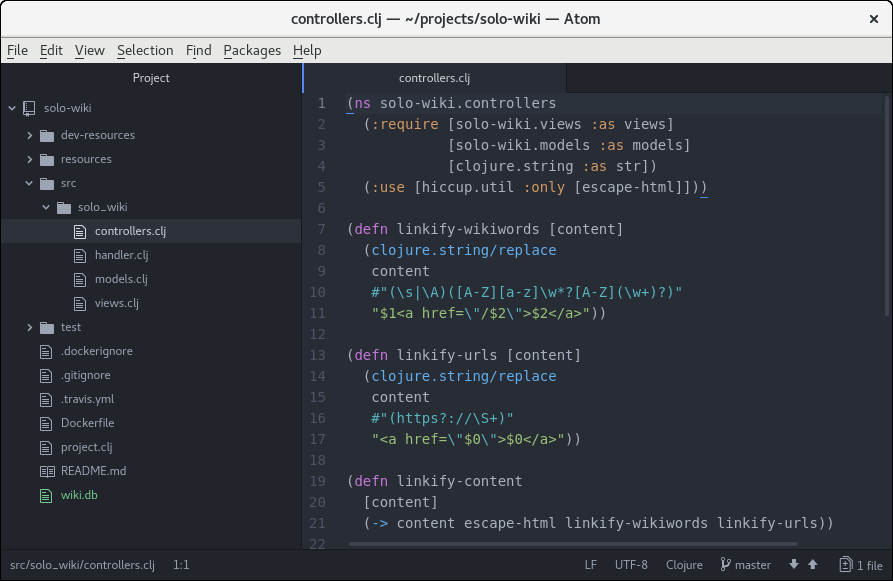
A big appeal of Emacs, the infinitely customisable editor, is that you can mold it to perfectly fix your workflow.
I have a sneaking suspicion that the Ikea Effect https://en.m.wikipedia.org/wiki/IKEA_effect increases the appeal too though.

Interesting, candid article exploring what happens when you try to build a high performance conservative GC:
I really like frameworks that provide a skeleton project generator. It means the initial impression shows a working project, and helps promote best practices!
Exercism has a really good summary of what great code reviews look like: https://tinyletter.com/exercism/letters/exercism-behind-the-scenes-unhelpful-insulting-and-rude-feedback-antipatterns
Cyclic graphs are hard in Rust. A lovely post demonstrating how to use arenas in Rust to build mutable graphs whilst managing lifetimes correctly:
It is profoundly confusing writing a debugger. You're accustomed to seeing a stacktrace as a sign that you've screwed up, but it means that your debugger is working correctly!
Showing 3,031-3,045 of 7,654 posts