Sadly, I've had to start muting words related to political topics. Politics produces lots of tweets in my feed saying the same thing.
miniblog.
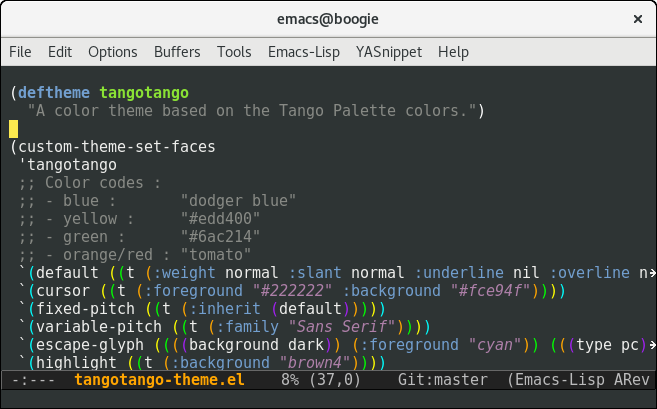
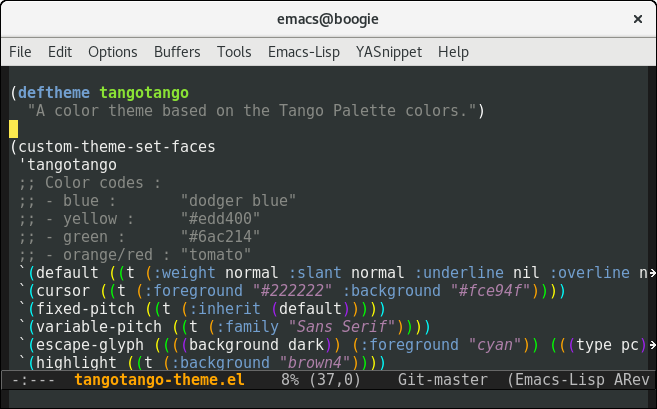
I'm a big fan of the tangotango Emacs theme: https://github.com/juba/color-theme-tangotango It now has matching fringe colours, for a cleaner look!
A library with more contributors is almost always better than a lib with fewer IME. More perspectives and a greater range of ideas.
Charles Babbage was 100 years ahead of his time. An ambitious project to build his Analytical Engine:

Monetising fame and followers on Instagram/Snapchat: https://www.bloomberg.com/features/2016-arsenictv-snapchat-influencer-economy/ (people sometimes working for exposure rather than money!)

@magit_emacs shouldn't "its user" be "its users"? https://magit.vc/donate/ Magit is very widely used IME :)
Impressive! Elm can detect if you're assuming truthiness semantics,& the type checker will make helpful suggestions:
Too few languages have increment/decrement in the global namespace. I'm only aware of elisp and Clojure. It's really handy and I miss it.
A neat Rust project that compares types of public fns/structs/traits to see if you need to do a major version bump!
Interesting defence of laziness-by-default. Has some neat examples where wrapping expressions in λ is insufficient!
On the challenges of building a P2P microblog system that still allows you to deal with trolls:
Applying any additional form of static analysis will find new bugs. Writing a new fuzzer is equally effective!
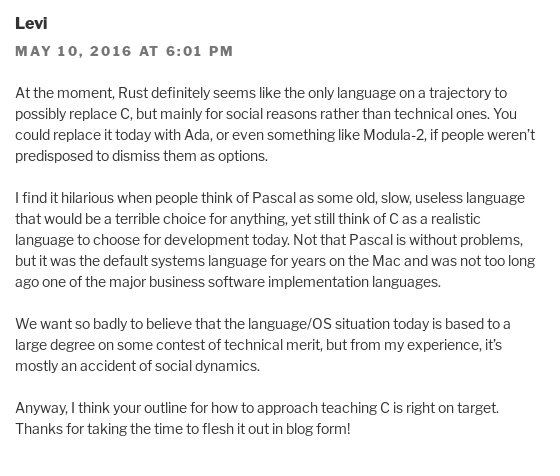
All to often, we choose programming languages based on social merit. Great commentary from
Do we associate syntax with semantics? Would you find ML syntax with dynamic types weird, or a lisp with Java-style var type declarations?
Elixir has a lovely syntax. It has great macro support without requiring parentheses.
Showing 3,331-3,345 of 7,654 posts