miniblog.
Sep 18, 2017
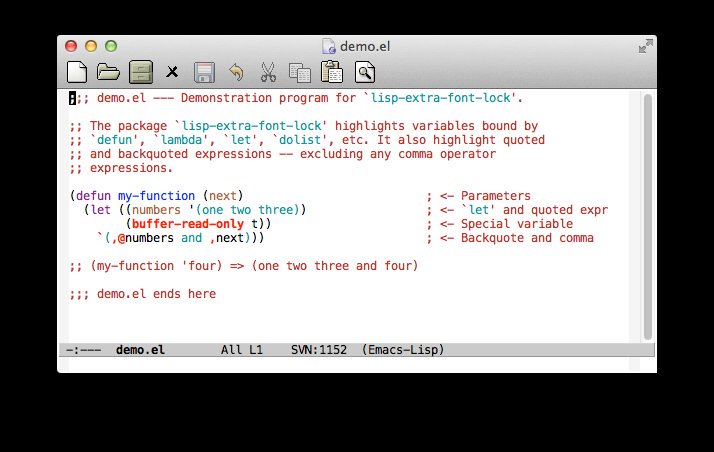
Highlighting parameters, let-bound vars and special variables differently in elisp!
GitHub - Lindydancer/lisp-extra-font-lock: Highlight bound variables and quoted expressions in lisp
Highlight bound variables and quoted expressions in lisp - Lindydancer/lisp-extra-font-lock
Sep 17, 2017
A tool that estimated review time needed would be really valuable. Spelling fix in docs: 1 min. Refactor major API: much longer.
Sep 16, 2017
50% of active Twitter users have <62 followers!
https://blog.revolutionanalytics.com/2013/12/the-distribution-of-twitter-follower-counts.html
(despite public-by-default, do users prefer a small intimate group?)
Sep 16, 2017
Useful reminder that VC-funded companies are great at building narratives, but aren't always the most innovative.
Are closed social networks inevitable?
X / ?
Sep 16, 2017
Cute project that turns any website into a 'native app':
https://github.com/jiahaog/nativefier
(is this a sign that tabbed browsers don't scale?)
GitHub - nativefier/nativefier: Make any web page a desktop application
Make any web page a desktop application. Contribute to nativefier/nativefier development by creating an account on GitHub.
Sep 16, 2017
Government agencies recommending against Tor:
https://netzpolitik.org/2017/secret-documents-reveal-german-foreign-spy-agency-bnd-attacks-the-anonymity-network-tor-and-advises-not-to-use-it/
(global passive monitoring makes onion-routing much weaker)
Secret documents: German foreign spy agency BND attacks the anonymity network Tor and advises not to use it
The German spy agency BND developed a system to monitor the Tor network and warned federal agencies that its anonymity is
Sep 15, 2017
PyPI packages with malicious install scripts!
https://www.nbu.gov.sk/skcsirt-sa-20170909-pypi/
(so few PLs have opt-in install scripts or run them in sandboxes)
Sep 15, 2017
I'm glad that 0567 as syntax for octal literals has fallen out of fashion in newer PLs. It's a footgun that catches out experienced devs.
Sep 15, 2017
Put gaps in a Purescript program and the compiler will suggest functions that could fill the hole!
24-days-of-purescript-2016/23.markdown at master · paf31/24-days-of-purescript-2016
24 Days of PureScript, 2016. Contribute to paf31/24-days-of-purescript-2016 development by creating an account on GitHub.
Sep 15, 2017
The new Pharo dev process: bootstrapping from a minimal (no compiler!) image, pull requests, and some excellent GItHub integrated tooling!
https://twitter.com/SergeStinckwich/status/907189116504297472
Sep 15, 2017
Interesting file watcher model: pscid shows errors as you edit, but only one error at a time to help iteration!
GitHub - kritzcreek/pscid: A lightweight, fast and unintrusive PureScript file-watcher
A lightweight, fast and unintrusive PureScript file-watcher - kritzcreek/pscid
Sep 14, 2017
I really like the convention of writing Lisp symbols as FOO or Erlang functions as foo/1. The lightweight syntax is great for prose or IMs.
Sep 14, 2017
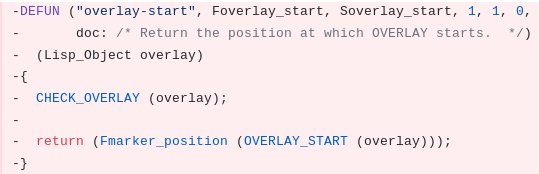
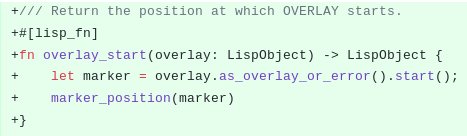
It's really interesting to see how idiomatic Rust code looks next to the venerable macro-heavy C code of Emacs.
port some functions by brotzeit · Pull Request #298 · remacs/remacs
X / ?
Sep 14, 2017
Amazing fast JSON parser in Rust that uses SIMD and avoids tokenisation!
GitHub - pikkr/pikkr: JSON parser which picks up values directly without performing tokenization in Rust
JSON parser which picks up values directly without performing tokenization in Rust - pikkr/pikkr
Sep 14, 2017
Pattern matching is so powerful that Elixir's docs introduce it before conditionals!
https://elixir-lang.org/getting-started/pattern-matching.html
1
...
223
224
225
226
227
...
511
Showing 3,361-3,375 of 7,654 posts