Implementing interactive languages, and the tradeoffs of interpreters, JIT compilers, and AOT compilers:
miniblog.
I've released difftastic 0.51! In this release:
* Prebuilt binaries for ARM64 macOS (i.e. M1 and M2 macs), ARM64 Linux, and Linux on musl (for older distros)!
* JSON output: an unstable feature allowing machine consumption of output!
* Bash, Python and Rust parser improvements
You know a software project has achieved popularity when people are using it on platforms other than Windows/Mac/Linux!
For example, I noticed that the cc crate recently had fixes for AIX.
I'm trying out Podman as an alternative to Docker, and it seems pretty nice. I like the separation of tools (e.g. running containers is separate from building images), and there's less hassle with user privileges. It even supports the same images!
The Docker daemon is really convenient for deployment though. It's less work than writing a systemd configuration.
I'm trying out Podman as an alternative to Docker, and it seems pretty nice. I like the separation of tools (e.g. running containers is separate from building images), and there's less hassle with user privileges. It even supports the same images!
TIL about Giscus, an alternative to utterances for GitHub-based blog comments that supports reactions and GitHub discussions:
Be careful evaluating code from LLM based tools, as there are several avenues for malicious users to inject output:
I've released difftastic 0.50!
In this release:
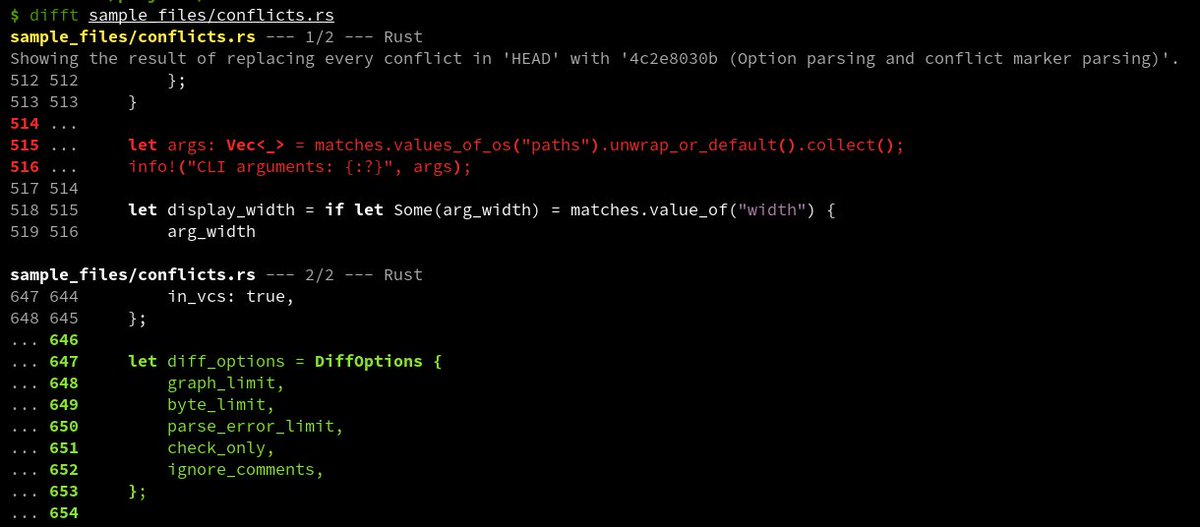
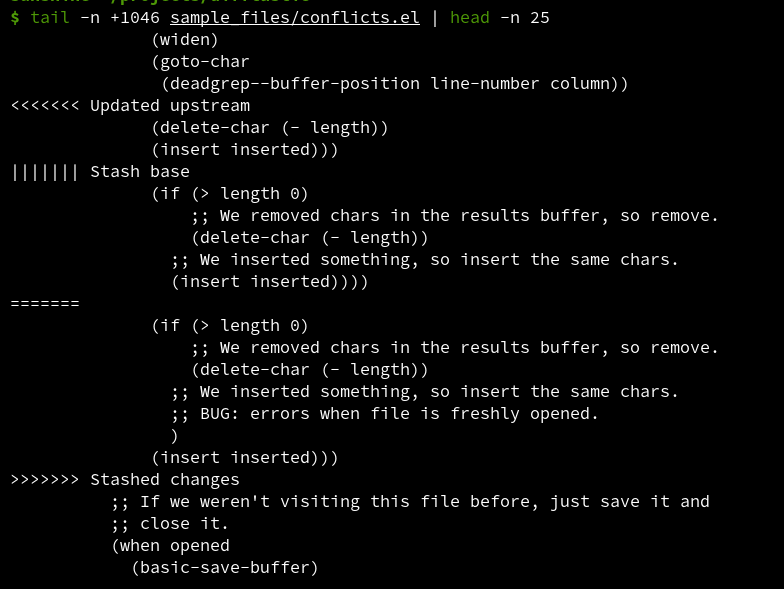
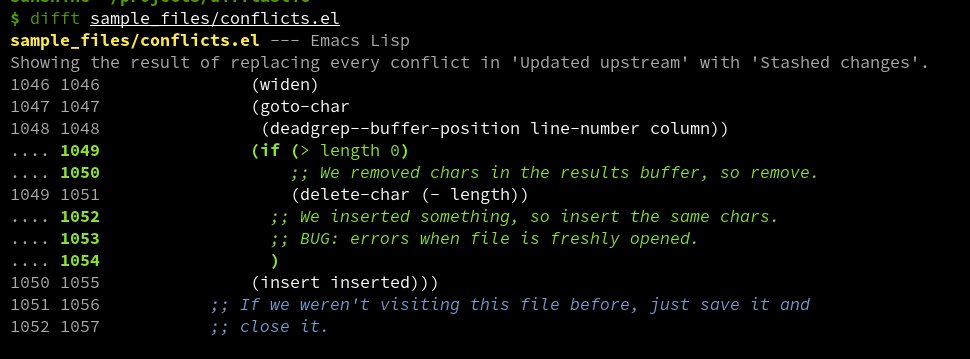
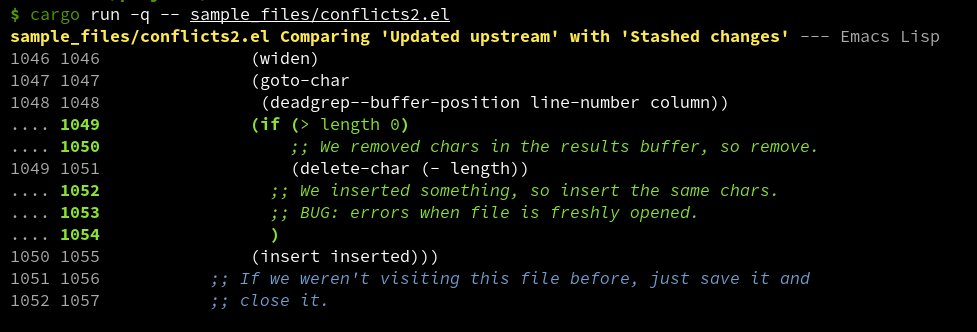
* Merge conflicts! Difftastic now understands <<<<<<< syntax and shows a syntactic diff of the underlying files.
* Updated parsers for Elixir, Erlang, Go, Kotlin and Racket
* Various styling quality-of-life improvements
It's really nice having build metadata in your binary (commit date, build date), but it's nice having a reproducible build from a tarball too.
I'm not sure what the best approach is.
@aburka Thanks for the feedback!
Definitely agreed on ours vs theirs, it's really confusing. Unfortunately I'm limited to how the sides are named in the file.
I like the diff3 conflictStyle in git, as it shows the base as well as both sides. I can't guarantee that the base is visible though, and it gives me three files to diff rather than two. Not sure about this case yet.
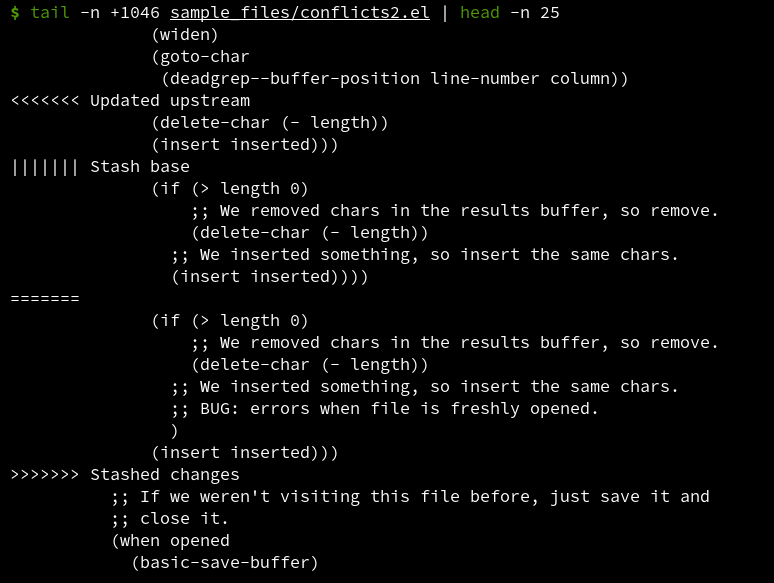
I'm experimenting with <<<<<<< merge conflict markers in difftastic: recreate the conflicting files and then diff them.
What do you think? Merge conflicts are confusing even at the best of times, but maybe difftastic's UI can help a little.
Running a package manager host for a popular language is really expensive. TIL that Python costs several million dollars per year!
> The display of long lines has been optimized, and Emacs should no longer choke when a buffer on display contains long lines.
Emacs 29 was recently released, and this alone is a great reason to upgrade!

I've created my first standalone Rust library! line-numbers is a simple project for finding line numbers of string offsets, efficiently: https://crates.io/crates/line-numbers
It's factored out of difftastic as it's something I want to reuse elsewhere.
I admire that Chromebooks have an explicit date when they stop receiving security updates. Many devices aren't so clear, so we can't have useful discussions like this:

Showing 436-450 of 7,652 posts