Emacs tip: Learn edebug. `C-u C-M-x' to mark a function for debugging, `<SPC>' to step through, and `I' to mark called functions for edebug.
miniblog.
By the same author, a great article on treading the line between sexps (macros!) and infix syntax (maths!)

Pragmatic, candid account of creating a new programming language:
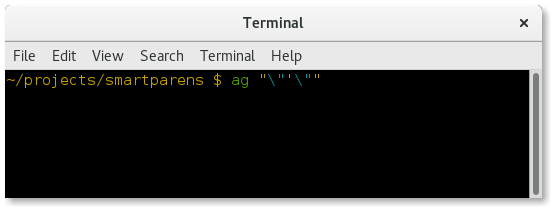
zsh-syntax-highlighting makes CLI regexps much easier to use: https://github.com/zsh-users/zsh-syntax-highlighting (another great idea from fish)
'Lint' has become overloaded. Does it mean 'find style violations' or 'find bugs'? (IME style formatting tools work better than nag tools)
"Consider using instrs.iter().enumerate().skip(index + 1)". rust-clippy's suggestions for equivalent code are so good they're magical.
Font renders are complex beasts with unsafe code. Since hardening code is hard, browsers use font sanitisers!
Why do profit-seeking companies keep making profitless Android phones? https://www.theverge.com/2016/2/3/10894200/android-smartphone-oem-profit (selling services,brand promotion apparently)

On WebKit Security Updates https://blogs.gnome.org/mcatanzaro/2016/02/01/on-webkit-security-updates/ (browsers have a huge attack surface, release early and often!)
https://www.unfitbits.com/ is a website entirely devoted to gaming fitbits! It was probably inevitable given the reward systems available.
Why is Babel a monorepo? https://github.com/babel/babel/blob/master/doc/design/monorepo.md (makes sense in the highly modular JS world, still a long way from a Google-style monorepo)
Given the popularity of zero-based indexing in programming, shouldn't we call the first release v0?
Fantastic blog post demonstrating how to write your own clang analysis: https://ehsanakhgari.org/blog/2015-12-07/c-static-analysis-using-clang#comment-3494 (compilers are great for nonlocal reasoning)
TIL about the remarkable FRACTRAN. It's a crazy Turing-complete language that just compares numbers with fractions:

Showing 4,846-4,860 of 7,653 posts