Blogged: Difftastic, the Fantastic Diff
miniblog.
On building great engineering teams with UX empathy, and the role of product managers on engineering-led teams.
Today I learnt that Scheme (1975) is actually older than Common Lisp (1984)! I'd assumed that Scheme designs were a response to CL.
Many of the CL features were created earlier, in fairness. CL was standardising the feature set.
As Rust grows in popularity as a systems language, I expect that someone will develop a dynamic language explicitly designed with great interop in mind.
C++ games seem to use Lua for this, and I've seen Java projects use Groovy.
Are there any up-and-coming contenders for Rust?
I like Discord's model of usernames, where I can be wilfred#12345 even if other people have the same name.
Perhaps package managers could do the same thing? It'd save the hassle with name collisions that many systems have. You could also compare download numbers if unsure.
I'm beginning to suspect that the act of writing a blogging engine is just to trick yourself into writing a few blog posts.
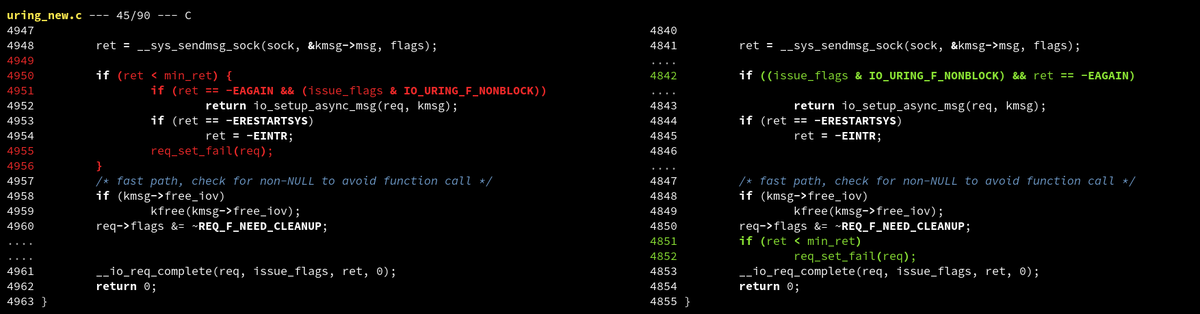
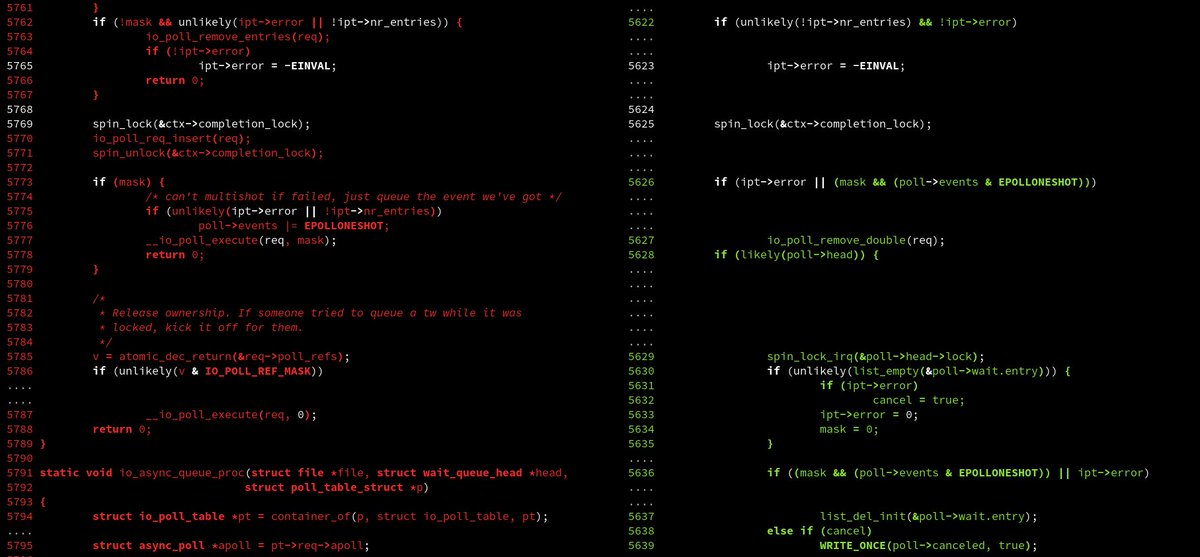
Difftastic works really hard to find similarities between the before and after file. Sometimes this works wonderfully (see first screenshot) and sometimes it goes way too far (see second screenshot).
It's matched up a few variables and semicolons from adjacent functions!
On writing small, personal apps:

I've released difftastic 0.35! In this release:
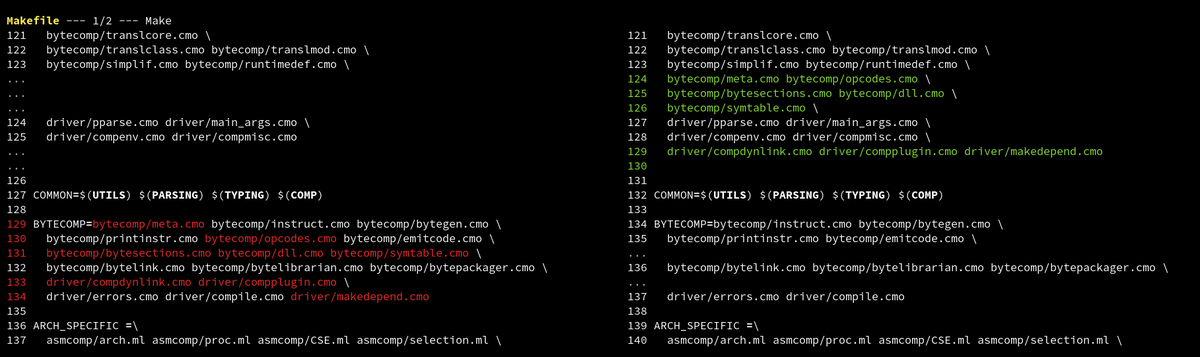
* Basic support for Makefile syntax
* Support for UTF-16 files (helpful on Windows)
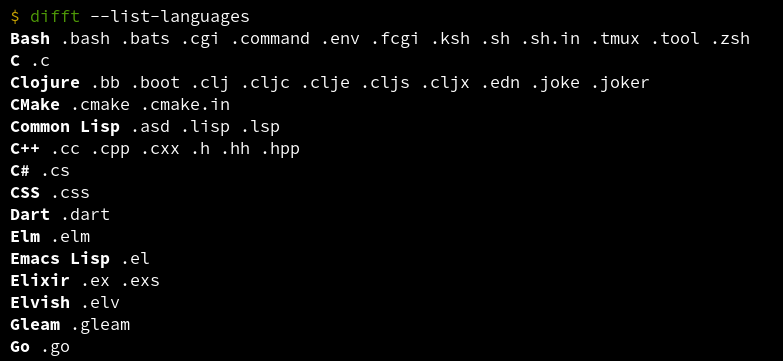
* Several quality of life improvements, including the ability to see what languages are currently supported

Today I learnt that you can simulate a command being run in a TTY with `script`, e.g.
$ script --return --quiet --command "ls"
Unfortunately it generates output files called "typescript", which is a little confusing!
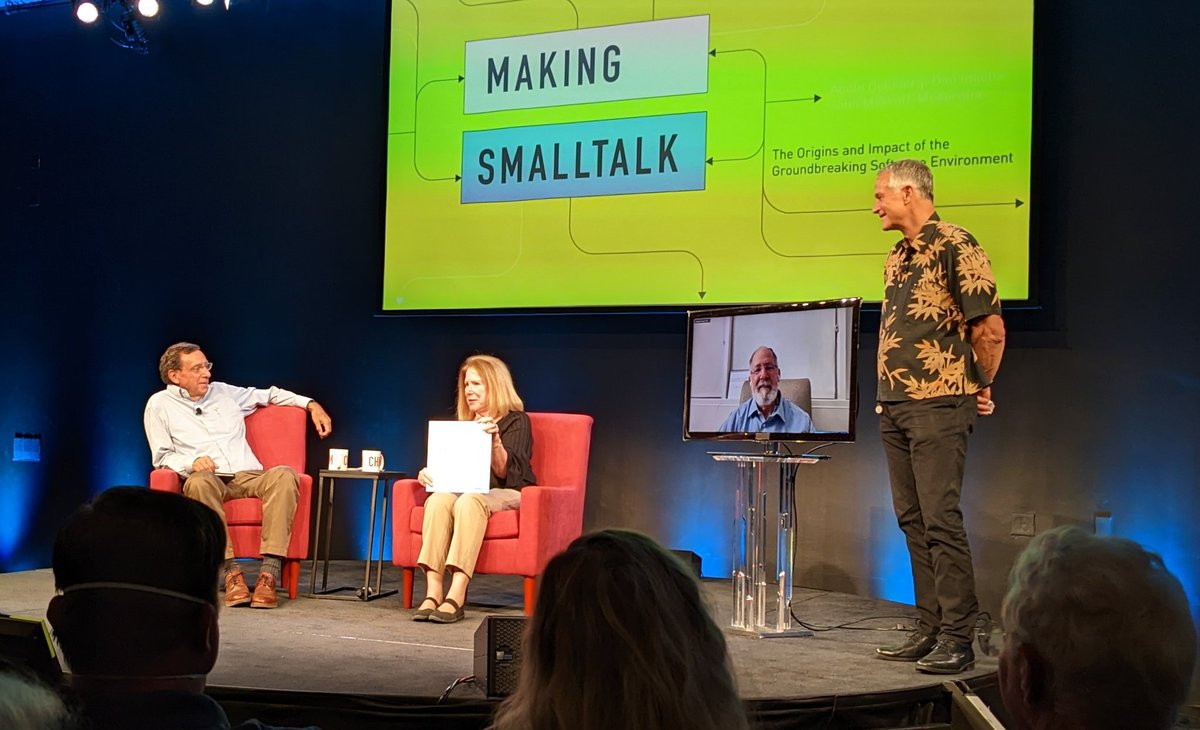
I had the pleasure of attending the Making Smalltalk event at the @ComputerHistory today!
Adele Goldberg and Dan Ingalls were there, plus some videos from Alan Kay. "One of the tests of a programming language: can you write a debugger in it?"
@janriemer@mastodon.technology That's a valid use of dbg! as far as I can see, what's stopping you doing that?
One interesting feature of Rust: it has both print and dbg, so you don't need to use print for debugging very often. I don't even use print that often.
Given the number of game companies that have re-released old games by bundling an OSS emulator, perhaps it's only a matter of time before Microsoft includes Wine in something!
Apparently eBay decided to change their background colour gradually, to avoid user backlash! https://kulor.medium.com/how-ebay-secretly-changed-their-background-colour-from-yellow-to-white-ffd9718e7bb
Showing 766-780 of 7,652 posts