OpenBSD is introducing some neat ways of marking sensitive memory so you don't accidentally expose data in a core dump:
miniblog.
Croquet was a 3D world written in Smalltalk. There's a promo video here: https://www.youtube.com/watch?v=mOZPW8l85eI
It's very exploratory, but the demos of a spreadsheet(!) with the 3D graphing and a live video avatar are really cute.
I've got into the habit of creating a directory for .zip files before decompressing them. I don't bother for tarballs.
The funny thing is that both can decompress to multiple files! It just seems much more common for .zip files to be untidy in this fashion.
Today I learnt you can estimate the age of a machine by looking at SMART data!
$ smartctl -a /dev/sda
9 Power_On_Hours Old_age 9335 (92 144 0)
12 Power_Cycle_Count Old_age 3900
I bought my ThinkPad second hand and it's had an amazing number of boots.
Ridiculous, brilliant and absurd: dynamically generating a keyboard layout based on the most common letters that you're typing right now!
I'm amazed at how seasonal iPhone sales are: according to the data in this article, a large percentage of iPhones are bought around Christmas! https://stratechery.com/2019/apples-audacity/
In a website that executes a unix program for you, would you expect stdout and stderr shown interleaved or separate?
(I suppose you could store an ordered series of labelled chunks to allow the user to see either, but that's significant impl complexity for unclear gain.)
Zero width spaces to enable the use of plurals in hashtags: https://twivorite.com/
Apple is building its own single sign-on service, and it will require apps to use it: https://techcrunch.com/2019/06/03/apple-sign-in-privacy/
Apple will start treating iPads differently to iPhones (rather than iOS on both) so apps can target iPad traits more effectively:

Bee Smalltalk is an impressive self-hosting Smalltalk implementation! https://esug.org/data/ESUG2014/IWST/Papers/iwst2014_Design and implementation of Bee Smalltalk Runtime.pdf
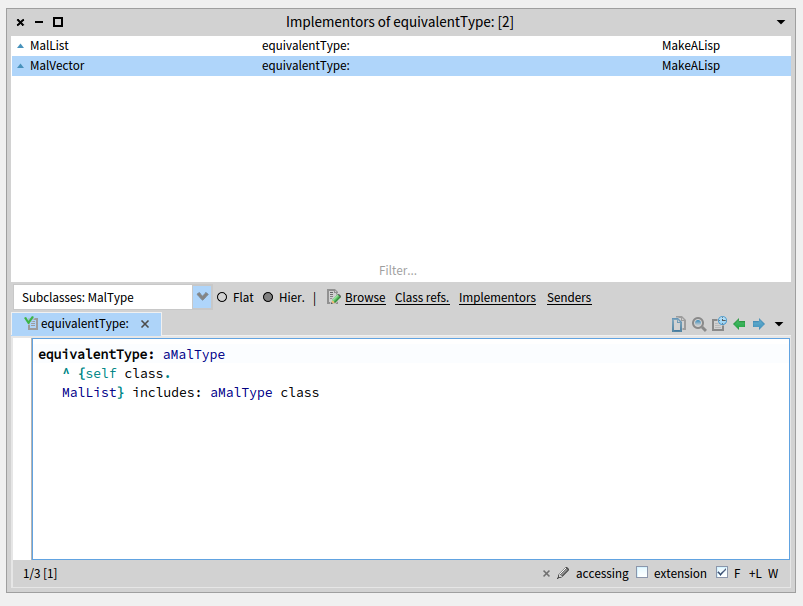
A cute Pharo IDE feature that I miss on other editors: you can view all the subclasses that implement a method, and edit them from inside that search UI! It's a lovely way to refactor.
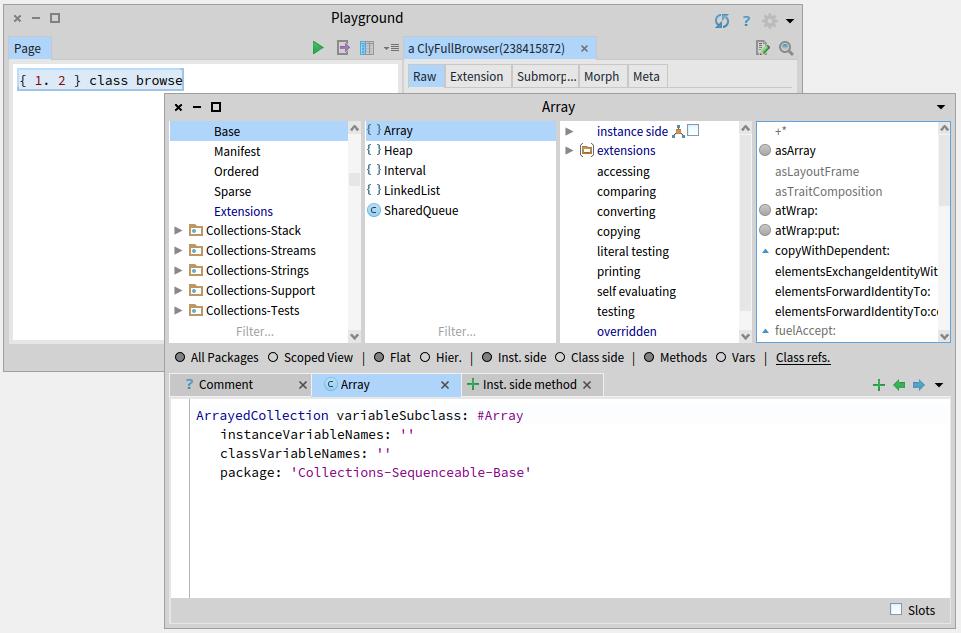
Pharo doesn't distinguish between the IDE and the running program you're developing. This enables fun features, like opening a class editor from a value in a REPL.
(In this picture I'm learning about the class you get from array literals.)
Applying machine learning to paywalls, only opening content if your signals suggest the user might subscribe!
Showing 391-405 of 736 posts