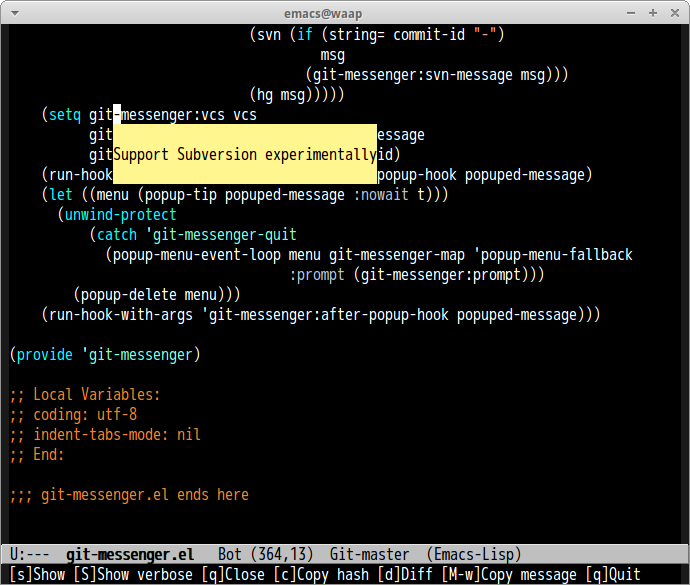
Neat Emacs package of the day: git-messenger: https://github.com/syohex/emacs-git-messenger
It's a popup for git blame on the current line. Feels much lighter weight than displaying blame information on the whole file.
I'm regularly impressed by just how good Google Translate is.
I wonder if we'll reach a point where translation tools replace foreign language dictionaries for language learners? A dictionary might say a word has 5 meanings, but a translation tool can consider the context.
There's a threshold where it's just easier to write a patch than to file a bug. It's more likely to result in a fix, but it can be more labour intensive.
I don't know where the line is. It seems to depend on the community's interest in patches, and whether you have commit privs.
I'm not a text supremacist. I've seen fabulous GUIs for inspecting data (database explorers, morphic halos, browser tools). WYSIWYG has a ton of advantages.
Yet I can't find a rich text UI I prefer over writing markdown directly. It's less surprising.
Here's a neat GitHub feature that I haven't noticed before: if you hover over Contributors, it shows you profile pictures of major contributors!
This picture is from https://github.com/github/semantic.
Reminds me of JS projects that generate READMEs with this visualisation.
A lightweight anonymous function syntax seems to reduce the need for metaprogramming.
I've written custom loop constructs with lisp macros, but Smalltalk seems to do just fine with blocks and method calls.
Cryptocurrencies are one of the few places where white papers are celebrated. Sometimes it's just a tickbox exercise, but it does encourage thorough, up-front discussions of design.
A wonderful property of link aggregators is that they don't limit themselves to current affairs.
For example, HN regularly links to content that wasn't published this year (with a label to show the content is older).
It's too easy to largely consume content that's very new.
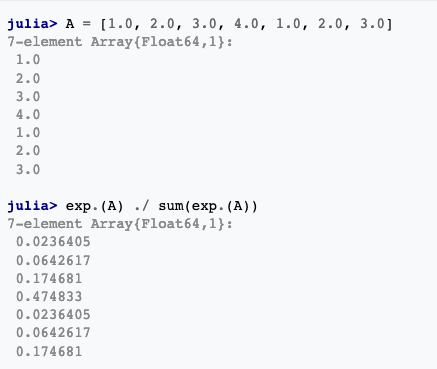
Julia syntax is lovely: I really like how you can add a . to make it distribute over an array.
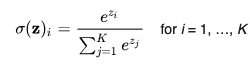
Looking at https://en.wikipedia.org/wiki/Softmax_function, compare the raw formula with the Julia syntax.