Gatsby is a static site generator that uses GraphQL heavily to fetch data.
It has some really neat reflective features built on top. Wondering which pages are generated? You can query the GraphQL interface!
miniblog.
Shower thought: if you have a code formatter, you don't need to ever insert newlines yourself.
You could repurpose the enter key for something else entirely!
What would you use this large key for? My first idea is go-to-definition.
The new version of Android will lock down storage APIs, making external SD cards much less useful: https://commonsware.com/blog/2019/03/28/death-external-storage-why.html
(Increases security, makes Google Drive more compelling, potentially helps enterprises and integrations.)
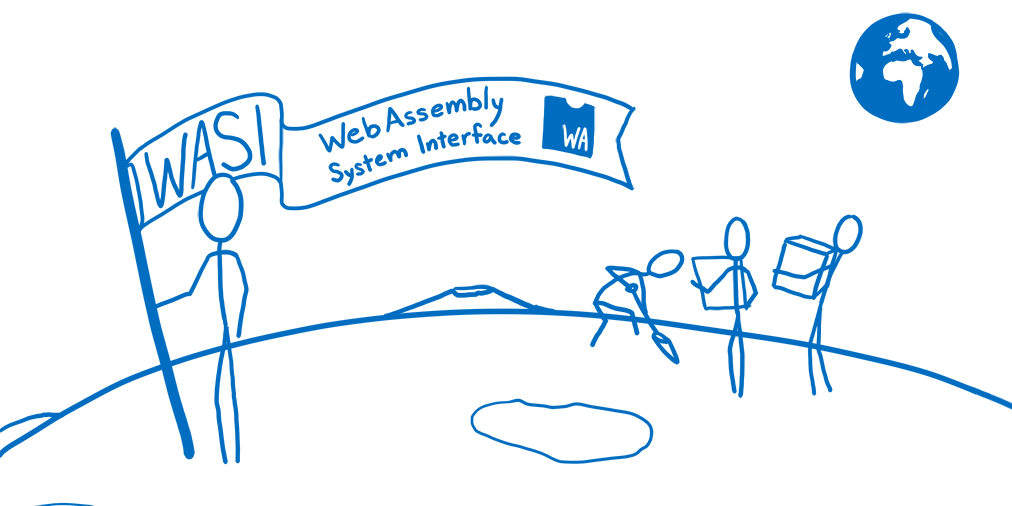
WASI is developing a portable, sandboxed system API so you can run WebAssembly outside of a browser: https://hacks.mozilla.org/2019/03/standardizing-wasi-a-webassembly-system-interface/
WebAssembly has a ton of people doing interesting things, but I do feel there's some overlap with what the JVM planned to do.
I knew that Haskell has an unconventional meaning for return, but today I learnt that return in Scala means something else too!
https://tpolecat.github.io/2014/05/09/return.html
It's a non-local return, so it returns from the *caller*! Wild.
Seems handy for Ruby/Smalltalk style blocks though.
I get significantly more conversations on Mastodon than Twitter, and they tend be more interesting too.
That's in spite of the smaller number of people that see my microblogs/posts here.
It's nice: there's a distinct community here, and they're worth connecting with 😊
On the perils of storing data in UTC:
https://codeblog.jonskeet.uk/2019/03/27/storing-utc-is-not-a-silver-bullet/
(Users expect future events to happen at the time specified, even if the timezone changes its policy on summer time transitions!)
MIPS is going to be open source, competing with RISC-V!
https://www.eetimes.com/document.asp?doc_id=1334087
https://www.eetimes.com/document.asp?doc_id=1334317
A really nice proposal to make NullPointerException in Java include a helpful message: https://openjdk.java.net/jeps/8220715
E.g.
'https://t.co/5UTXCp1Wmd_b.to_c'; is null. Can not read field 'to_d'.
AMP for email will make it possible to send interactive emails: https://techcrunch.com/2019/03/26/google-makes-emails-more-dynamic-with-amp-for-email/
Regardless of the feature set, it'll interesting to see if it gains much adoption. Rolling out changes to a distributed system is very hard (cf IRC).

I've realised that I have a much better understanding of the semantics of languages that are value oriented. You avoid murky questions like this:
try:
raise Exception('')
except:
return 1
finally:
return 2
There's no 'right' answer here when choosing how a PL should work.
Really impressive result: using generative adverserial networks to increase the resolution of videos!
Abstract: https://ge.in.tum.de/publications/2019-tecogan-chu/
Video: https://www.youtube.com/watch?v=pZXFXtfd-Ak
I'm playing with GatsbyJS today. It's a really interesting design approach: it's a static site generator, but it uses a GraphQL server during development so you can pull data from lots of different sources.
Blogged: The Siren Song of Little Languages
Showing 541-555 of 736 posts