jsx-info https://www.npmjs.com/package/jsx-info is a really neat project that will report how much a property is used on JSX components.
It's a really nice generalisation of dead code analysis: which properties are used the most?
miniblog.
IPFS is a really nice distributed filesystem that is slowly growing in popularity. Netflix has found a good use case: container image distribution.
https://containerjournal.com/topics/container-management/ipfs-emerges-as-tool-to-distribute-container-image
I'm slightly reminded of Usenet: just download content from the nearest server!

The total amount of data from the first spacecraft to perform a Mars flyby was ~600KiB: https://en.wikipedia.org/wiki/Mariner_4#Results
That's tiny, but for interplanetary data transfer in the 1960s it's really impressive.

Discord has a neat login technique I haven't seen before.
If you open the native client, it checks to see if you've already logged in from the browser! If you have, you don't need to re-enter your password.
Trace which code paths in trunk are covered in each test, then only run relevant tests on pull requests!
https://engineering.shopify.com/blogs/engineering/spark-joy-by-running-fewer-tests
A neat approach from Spotify, and it does the right thing 99% of the time.

I feel like pagination is an unsolved problem on online stores. How many items per page should you show? Should you allow Show All? Should you implement infinite scroll?
There doesn't seem to consensus around design best practices.
"Apple could [..] deeply integrate the operating system and the design of the chip itself to [..] bring new features and capabilities to market."
https://stratechery.com/2020/apple-arm-and-intel/
Are there real benefits of a bespoke CPU+OS combo? I'm struggling to imagine concrete things it enables.
Impressive ML research building a coloured 3D model from a single photo of an outfit!
https://shunsukesaito.github.io/PIFu/
ML still seems to be making major strides. I'm not sure if this means technique breakthroughs, or if we're just fine-tuning established techniques.

The vast majority of 'external brain' systems seem to based on hyperlinked text. This seems to be true for exocortex, memex or zettelcasten inspired designs.
This is great for reading, but you can't do DB queries to answer questions. What would a 'semantic web' design look like?
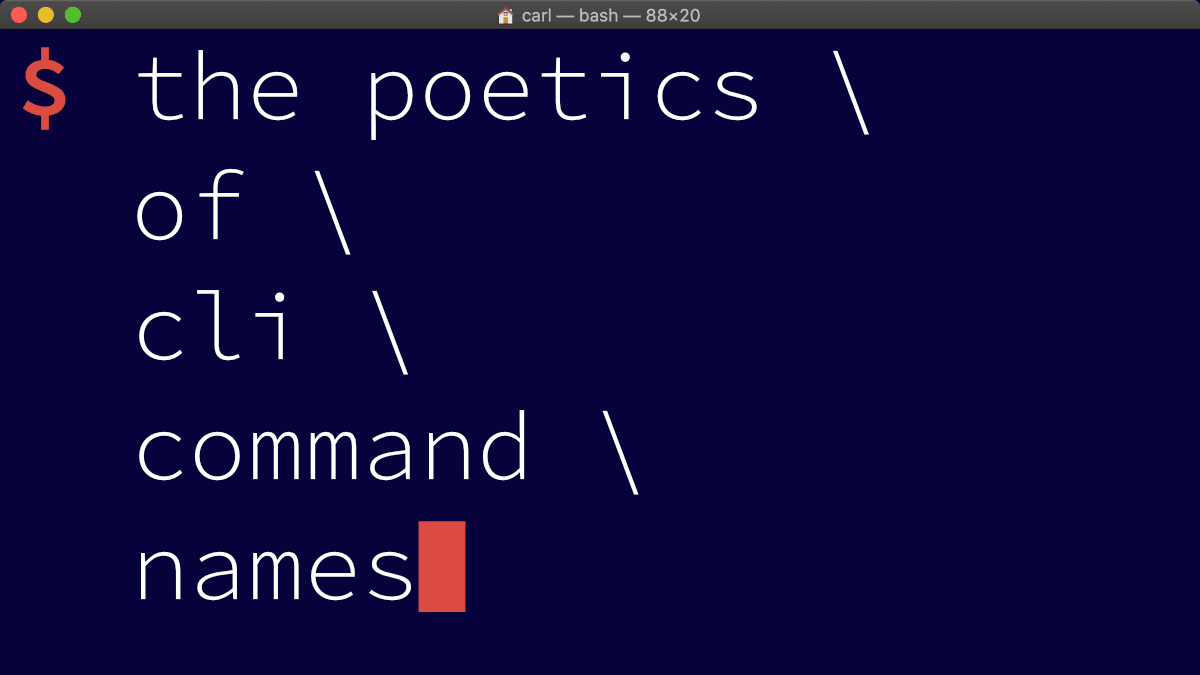
Cute discussion of good and bad CLI naming schemes:
Does usability research suffer from historical bias?
I've seen papers suggest that old-fashioned buttons with a bezel are better than the modern flat style. That seems reasonable, but I wonder if the effect would be smaller if early GUIs were flat.
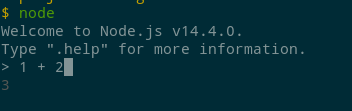
Cute feature I hadn't previously noticed in node: it will evaluate pure expressions before you've even pressed enter!
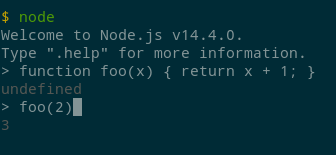
Looks like this even works for functions that it can recognise as having no side effects.
I find mobile-first development easier. Every time I design a UI for a desktop first, it's slightly broken on mobile. It's easier to scale up than down.
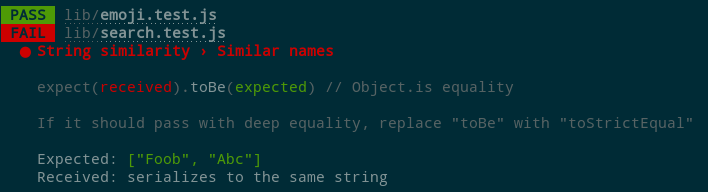
Jest has this wonderful feature where it suggests other equality checks you might want to consider if your test fails. It's super helpful and a really nice touch.
Interesting discussion on globs vs regexps for package configuration: https://github.com/facebook/jest/issues/7185
Is it true that all globs can be expressed as regexps? I can imagine there might be some cute tricks that can't be converted.
(I definitely find globs easier to read though!)
Showing 211-225 of 378 posts