On teaching Haskell, and which parts of the semantics are tricky for newcomers: https://ciobaca.substack.com/p/pedagogical-downsides-of-haskell
miniblog.
It's funny how webkit-based browsers account an increasingly large proportion of users, but there's no similar trend in JS engines.
The JS implementation space seems to be much more diverse, at least in browsers.
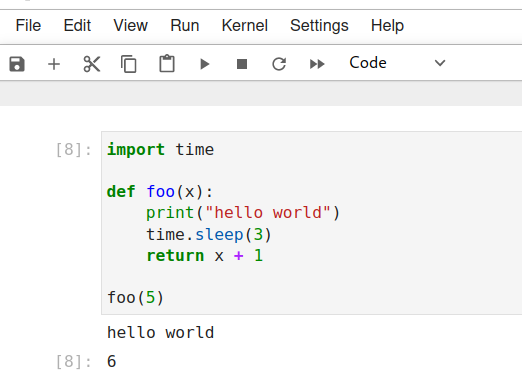
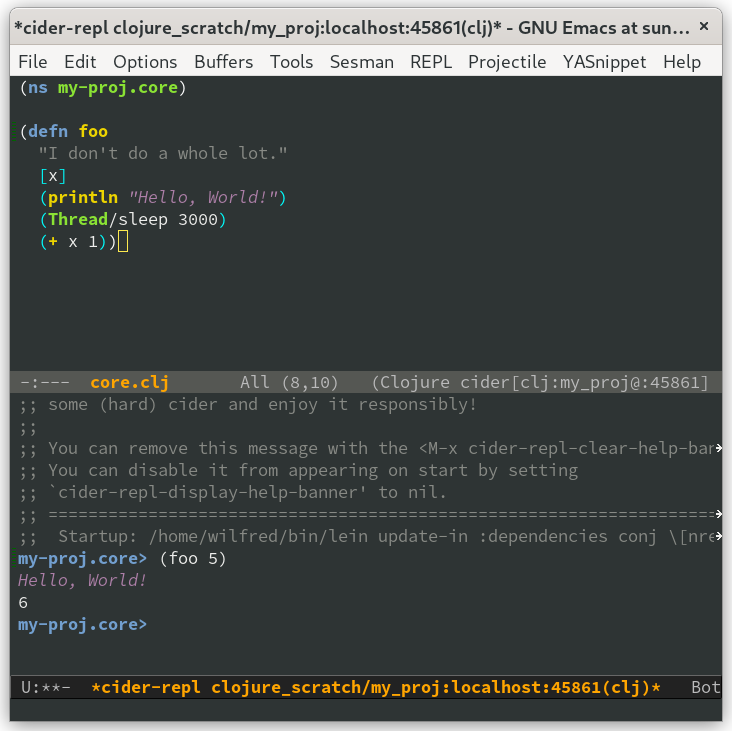
One interesting property of both stdin/stdout based REPLs and RPC based REPLs is that they need to support asynchronous events.
In both these programs, I don't need to wait until the function is done to see the output printed. It's not sufficient to read-eval-wait-print-loop.
On how far programming language research has come, and the maturity of tools and techniques that make more ambitious projects viable:
@sidawson@mastodon.nz My bio says "a healthy dose of Emacs", which is ambiguous as to how big 🙃
Rich Hickey compares REPL design with RPC style nREPL: https://groups.google.com/g/clojure-dev/c/Dl3Stw5iRVA/m/IHoVWiJz5UIJ
Rich considers the nesting ability to be important. If the user is interacting with stdout/stdin, they can enter arbitrary other text UIs.
A fun example of Emacs composability: run spell check when you're viewing files, so you can fix typos in file names:
It's weird how many languages represent tests as functions. They rarely take arguments and very rarely (never?) call other tests.
Is it the right abstraction?
One underrated feature of Go and Julia: methods are defined without extra indentation. In e.g. Java they're inside the the class at the next indentation level.
Methods are so common and indentation is a finite resource. "Top level method" syntax is surprising at first though.
TIL that the HDMI specification is not public, so it's hard to write OSS drivers:
An incredible 7 minute demo of APL, going from constructing an array to visualising Conway's Game Of Life, built incrementally without loops or temporary variables: https://www.youtube.com/watch?v=a9xAKttWgP4
I'm amazed to learn that there is now a marketplace for buying and selling good prompts to midjourney/ChatGPT etc!
You pay and you receive a prompt that generates good results. For example:
PYPL: PopularitY of Programming Language https://pypl.github.io/PYPL.html is a nice PL metrics tracker that's an alternative to TIOBE.
It has a clear methodology and it carefully chooses keywords to avoid e.g. Python metrics being affected by interest in snakes.
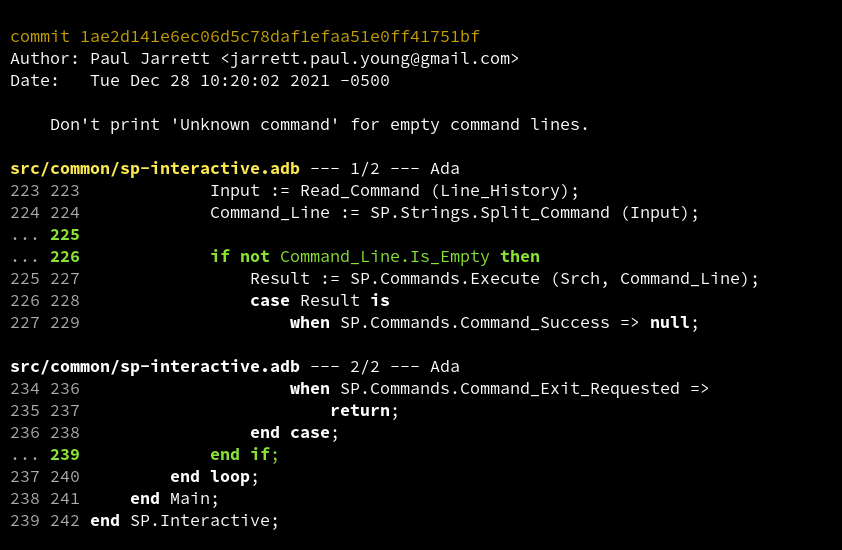
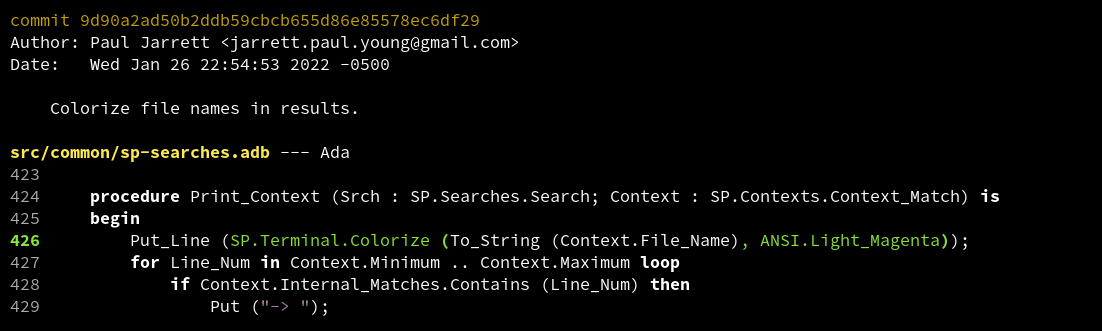
I've released difftastic 0.46! In this release:
* Ada support
* Support for Arduino C++, better TOML handling, and a ton of upstream grammar updates
* Fixed several nasty corner cases with trailing whitespace or binary/UTF-16 confusion
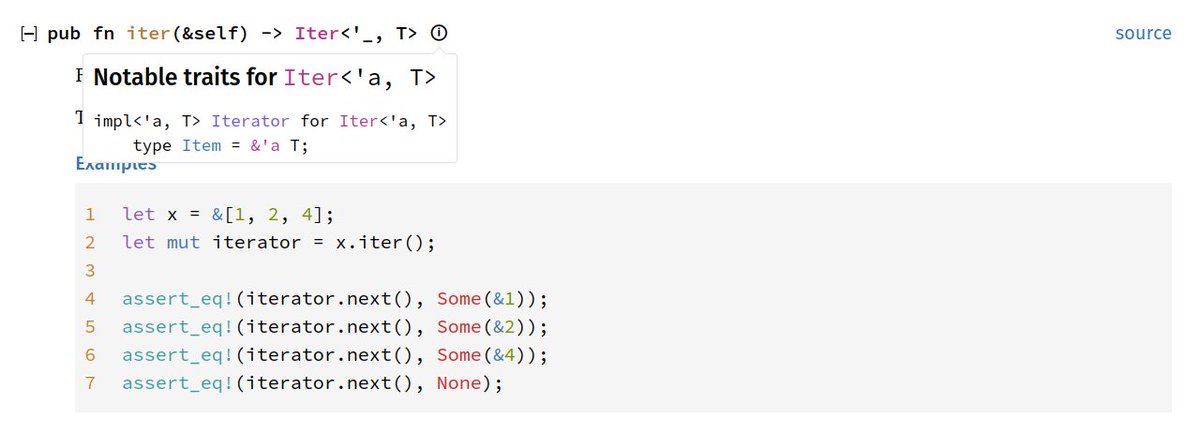
TIL that Rust has a (i) icon that shows relevant traits that a type implements. This is useful to understand that e.g. .iter() on a Vec<T> iterates with &T.
https://doc.rust-lang.org/std/vec/struct.Vec.html#method.iter
It looks like one of my bug reports was mentioned, so I'm delighted but wish I'd noticed earlier!
Showing 136-150 of 245 posts