I find zoxide invaluable for jumping between frequently used directories: https://github.com/ajeetdsouza/zoxide
TIL that you can also use it like cd!
$ z /foo/bar
$ z ..
miniblog.
Short and very accessible introduction to implementing unification, including Python sample code:
Python's GIL is well known, but many languages have limitations on multithreading (e.g. JS, Ocaml).
Perhaps this is a consequence of C as a popular implementation language? A GIL could be less common when Rust is the implementation language.
Wonderful article comparing error wording and display across many different programming languages:

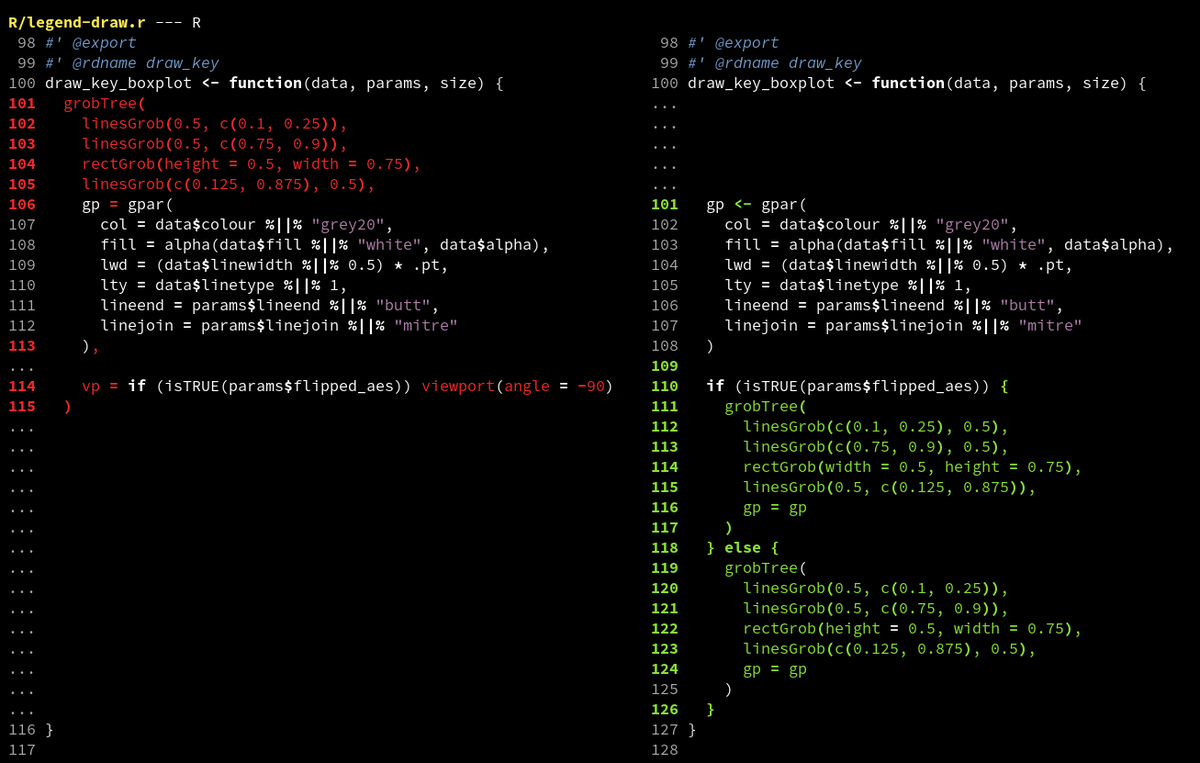
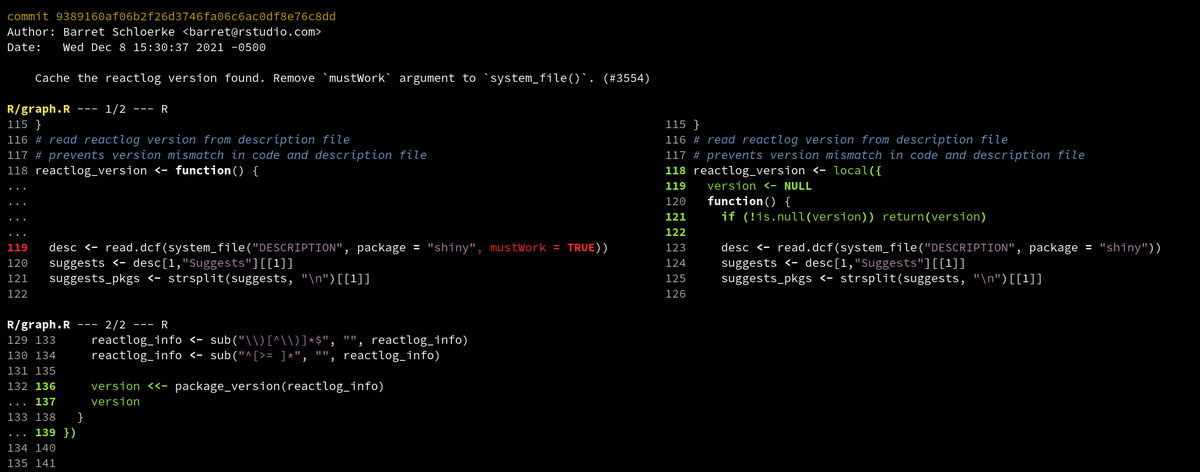
I've released difftastic 0.43! In this release:
* Support for R
* Better behaviour on Windows
* A bunch of display bugfixes

I'm dusting off a Rust project from 2016, and it's striking how much the ecosystem has grown. For example, I used getopts then whereas clap is delightful and does so much now.
I really like languages that store their runtime stack on the heap, such as Smalltalk.
You can write code as if you have tail call optimisation, but you still have normal stack traces for debugging.
Codeforces is a huge website with a wealth of well-defined programming problems: https://codeforces.com/help#q1
(Useful for program synthesis and other situations where you want a large problem set to play with.)

I don't have a favourite 'just an integer' type in Rust. I was writing a progress function for a Rust program that counts up to 20 input files.
u64 is sometimes fiddly, usize makes me think about indexing, and u32/u16/u8 make me think that something is performance sensitive.
Are there any languages that display stack traces really well? Do you have a favourite?
The trend for package managers seems to be increasingly installing packages locally, in the directory of the current project.
C: exclusively system packages
Python: system or 'virtual' (local) packages
JS, Rust: exclusively local packages
zsh is generally wonderful, and it's sufficiently like bash/POSIX sh that it works.
However, it uses 1-indexed arrays, whereas bash uses 0-indexed arrays. This totally caught me out.
It's a tragedy that ; and : are often on the same key on the keyboard, are often both legal syntax, and are so visually similar. I wonder how much programmer time has been wasted.
I'm adding R support for difftastic, and it seems to work pretty well!
> Converting to hexl format discards undo info; ok? (y or n)
I really admire how seriously Emacs looks after your undo state. Not enough software will warn you if you're about to discard undo information.
Showing 196-210 of 245 posts