Emacs for Vim users: https://www.youtube.com/watch?v=_y4OuHfxgmI
Great introductory video to Emacs principles, especially for those with a vim-ish background.
miniblog.
The surprisingly high likelihood of a kernel bug being due to cosmic rays! https://lwn.net/Articles/219983/
I don't understand the preference in ML family to use currying so enthusiastically.
Eg in the signature of a sort function, I prefer (a,a)->Ord as the comparator function signature, vs a->a->Ord. It's easier to distinguish inputs and outputs.
Are there upsides I'm missing?
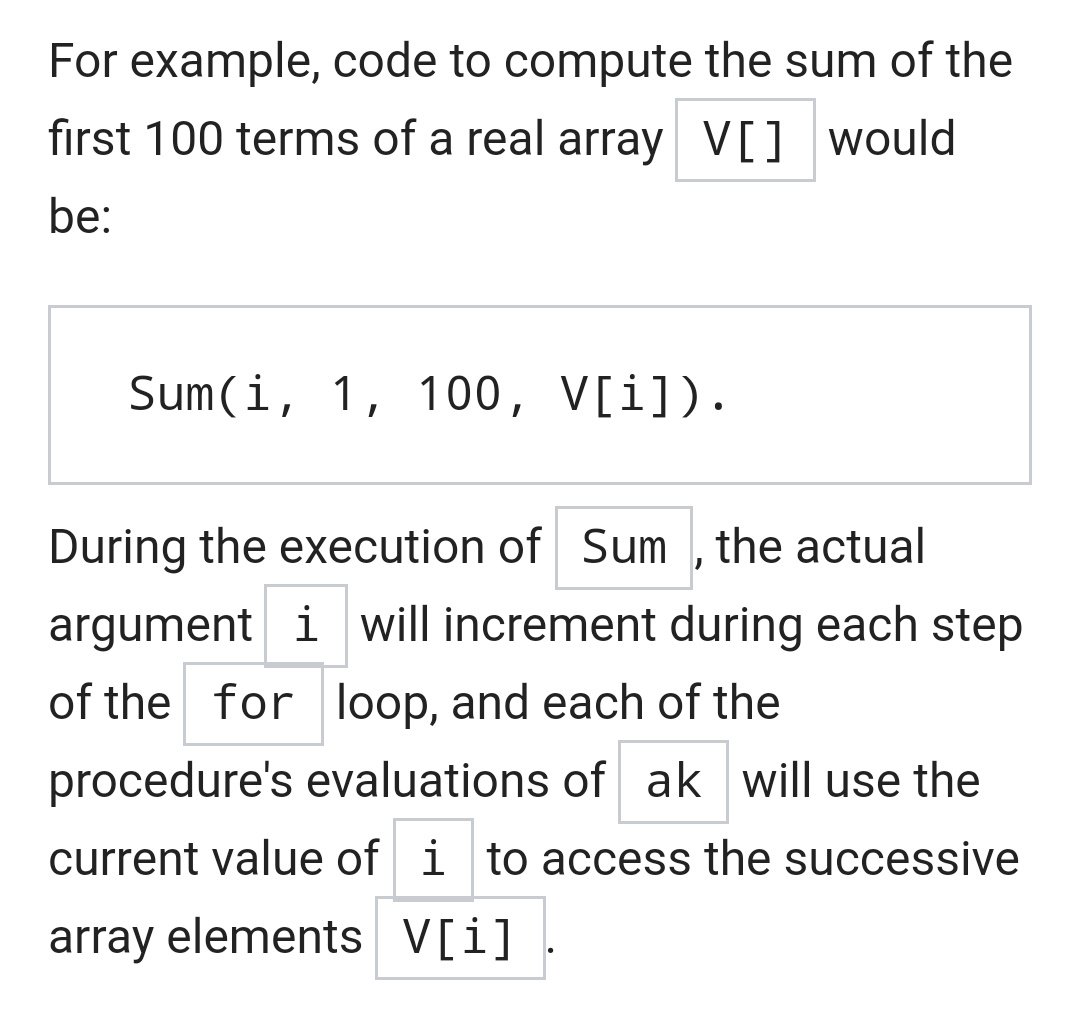
Jensen's Device is this fun (though slightly bananas) programming technique for call-by-name programming languages. Note how we're iterating over V[i] in this example!
I'm amused to learn that many MUSHes have a notion of in-game currency used to pay for compute: https://github.com/pennmush/pennmush/blob/master/game/txt/hlp/penntop.hlp#L794
This very much predates Ethereum or AWS Lambda pay-per-API call!
Emacs, or perhaps lisps in general, are a profoundly weird development experience. I've found a bug with byte compilation, so I'm stepping through the byte-compiler live in my current Emacs instance and amazingly everything works.
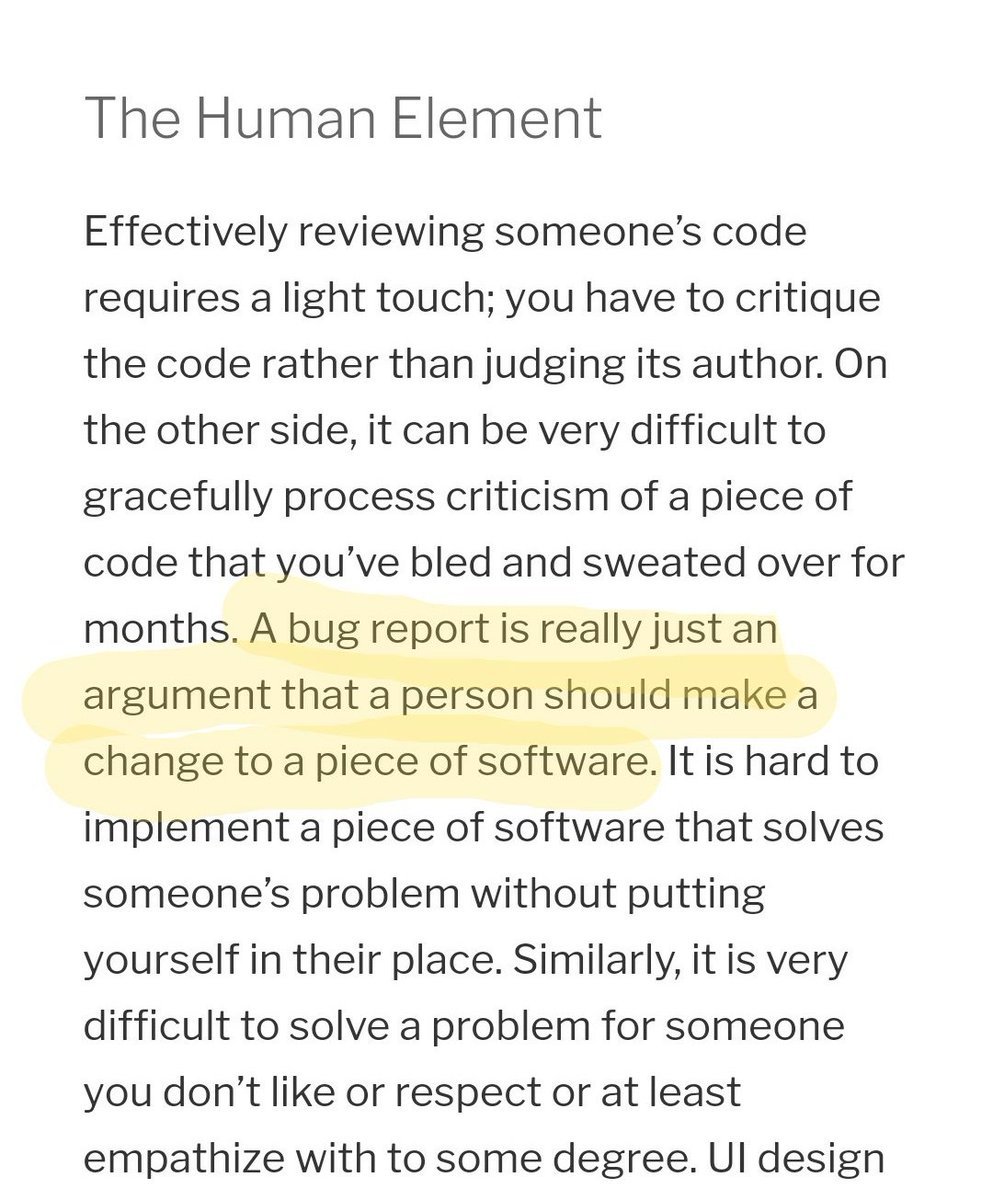
This is a great perspective: bug reports should be clear, with reproduction instructions, but they need to be persuasive too.
I'm fascinated to see Steve Losh demonstrating a 'gather' macro in Common Lisp, removing boilerplate for an accumulator: https://stevelosh.com/blog/2018/05/fun-with-macros-gathering/
Most use of yield in Python seems to be focused on gathering rather than lazy evaluation, but I never had a name for the concept!
We still generally expect web services to have both apps and websites that suit conventional PC form factors. Should we?
Lambda, the Ultimate Political Party: https://www.nhplace.com/kent/PS/Lambda.html
On the differences between languages, and what makes a PL a lisp. Community values and priorities, not just language features!
It's also fascinating to see that Stroustrup's Rule (see https://www.thefeedbackloop.xyz/stroustrups-rule-and-layering-over-time/) applies to text adventure UIs too.
Whilst they have a nice natural language syntax "go west", common commands quickly get abbreviated into something shorter.
Playing with LambdaMOO is an amazing time capsule into computing history. It really needs a good client (i.e. not just telnet in bash) but many clients have bitrotted severely.
I ended up using a basic Emacs client:

I am fascinated to learn about MUSHes, multiplayer games/discussion rooms which support the users collaboratively editing the code of the game! https://en.wikipedia.org/wiki/MUSH
The programming language used is lisp influenced: https://duh.com/discordia/mushman/man2x1
There's something odd about screenshots of text adventure games. You capture the experience, but pictures of text is just so frowned upon in developer circles.
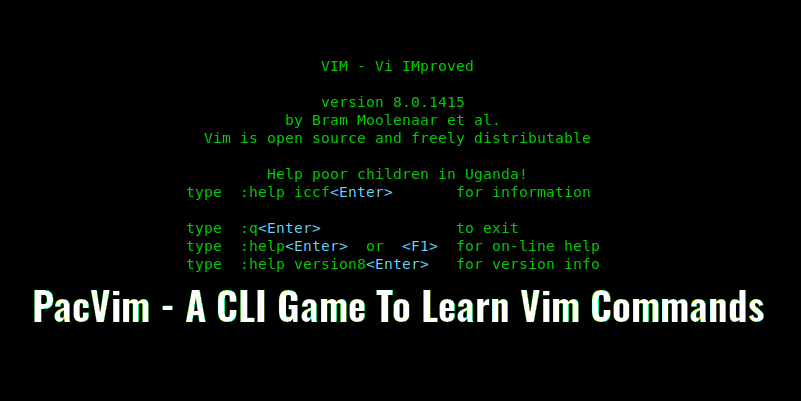
A vim-pacman mashup for learning key bindings!
Showing 2,911-2,925 of 7,654 posts