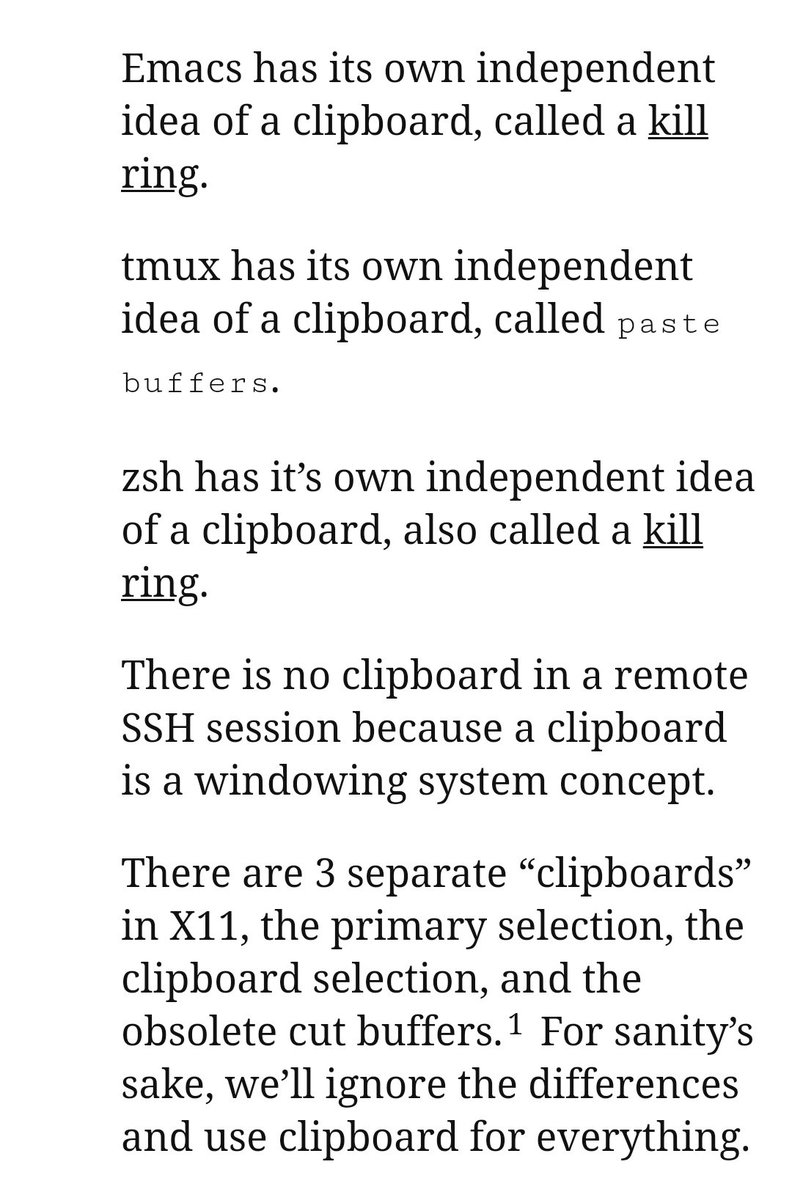
Wow, it's remarkable how many apps have their own option of a clipboard. It's a shame platforms don't offer a multiple entry clipboard by default.
From
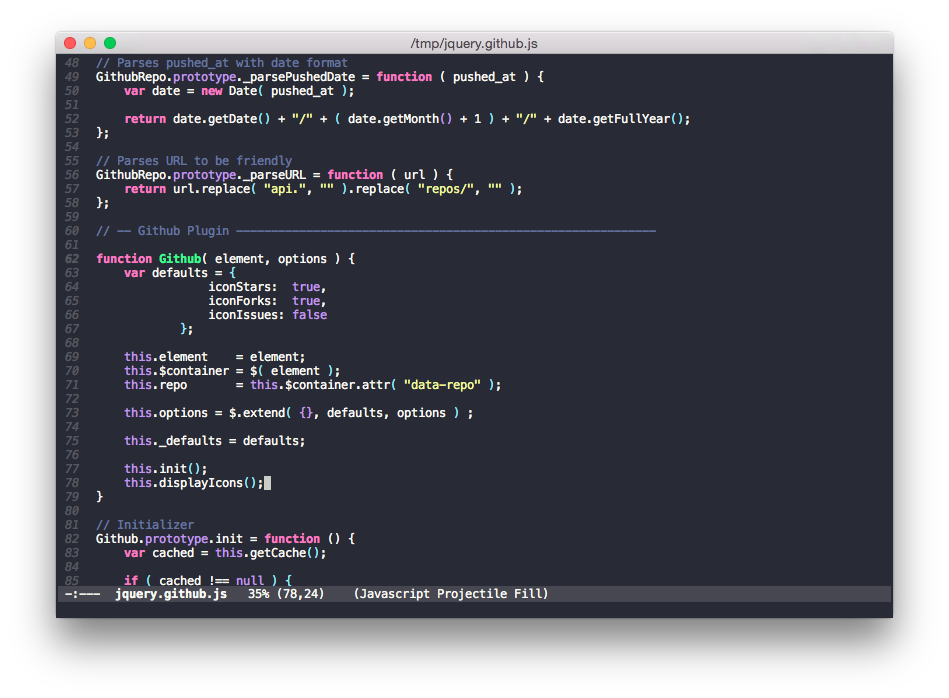
I'm very much enjoying the Emacs Dracula theme. It's pretty and has colours for a ton of different Emacs packages.
Oni is an interesting editor project I've not seen before. It pitches itself as "combining the best bits of NeoVim, Atom and VSCode"
https://www.onivim.io/ and looks pretty polished.
On making metrics actionable:
Medical trials in the US are required to publish their results, but many trials do not currently obey this requirement. Rather than only measuring it, a live tool encourages researchers to publish and see the results!
https://ebmdatalab.net/our-fdaaa-trialstracker-is-already-helping-to-get-new-trials-reported/An interesting commit in GNU Emacs: optimising the format command by allowing (format "%s" x) to just return x, saving a string allocation. This was already the place in some parts of elisp, but it's now documented and taken advantage of :)
https://github.com/emacs-mirror/emacs/commit/3db388b0bf83d3138562f09ce25fab8ba89bcc81Node.js 10: better errors, a new module system, and a stable ABI (independent of V8) for native modules!
https://levelup.gitconnected.com/whats-new-in-node-10-ad360ae55ee4Why do so many blogging platforms require commenters to provide an email address? I don't think I've ever received an email as a result of a comment I've made.
The assumptions C/C++ compilers make, and an argument in favour of giving the compiler more flexibility regarding struct layout and padding.
(I believe Rust gives the compiler more freedom for structs that don't cross an FFI boundary.)
https://twitter.com/shafikyaghmour/status/991370524008759296Superb article on type systems, open vs closed world soundness, and type systems intentionally not offering soundness:
Interesting article on research progress on the Unique Games Conjecture and its ramifications for solving programs with constraints:
Exploring a MIPS CPU that isn't RISC and even uses variable length instructions:
https://www.eejournal.com/article/mips-i7200-breaks-the-chain/
(In embedded markets it's a lot easier to sell a new ISA apparently!)
It's weird that you can't push *all* of your git state. I'd be able to help newcomers better if they could push their reflog.
Similarly, if I'm halfway though a big merge with conflicts, I have to handle them all: I can't push the current state and continue later on another box.
The more words an open source tool devotes to the alternatives, the better engineered it tends to be IME. From Uber's article about their method profiler:
I'm leery of blog or wiki platforms these days because so many are shut down after a few years.
It's weird that video hosting platforms fare better. With the exception of Google Video, the other platforms have stuck around, even though the running costs must be much higher.
Never mind jscodemods, I'm fascinated to learn that the Linux kernel has had a semantic patch tool for years!