A bunch of useful Emacs tips for handling the region, but I definitely did not know that Emacs can calculate lunar phases!
miniblog.
Fun example of a bunch of YAML gotchas all in a single file:
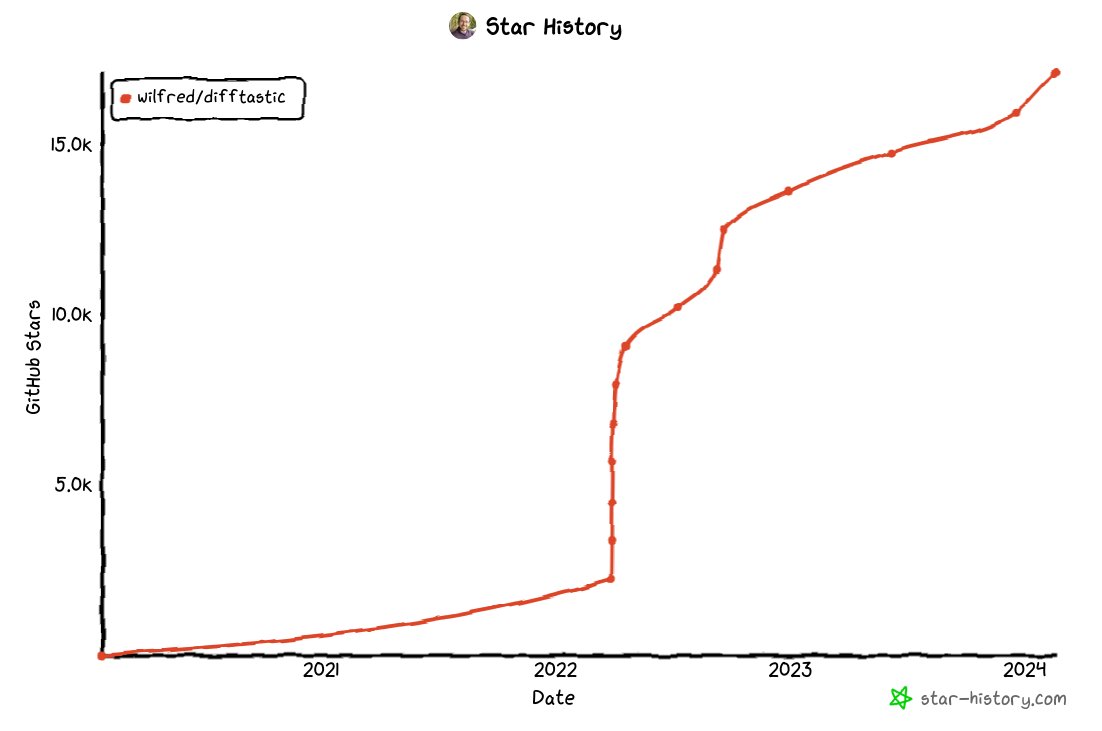
I don't have much data on difftastic usage, and I suspect most users get it from the packages provided by their distro.
There's been a clear uptick in stars since I built a homepage in the last month or two though!
(The first big bump is when it hit Hacker News.)
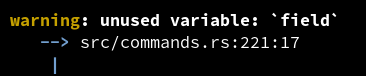
Why do so few CLI tools use colour inside their error messages? For example, rustc uses colour well in the error display, but there's no special styling of the content in backticks.
By contrast, markdown website almost always style backtick text differently from prose.
E.g. `field` is not specially styled here.
Apparently over half of the income for the Python Software Foundation comes from PyCon US!
https://www.python.org/psf/sponsorship/
TIL cargo is exploring a Rust script mode, essentially a concatenation of Cargo.toml and main.rs
I've been using a 'golden tests' library for testing my parser, and it's just delightful. Rather than writing a verbose assertion about the resulting AST, I can just re-run my tests until the output looks good!
I've been using a 'golden tests' library for testing my parser, and it's just delightful. Rather than writing a verbose assertion about the resulting AST, I can just re-run my tests until the output looks good!
I'm using https://github.com/jfecher/golden-tests currently, which can automatically update the output in the file.
Example commit:
The Ruby on Rails guides use "please" when suggesting other resource to read or best practices to follow. For example: https://guides.rubyonrails.org/autoloading_and_reloading_constants.html
I've not seen this docs convention before. I certainly see the appeal for describing best practices: "your collaborators will appreciate it!"

Are there any good tools for generating boilerplate code?
If I'm a web framework author, I'd love to provide a *discoverable* tool for defining a new controller. This is especially important if files need specific naming conventions or to be in certain directories.
Are there any good tools for generating boilerplate code?
If I'm a web framework author, I'd love to provide a *discoverable* tool for defining a new controller. This is especially important if files need specific naming conventions or to be in certain directories.
I've seen tools like yeoman and create-react-app, but they seem to focus on new projects. There's also no VS Code integration that I'm aware of.
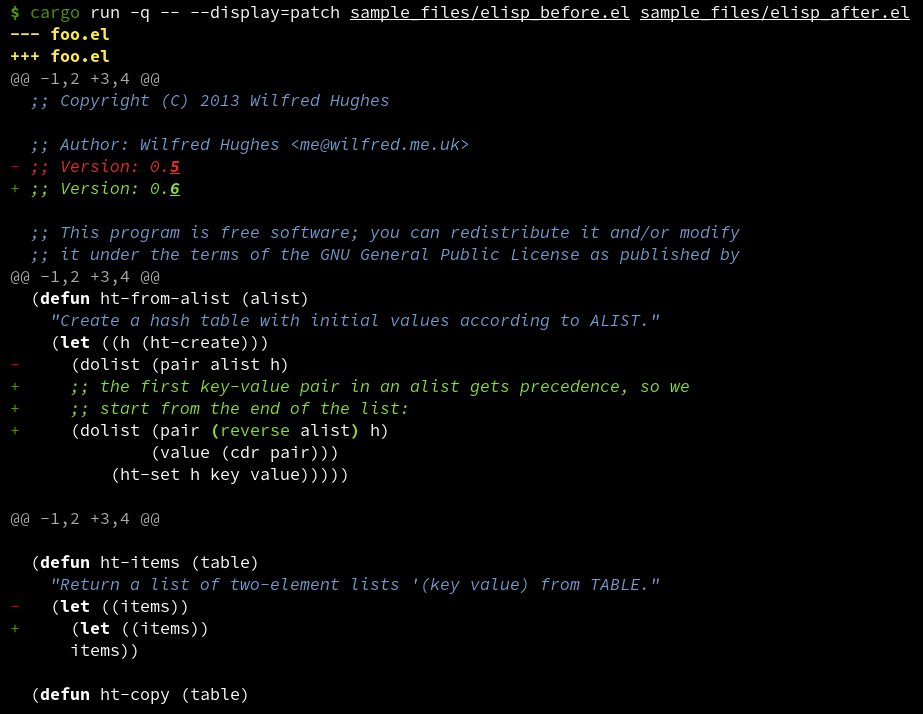
I'm still experimenting with patch display in difftastic.
The change to the imports are clearer in the patch mode, but the side-by-side mode does make the if/else changes more readable.
Patches are probably worthwhile anyway due to their machine readability.
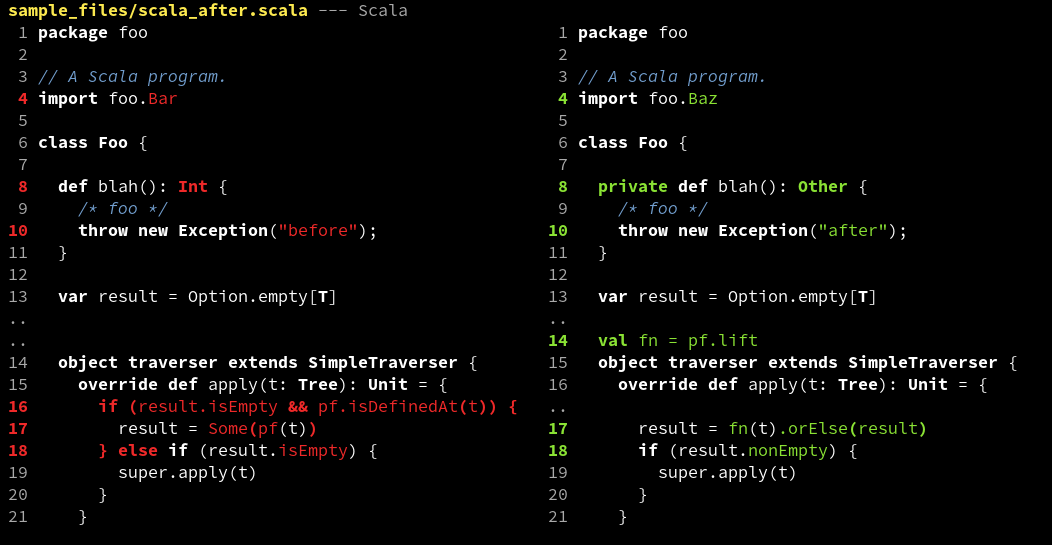
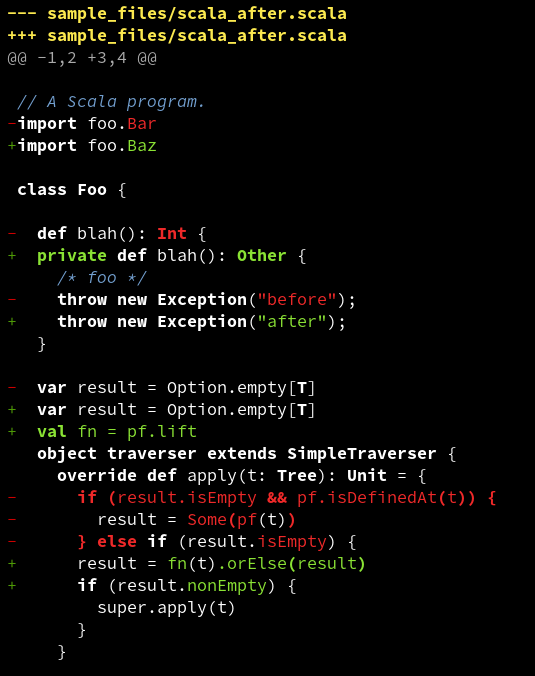
I'm experimenting with a patch-style display format for difftastic.
What do you think? Do the colours work? What about the last example, where there's only whitespace changes and the syntactic diff has nothing to highlight?
Do you think values and types should be in separate namespaces? Why/why not?
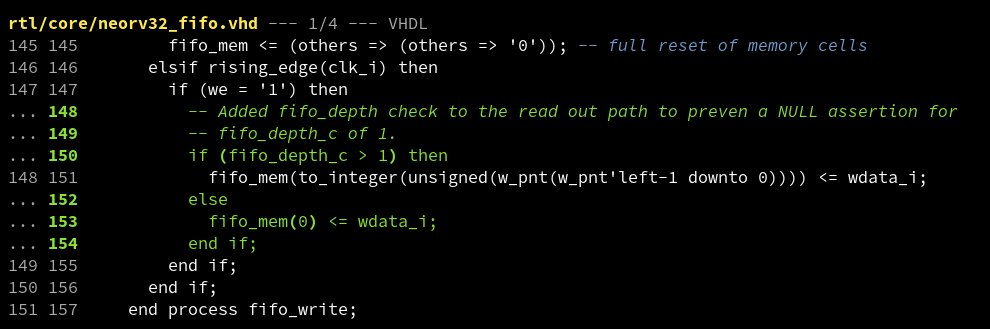
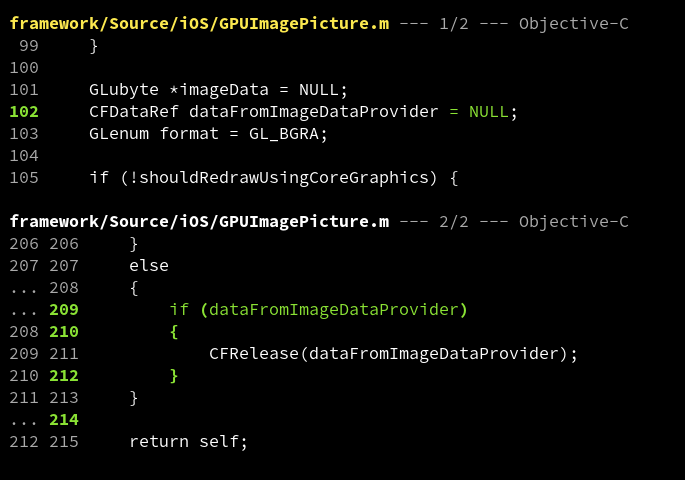
Difftastic 0.55 is out! In this release:
* Support for VHDL and Objective-C
* Improved support for XML
* The usual smattering of bugfixes :)
Showing 361-375 of 7,652 posts