I like the concept of a REPL: an interactive environment where you can redefine code and evaluate snippets to see the result.
I try to avoid the term "REPL" though. Most languages don't use "read" for parsing (the R) and it's confusing. Are there good alternatives?
miniblog.
What's your preferred granularity of docs?
(a) A whole module on one page, e.g. https://pkg.go.dev/time, making search easy?
(b) A function per page, e.g. https://www.php.net/manual/en/function.time.php, giving more space for examples and See Also sections?
I'm torn, and I've seen both done well.

Interpreters versus compilers as a spectrum, and a fun worked example of optimising Brainfuck:
https://www.youtube.com/watch?v=0DLdQ6yb7h8 is a really accessible introduction to programming workflows with Sly for Common Lisp.
The notion of 'stickers' is novel to me: you mark places in the code where you want to remember values (essentially tracing) or pop to a debugger (breakpoints).
As shortform video grows in popularity, will we start seeing it in docs?
I can imagine a docs page that starts with a 30-60 second video as being popular for some users.
What defines the *feel* of a programming language?
I've heard JS described as "composing lego blocks" due to npm, and Common Lisp with Sly feels like a place you explore (e.g. docs from the REPL).
All PLs have tools though. Which ones set the vibe?
Today I read the term "negative bus factor" to describe the situation where multiple libraries have the same single maintainer.
Perhaps people measure bus factor logarithmically?
A function with three arguments of the same type is way easier to screw up than a function with ten arguments of different types. It's weird.
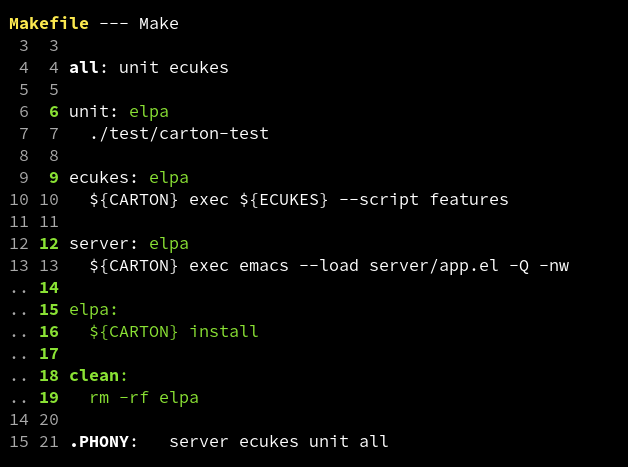
I've released difftastic 0.41 with a ton of quality of life improvements!
* Better highlighting of words in comments and fallback textual mode
* Better support of tabs (handy for Makefiles)
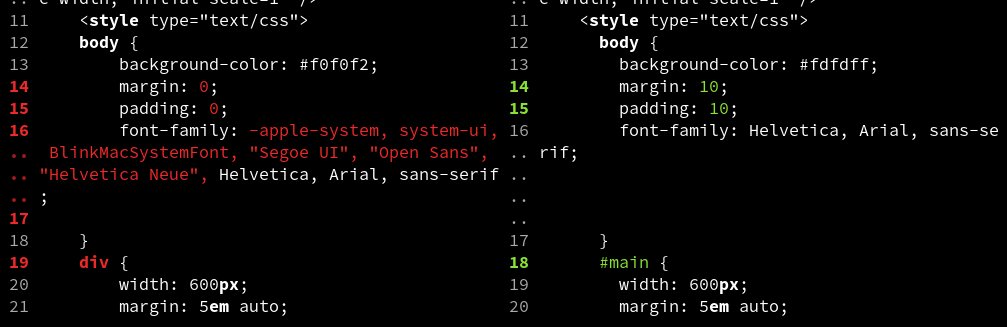
* Support for nested syntax in HTML files (courtesy of Sesse)


Today I learnt that Cell<T> has the size of a pointer (i.e. probably 64 bits) in Rust, regardless of the size of T.
It's a common pattern for making struct fields mutable, but the T isn't actually stored inside the struct.
A survey of parser generator usage in major language implementationss: https://notes.eatonphil.com/parser-generators-vs-handwritten-parsers-survey-2021.html
Most have a handwritten parser. GCC and Go moved from generated to handwritten. SQLite and Python <3.10 built their own parser generators!
The next version of difftastic will support parsing CSS and JS syntax inside HTML! This makes a huge difference to HTML files.
This support for tree-sitter sub-parsers was contributed by Sesse :)

Writing a programming language? Challenge the design status quo:
Zig has moved to a compiler bootstrap approach that uses webassembly: https://ziglang.org/news/goodbye-cpp/
They check in the wasm artifact and provide their own wasm compiler. wasm is the most portable backend supported by LLVM.
OCaml does something similar! It includes a minimal VM.
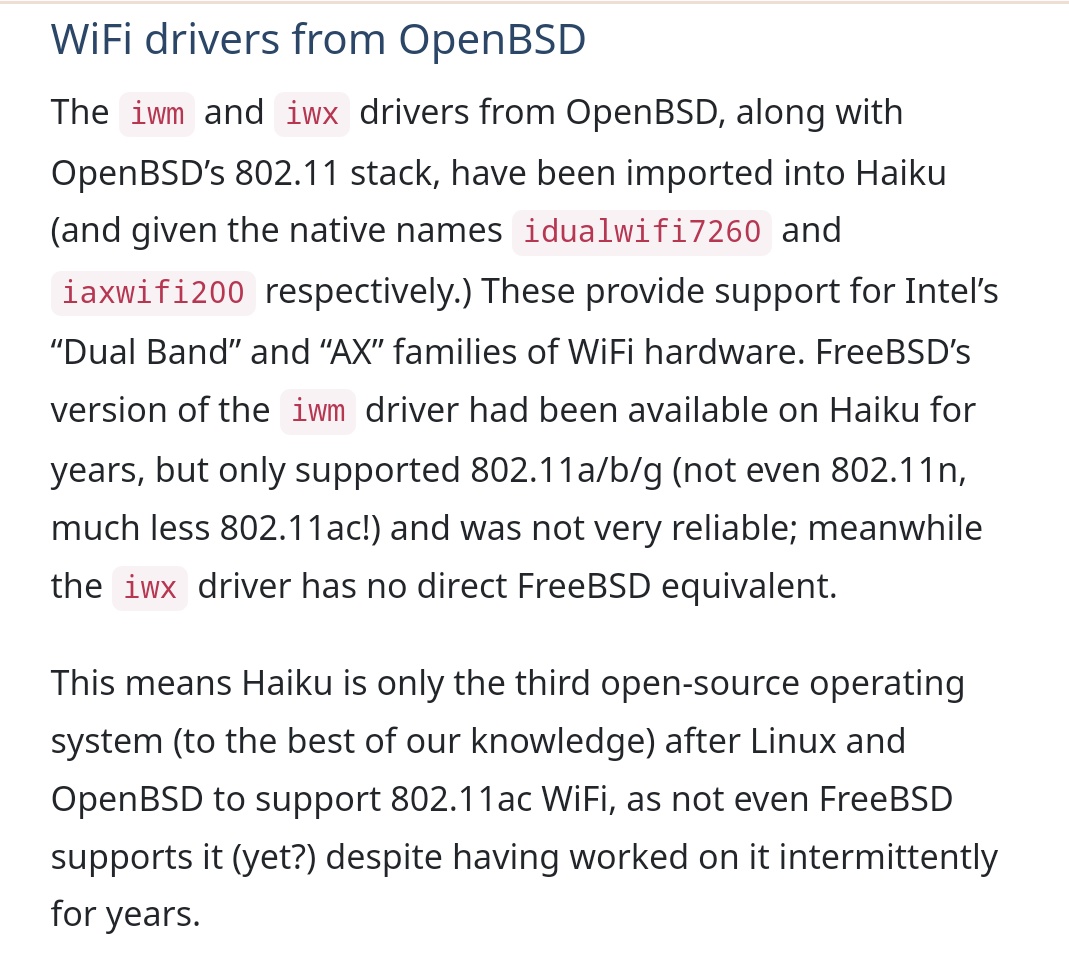
Reading the beta 4 release notes for Haiku R1, it's striking how much work it is to support modern WiFi protocols: https://www.haiku-os.org/get-haiku/r1beta4/release-notes/
Previously, 802.11ac was only supported on Linux and OpenBSD! (Ignoring proprietary operating systems)

Showing 616-630 of 7,652 posts