I've seen several users write "diffstatic" rather than "difftastic". I'm not going to typosquat on https://crates.io/, but it's a shame that Cargo doesn't have a "did you mean ...?" feature.
miniblog.
nREPL is supported in several languages, not just Clojure! https://metaredux.com/posts/2019/01/12/nrepl-beyond-clojure.html
Interacting with a live instance isn't handled by LSP, so it's interesting to see language-agnostic protocols in this space.
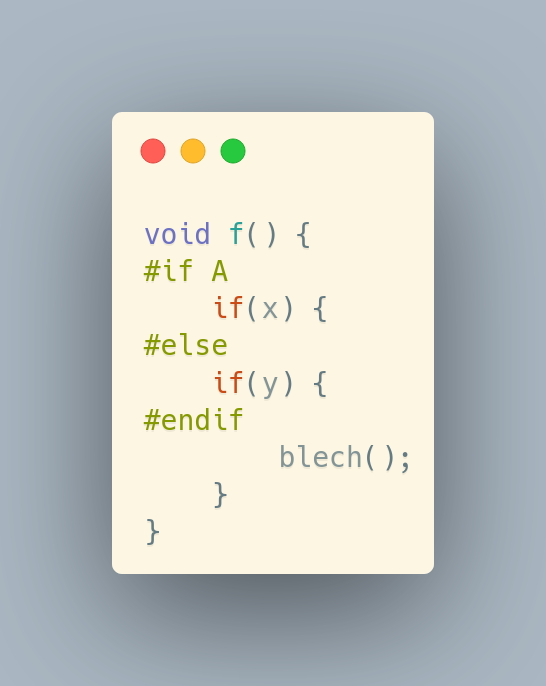
Here's a scary example from the tree-sitter-c bug tracker: before running the preprocessor, there's no guarantee that C code will parse!
(Typically it will I think, but no guarantees.)
tree-sitter has been amazingly successful at getting developer tools to work together.
Neovim has a bunch of people contributing to parsers when they notice highlighting issues. That benefits the whole ecosystem: semgrep, difftastic, even Emacs!
TIL there are multiple developer tools called asdf!
(1) https://github.com/fare/asdf (Common Lisp build tool)
(2) https://asdf-vm.com/ (manages installed PL runtimes, like a generic nvm or rbenv)
I'm surprised multiple folks like the name, I'd worry that it's easy to forget.
Difftastic 0.24 is out!
* Languages: Added Dart and improved Clojure
* Display: Fixed a ton of corner cases, and added a warning when comparing a file with itself(!)
* Performance: Improved large files or comparing directories
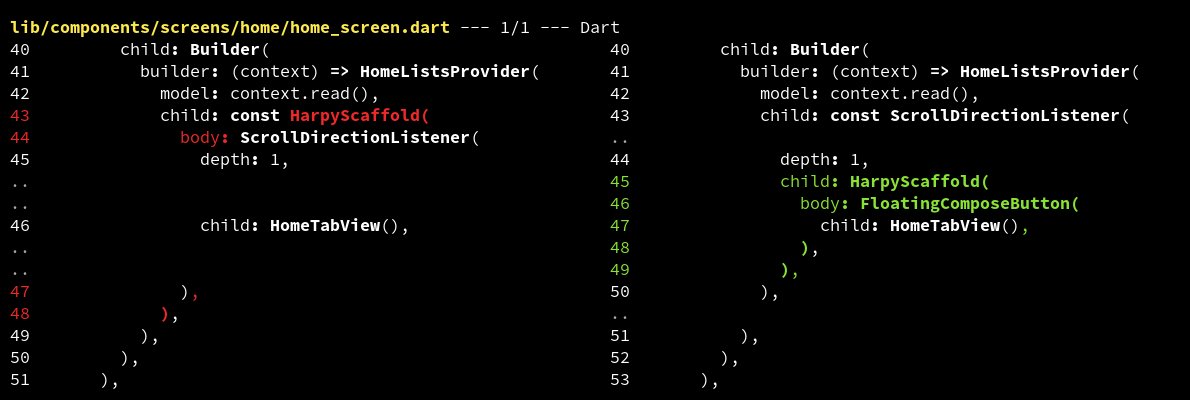
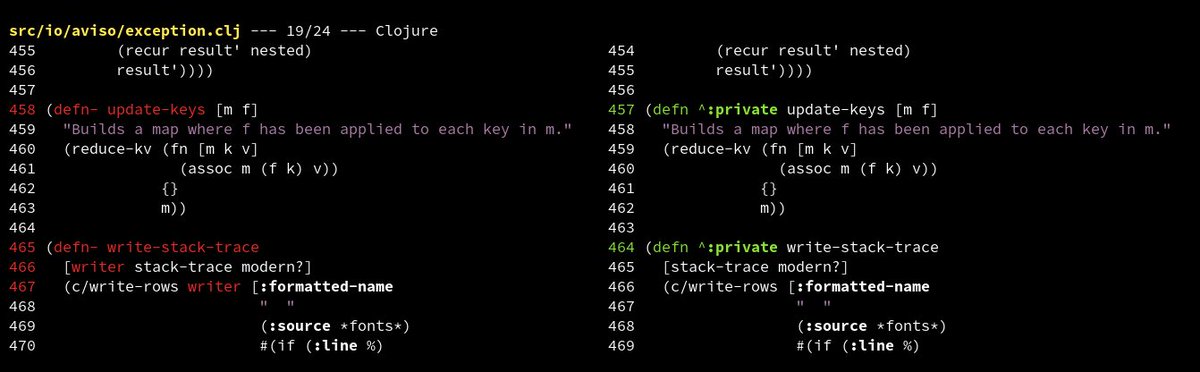

It's hard to demonstrate how difftastic works in screenshots, so I've prepared a <60 second ASCII screencast of usage!
(Feedback welcome.)

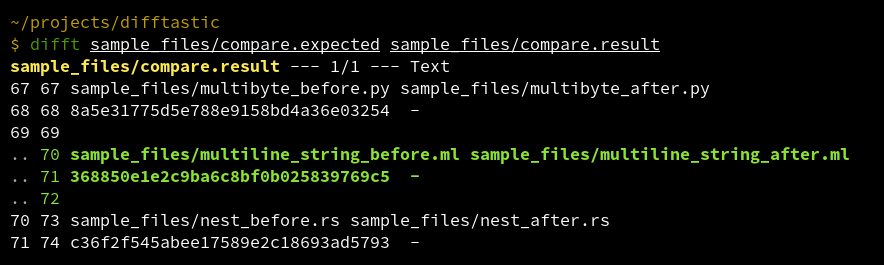
Dogfooding difftastic: comparing the results of the sample files using difftastic.
So I'm diffing the results of my diff tool by using my diff tool :)
Rust has a ton of ways you can convert a &str to a String: .into(), .to_string(), .to_owned().
I'm never sure which one reads best. Maybe .to_owned() shows your intention the most clearly?
Integration tests are inherently scary. You want to make them as similar as possible to your production environment, which massively increases the risk that one day they will talk to production directly.
If the latest version is the cutting edge or even bleeding edge, would a legacy version be a dull edge?
Let's Be Real About Dependencies: https://wiki.alopex.li/LetsBeRealAboutDependencies
Contrasting C/C++ dependencies with languages with first-class packages (Rust, Go, JS) and finding similar level of dependencies! Perhaps modern package managers just make this more obvious.
After thoroughly confusing myself for a minute, I've added a feature to difftastic to warn you if both arguments are the same.
With hindsight, I should have done this much earlier.

Sometimes I suspect you could send a pull request to any project replacing `foo` with `foo + 1` anywhere by saying "fix off-by-one error". `foo + 1` rarely looks wrong.
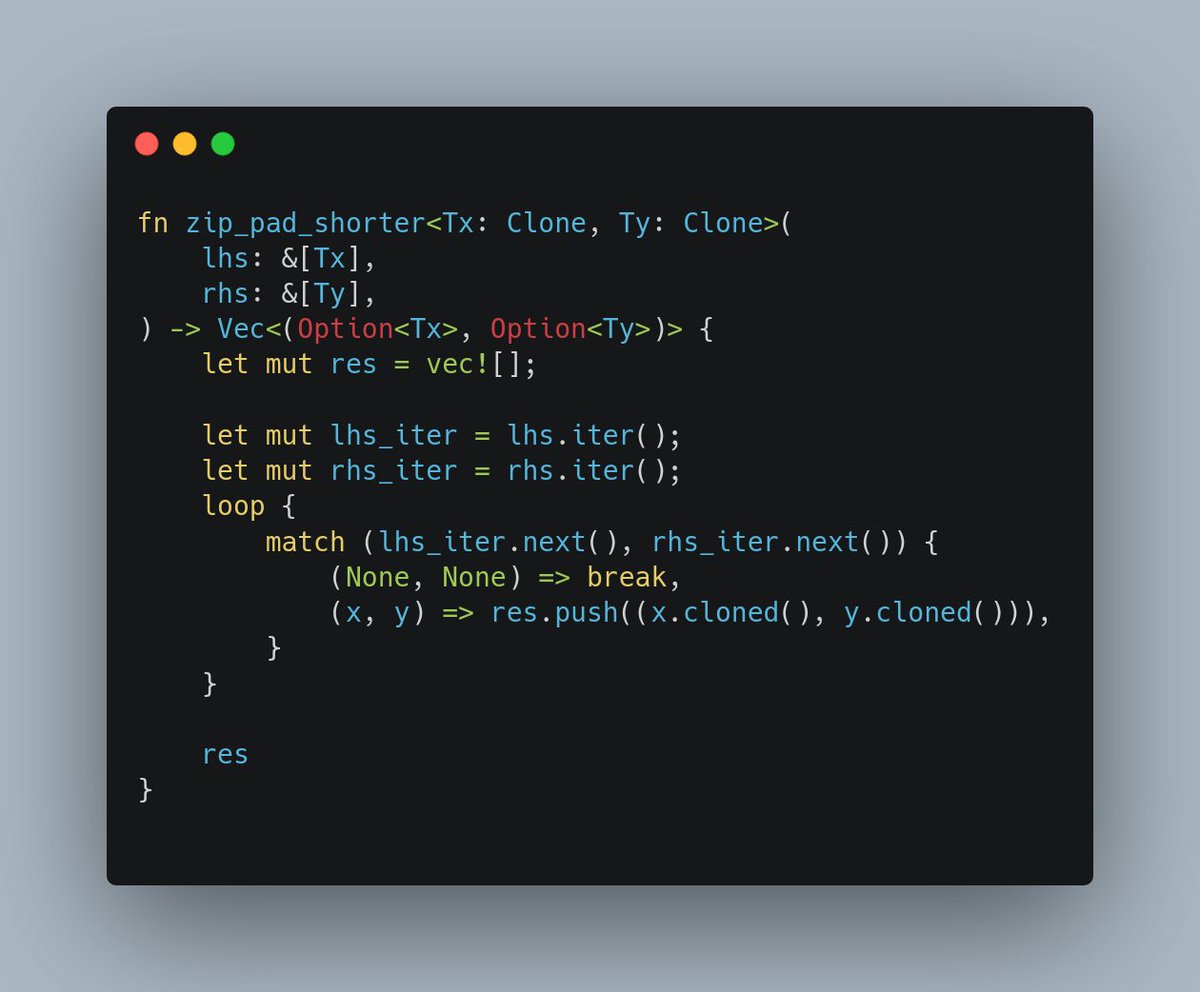
Rust's Iterator interface is growing on me. I replaced a bunch of `i += 1; foo.get(i)` loops with explicit calls to `.next()`. It's less code and easier to reason about.
Showing 901-915 of 7,652 posts