Excellent discussion of how REPL programming enables you to write code incrementally, going beyond what you can do with e.g. ipython or ghci.
miniblog.
It is really impressive how quickly different distros are shipping new versions of difftastic. Less than a day!
AUR has a bleeding-edge git package whose version tag is always 1. It's a shame, I would like to be able to download v1 too :P
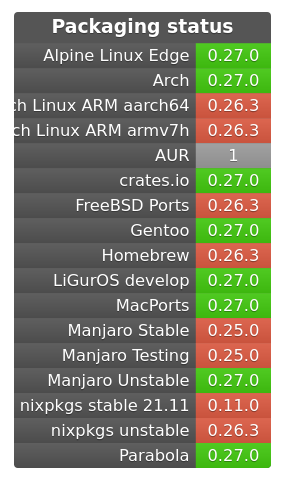
Difftastic 0.27 is out! In this release:
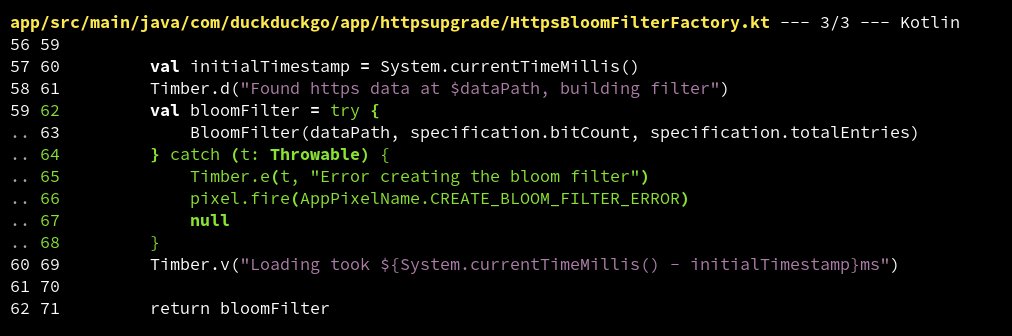
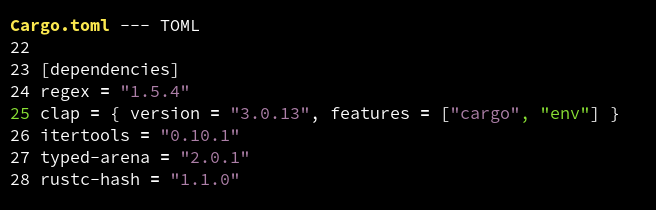
* Added support for Kotlin and TOML
* Updated to latest tree-sitter parsers, including TS union types, C++ fold expressions and Java modules
* Improved the scaling of diff algorithm on large expressions
I've finally added an incremental search option to deadgrep! https://github.com/Wilfred/deadgrep/blob/master/CHANGELOG.md#v012
I also learnt that incremental tools don't do anything clever with the minibuffer: they just call read-char in a loop.
The Rust reference describes `?Sized` as "questionably sized". I feel vaguely judged :)
tree-sitter is adding a notion of reserved keywords, as it previously treated keywords as contextual: https://github.com/tree-sitter/tree-sitter/pull/1635
Includes a fun example of using `if` as a name in JS!
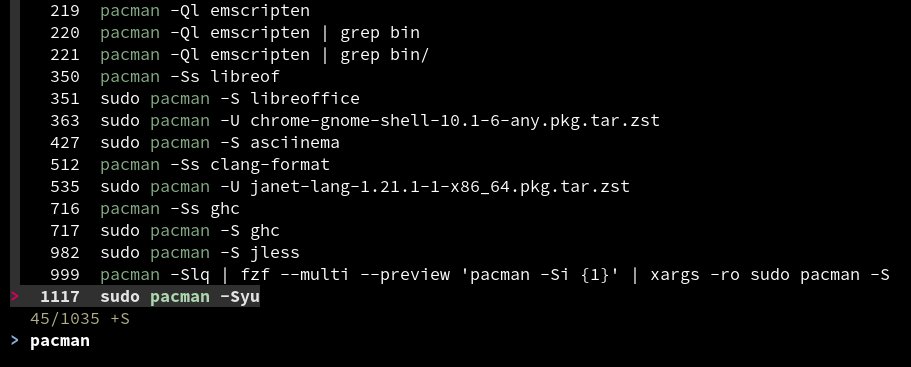
One really nice aspect of fzf completion for ctrl-r is the ability to view multiple candidates at once. It's easier to only show one option to the user, but it's less useful.
(VS Code's Command Palette and modern Emacs minibuffer packages also have this advantage.)
The best interface is no interface: https://web.archive.org/web/20120831083217/http://www.cooper.com/journal/2012/08/the-best-interface-is-no-interface.html/
The author's critique of needing to find an app to accomplish a task is just as relevant today.
I'm writing some docs in markdown, and I'm really glad I can use arbitrary HTML when I need to. It's so handy when you hit the limits of markdown (e.g. tables, named anchors, custom styling).
It's dangerous when you have untrusted input, but I'm beginning to appreciate it.
I'm really impressed with fzf, the terminal fuzzy finder. It makes ctrl-r way more powerful, and it even has a ctrl-t to pass file arguments!
It uses existing terminal history rather than 'enable and now you will have history', which is nice too.
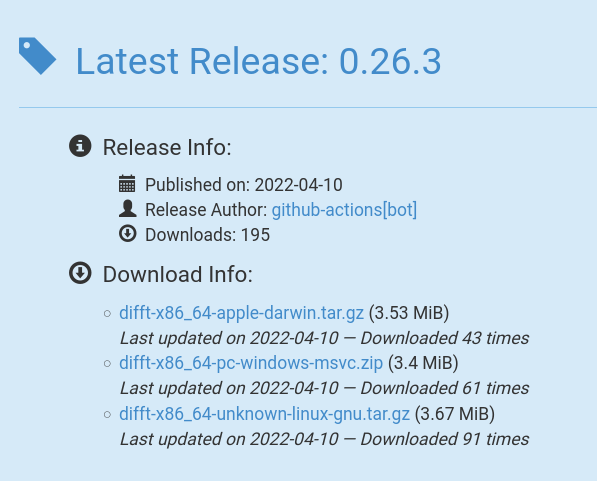
Today I learnt that GitHub Release download counts are publicly available! This is a really helpful way of seeing what proportion of users are on each platform.
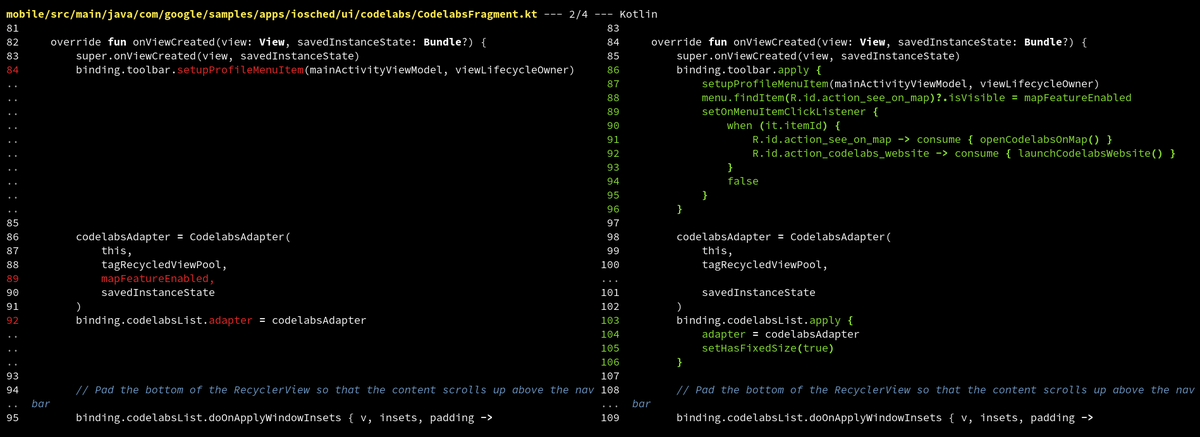
The next version of difftastic will support Kotlin too!
I'm fascinated to learn that some distros are including the whole HTML manual in the package!
It seems like a nice thing for users, but I was initially surprised to see JS in the package.
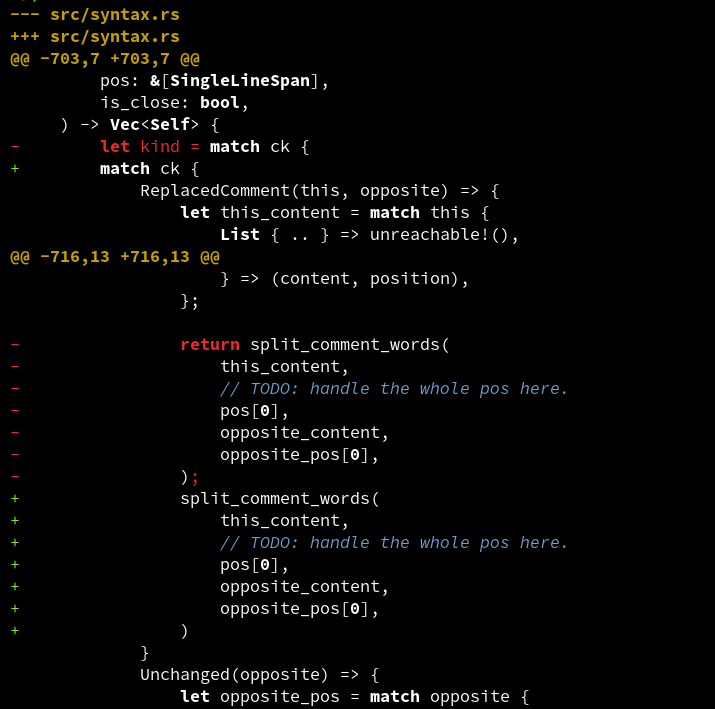
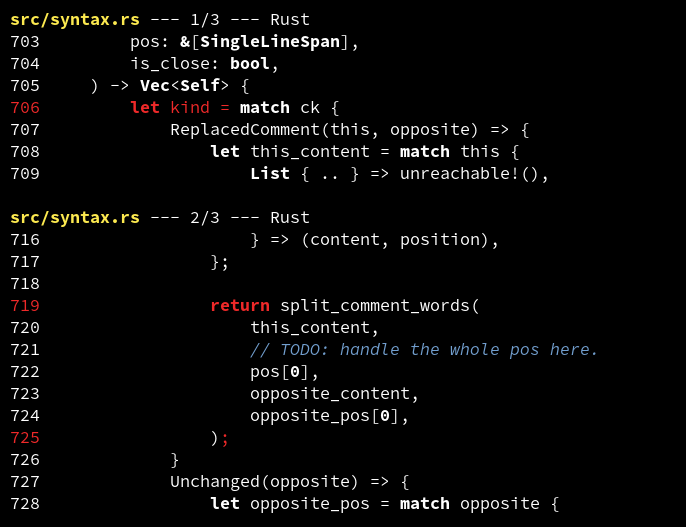
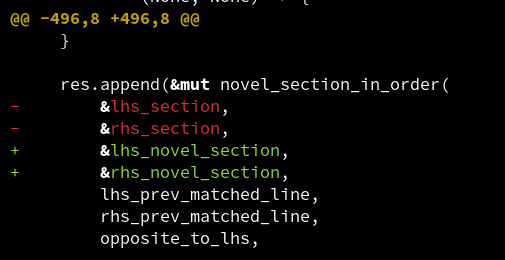
I've been experimenting with supporting the unified diff format in difftastic. This is a single column format ('inline') with @@ markers.
What do you think? This format doesn't scale well to larger changes, but it's super familiar and works with other tools.

Difftastic is the first time I've ever shipped a binary on Windows. It was surprisingly straightforward.
Rust has good Windows support, and GitHub Actions means I don't need to set up a Windows toolchain locally.
Showing 871-885 of 7,652 posts