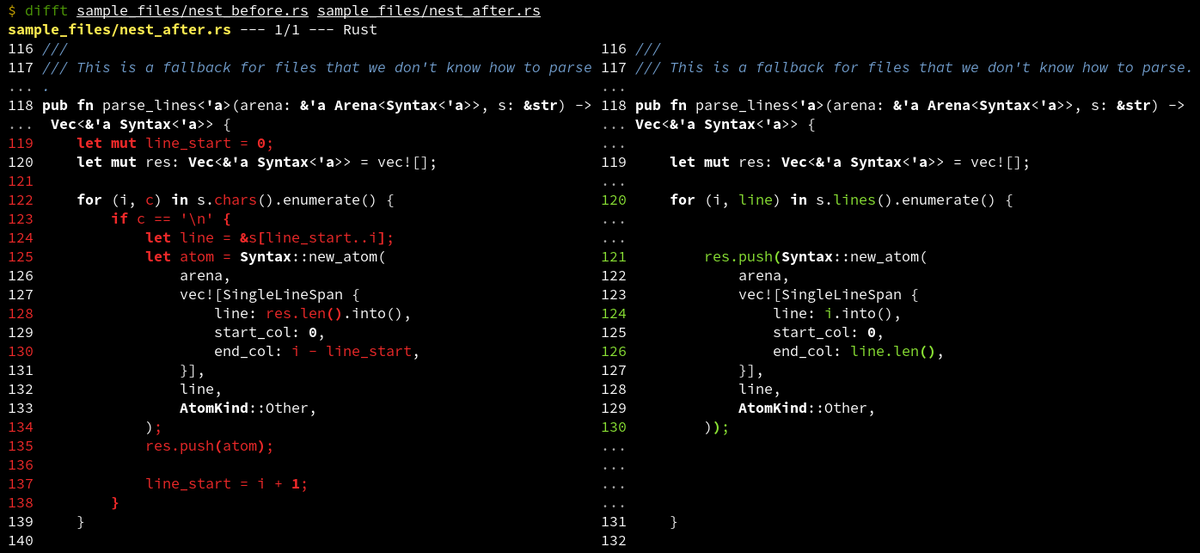
Simple Doom-style FPS written entirely in Awk! https://github.com/TheMozg/awk-raycaster
miniblog.
I've worked on apps with really cute custom spinners. They can add a distinct vibe for the app.
It's a high risk strategy though. If any part of your system starts running slowly, users develop ban associations with the spinner. I prefer default spinner designs these days.
The Servo browser is going to be part of the Linux Foundation!
I really hope it works out, Servo is an amazing project. It's really hard to build custom browser designs and having a good reusable browser library matters.
https://blog.servo.org/2020/11/17/servo-home/
The GIMP is the only software tool (AFAIK) where selecting content is an undoable operation.
I think this makes sense: selecting things in a complex image is a much more involved operation than in text.
I tend to favour explicit numbers of arguments in functions: I rarely find auto-currying a useful default. Explicit arity gives good errors!
I've realised that auto-currying allows you to handle generic functions though. `a -> b` can be any function!
I'm surprised that "free for OSS" is a common pricing model, without rate limiting the number of free projects/users.
Perhaps OSS isn't really that big? Or maybe it drives paid-for adoption sufficiently?
Changing how microwaves are constructed and emit power, potentially making the turntable design obsolete: https://www.electronicsweekly.com/news/design/the-future-of-microwave-cooking-is-solid-state-2016-01/
GitHub Container Registry seems like a pretty drop-in replacement for Docker Hub: https://github.blog/2020-09-01-introducing-github-container-registry/
Reactive notebooks: cell state is immutable, unordered (unlike Jupyter) and naturally lends itself to interactive web UIs! https://github.com/fonsp/Pluto.jl
Reflecting on some of the more surprising APIs in the Haskell ecosystem: https://www.snoyman.com/blog/2020/10/haskell-bad-parts-1
Google will be capping Google Photos at 15GiB free storage: https://blog.google/products/photos/storage-changes/
I'm "more than four years away" from filling it. I wonder what the typical usage rate is?
I enjoyed watching this documentary on RuneScape (an MMO game): its MUD origins, the challenge of complex 3D models making iteration more expensive, and the team culture around it:
https://www.youtube.com/watch?v=7RNK0YBdwko
Automatically offering the Internet Archive when a page 404s in the Brave browser: https://blog.archive.org/2020/02/25/brave-browser-and-the-wayback-machine-working-together-to-help-make-the-web-more-useful-and-reliable/
Feels like all browsers should do this.
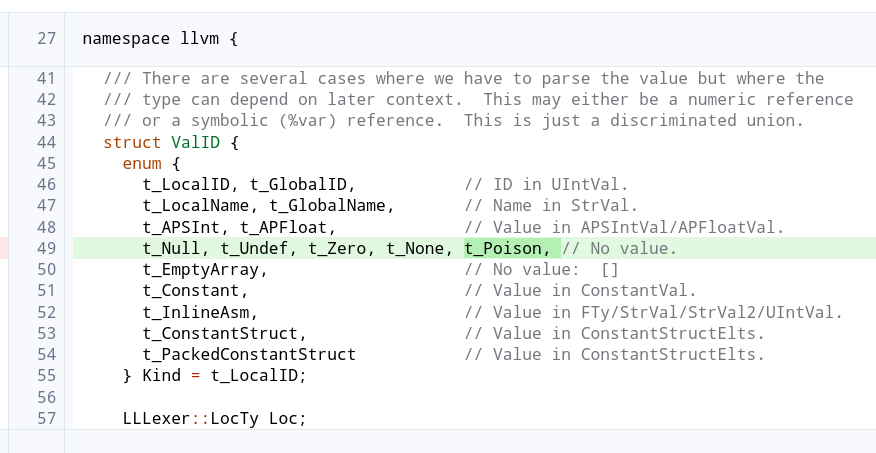
LLVM is introducing v1 to v4 of x86-64, so you can target newer chips: https://github.com/llvm/llvm-project/commit/012dd42e027e (gcc will do the same thing)
The developers of games can feel very distant from players, so I'm not surprised to see sites that track dev discussion across platforms:
https://devtrackers.gg/
Design differences for small websites designed for specific, geographically focused communities:
https://web.archive.org/web/20040411202042/http://www.shirky.com/writings/situated_software.html
(article is from 2004, a basic server is even cheaper now!)
So many UIs are fuzzy text completion now. For example: ivy in Emacs, VS Code's command selector and Firefox's address bar.
They scale really well, have good discoverability, and they're forgiving of typos. Is this a local optimum in UI design?
Variable length arrays in C, the change in Linux kernel developer viewpoints, and the effect of clang constraining its VLA featureset: https://lwn.net/Articles/749064/
Contrasting Rust traits with C++20 concepts: https://mcla.ug/blog/cpp20-concepts-are-not-like-rust-traits.html (Rust traits are stricter, which can enable better errors)
"an ad-hoc, informally-specified, bug-ridden, slow implementation of half of Common Lisp"
Sounds like every metacircular interpreter I've written!
Showing 1,241-1,260 of 7,508 posts