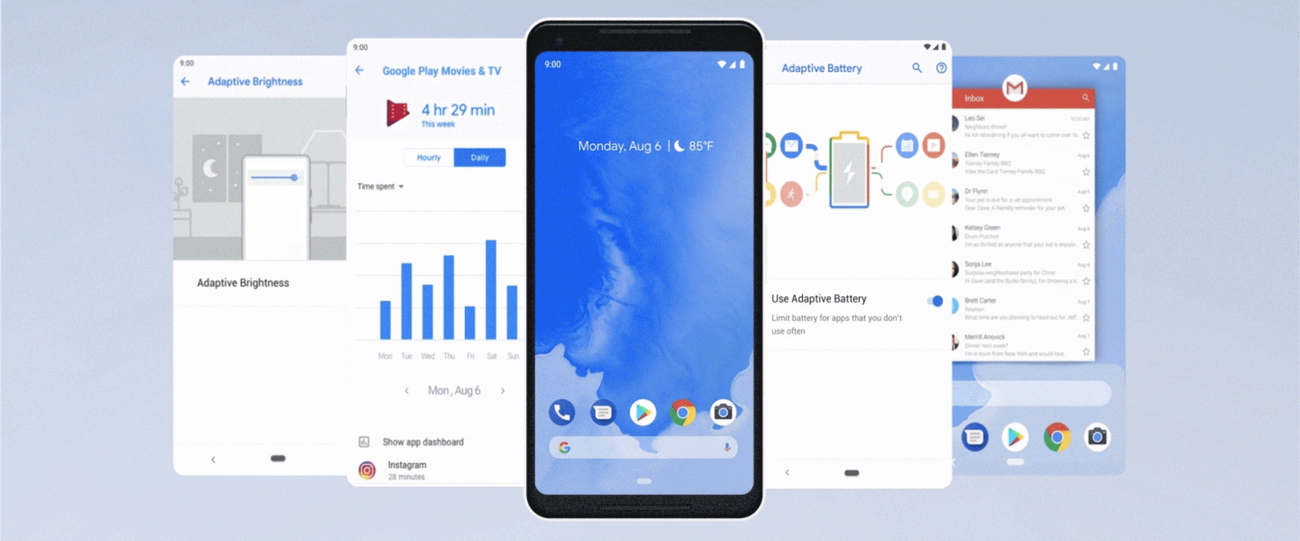
New features coming in Android Pie:
https://blog.google/products/android/introducing-android-9-pie/
UI changes to help users make the most of their increasingly large devices, plus adaptive features that learn what you use when
Interesting to see DNS over TLS coming to more platforms too.
miniblog.
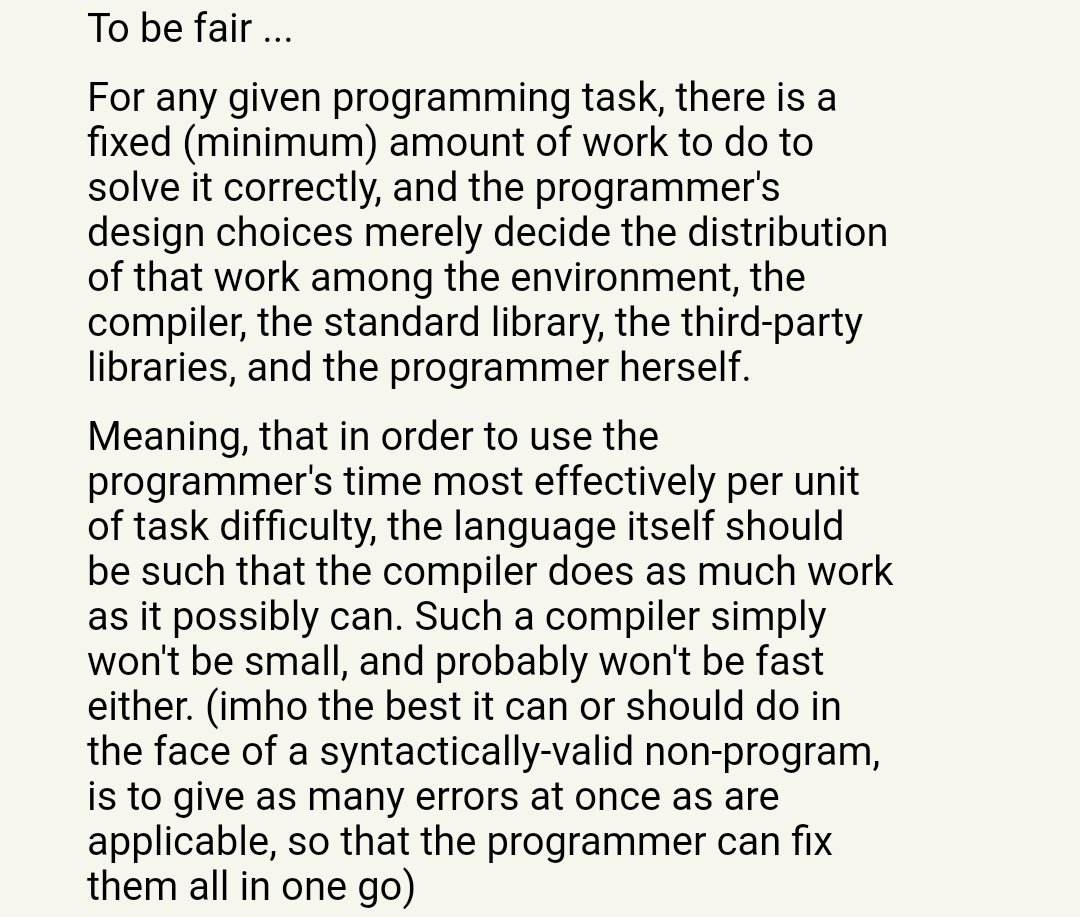
Language design is often about where the work happens: the compiler, the stdlib, other libraries, or the programmers themselves!
From
Excellent, interesting blog post on how Rust's cargo does version resolution, why it favours the latest compatible version, and the tradeoffs in this space.
https://aturon.github.io/2018/07/25/cargo-version-selection/
It's possible to reliably segfault Emacs when using undercover, at least on Travis: https://github.com/Wilfred/elisp-def/commit/57523ad268e0f4d2550386d45d55d7a6ed5fe50c
Not sure why at this point.
'Elm Lens' is a really neat idea: it exposes the number of callers to the current function in your editor!
I feel like programming languages are iterating faster in the 2010s than the 2000s. For example, Java and C++ are changing faster now.
Perhaps it's easier to ship new language features in today's systems? More of a culture of upgrading compilers? Fewer installed desktop apps?
A discussion on how decisions are made on the future of the Java programming language, and who gets to make those decisions: https://www.youtube.com/watch?v=HpbchS5kmio
I'm intrigued by the idea of deep learning systems 'hallucinating' high resolution images from low res. It makes sense: if it's a photo of known type (e.g. people, birds) you have a lot of additional data to interpolate intelligently.
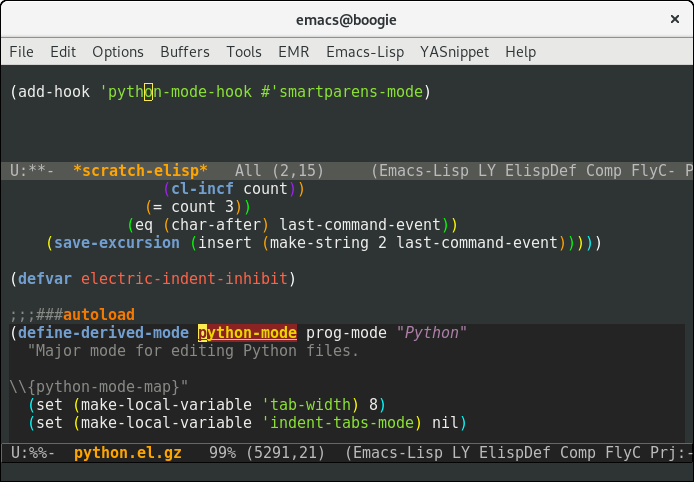
elisp-def is now even smarter at finding definitions in Emacs lisp!
If a variable is defined by a macro (e.g. foo-mode-hook) or a function is defined by a macro (e.g. using defstruct) then it will still find the definition!
SAT solvers are underused in tech: an introduction and a fun example of sudoku solving: https://codingnest.com/modern-sat-solvers-fast-neat-underused-part-1-of-n/
Exploring JVM extensions to add proper reified generics to Java! You'll be able to distinguish List<Integer> from List<String> (i.e. not just type erasure).
https://openjdk.java.net/jeps/8204937
@kensanata@octodon.social Glad you like it!
I wrote that part and there's nothing Remacs-specific in that section. Just general emacs perks ☺️. I've not written any other 'marketing' for emacs but I felt some the advantages were under-discussed by other authors.
Docstrings are an awesome features that make languages more ergonomic. They help you understand code on the first read, and there's pressure to write them when it's part of the language.
I suspect you can even get away with awful syntax if docstrings are ubiquitous.
Emacs is still becoming *more* customisable over time! For example, in 2016, the backtrace function became a user-level function. https://git.savannah.gnu.org/cgit/emacs.git/commit/?id=27cada035a79b633e856a437dd0e037acc1d61c6
This allows users to introspect, debug or write their own!
Showing 256-270 of 657 posts