On older, more experienced developers, and the remarkable growth of the programming community:
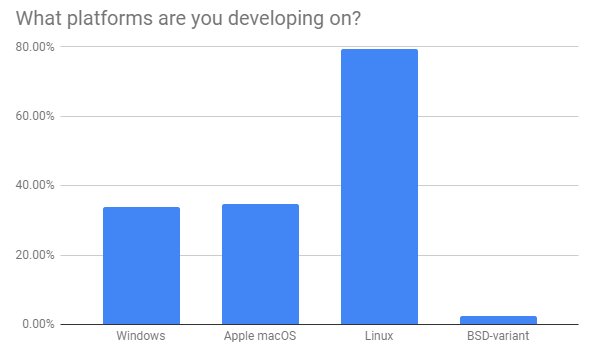
From Rust's latest community survey:
https://blog.rust-lang.org/2018/11/27/Rust-survey-2018.html
As consumer platforms become less programmable, perhaps we will increasingly see development primarily on Linux? (The year of Linux on the desktop is coming! 😂)
Adding a language feature is like adding a new shape to a lego set. It enables a huge range of new combinations (for better or worse).
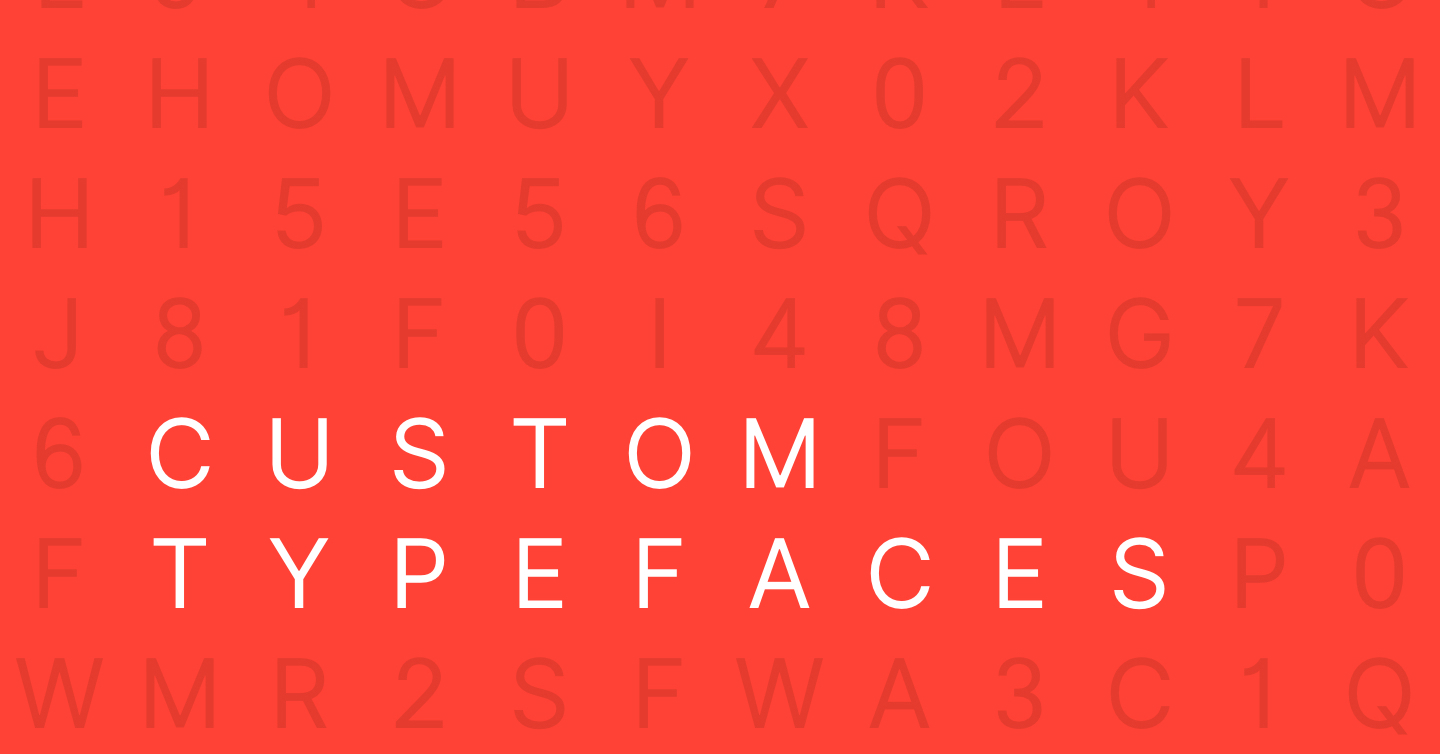
I had no idea how many tech companies have created their own fonts!
https://www.arun.is/blog/custom-typefaces/
(Unique branding, better language coverage, and it may be cheaper than licensing an existing typeface.)
@MightyPork@dev.glitch.social Stupid question: why not? Surely you'd still push the relevant commits to your git repo?
Interesting question: how do you do comments in block oriented programming languages?
Today's compromised npm package:
https://github.com/dominictarr/event-stream/issues/116 only had the malicious code in the minified version.
We don't always think of JS as a compiled language, but reproducible/verifiable compilation would have helped here.
A fun overview of basic operating system development:
Syntax highlighting of diffs feels like an under-researched field. Doing a good job on incomplete snippets is a hard problem.
'YouTube Voice' (the speech style used by many youtubers) is often more enunciated:
https://www.theatlantic.com/technology/archive/2015/12/the-linguistics-of-youtube-voice/418962/
I think the internet has done something similar to writing styles too. I certainly use more exclamation marks!
Inline links are much more convenient than footnotes. However, they're more distracting. Unless I'm completely new to a topic ("for an overview of the field see [3]") it's better to read the whole article first.
Are there better UIs? Hide the links at first?
@bugaevc@mastodon.technology Idle thought: why not make the command grey, leaving white for output? The user knows what they've typed, but doesn't know what the output will be.
@bugaevc@mastodon.technology Beautiful! I've wanted a card based terminal for a long time: it feels like a great design for commands that sometimes write a ton of output.
@kensanata@octodon.social A great point, but many smartphone apps would work fine as websites.
I really like Stylus, the Firefox plugin for writing custom CSS for websites.
My rules aren't clever though.
The vast majority are just adding display: none; for distracting UI elements. The remainder are for excessively responsive sites that become unreadable on wide monitors.