Should programming language docs come with exercises for the reader to test their understanding?
This feels like a great way to help people learn, and you could even measure docs by pass rate.
I've seen online books occasionally use this format, but never official resources.
miniblog.
I've started using Logseq for note taking: it's roughly in the same space as Roam/Obsidian but OSS and using markdown on your local disk.
So far it works really well. I like using [[Link]] syntax for cross-referencing themes that I mention in several places.
I've never seen a JIT with an "eject" option.
If I'm happy with the steady-state performance of my system, I'd rather disable the JIT and lose additional optimisation in favour of removing the tracing overhead. Do any languages offer this?
It's interesting how [.] is increasingly the standard for talking about dangerous domains: http://evilsite[.]com
It's not a format that needs to be consumed by anything, although I suppose a standard makes grepping easier.
Google changing Goobuntu to rolling release based on Debian testing, rather than big-bang releases every two years based on an LTS: https://cloud.google.com/blog/topics/developers-practitioners/how-google-got-to-rolling-linux-releases-for-desktops
A really nuanced take from the Department of Defence on the economics of OSS and why people contribute fixes:
Difftastic 0.31 is released:
* Two new languages: Hacklang and SQL
* Updates to: C#, Dart, Elm, Gleam, Haskell, HCL, Java, JSON, OCaml, PHP, Python, Ruby, Scala and TypeScript
The tree-sitter parser maintainers have been busy!
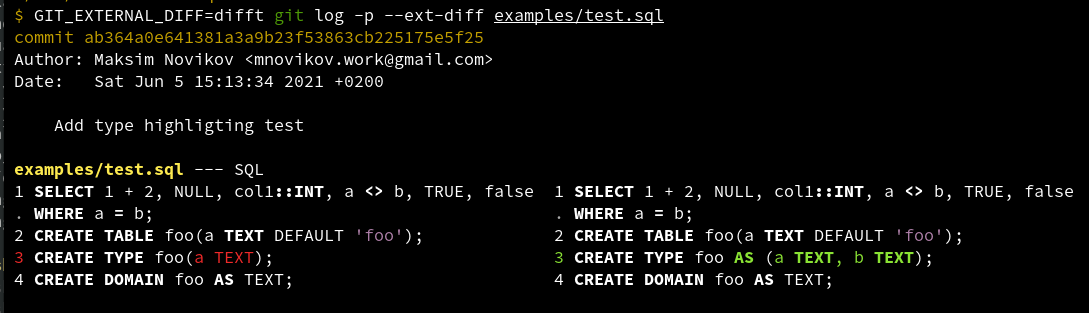

I'm really flattered that IntelliJ users are requesting structural diffs and referencing difftastic!
(FWIW I'd love to eventually ship a reusable library, but APIs are just changing too fast right now.)
https://youtrack.jetbrains.com/issue/IDEA-291212
Fascinating deep dive on Twitch deliberately constructing a 10GiB array to reduce the number of GC cycles in Go: https://blog.twitch.tv/en/2019/04/10/go-memory-ballast-how-i-learnt-to-stop-worrying-and-love-the-heap/
(This trick is no longer necessary in the new Go 1.19 apparently, as it's added a GOMEMLIMIT environment variable.)
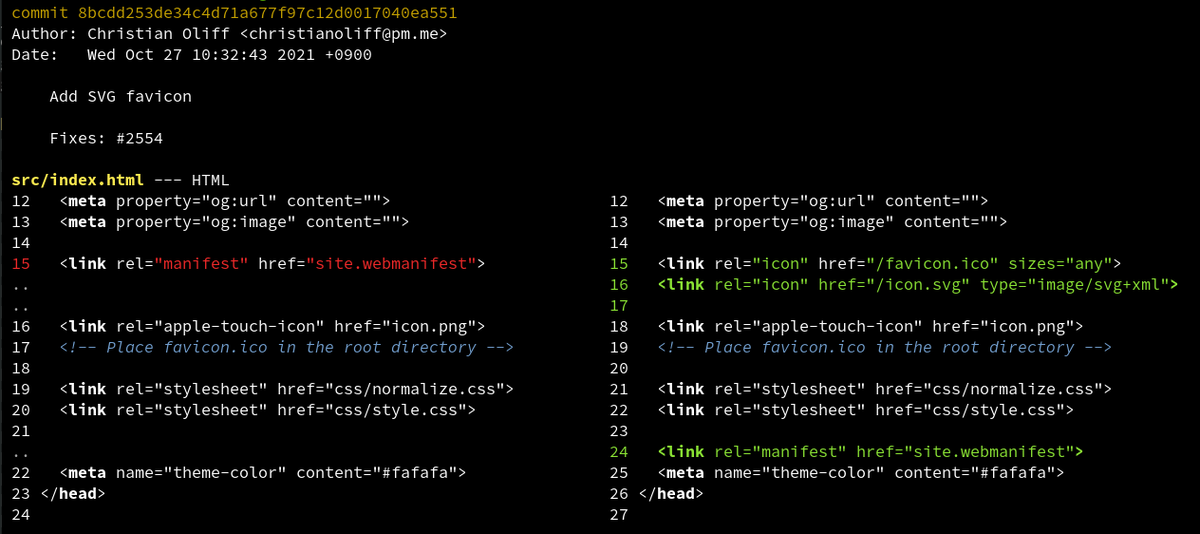
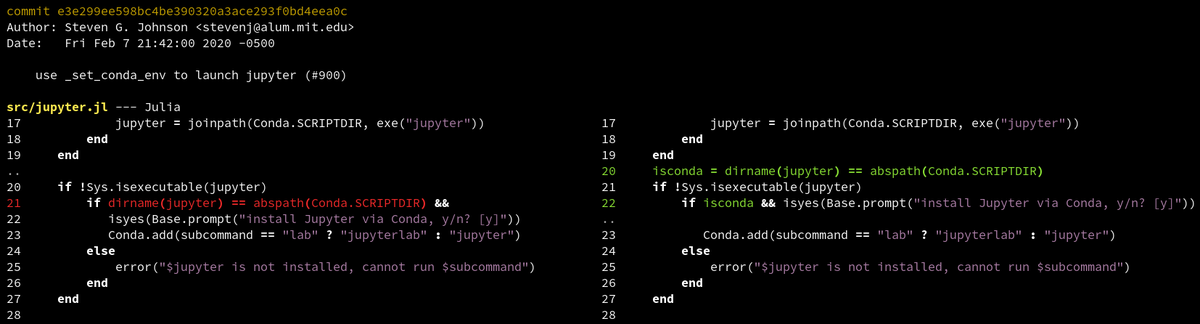
Difftastic 0.30 is out! In this release:
* Added support for both Julia and HTML
* Better Unicode support
* Substantially improved dumb textual diffing performance too!
Compile times of 30-60 seconds are particularly challenging: they're too short to do something else, but too long to get into a flow state.
I find music helps avoid context switching at least.
When adding a new language to difftastic, it's hard to find interesting git repositories to test against.
I've started just querying GitHub for the most starred repos for a given language. For example, here's Haskell: https://github.com/search?l=&o=desc&q=stars%3A%3E500+language%3AHaskell&s=stars&type=Repositories
I've started playing again with A* search instead of Dijkstra for difftastic. So far it's only saved me visiting 3% of graph nodes, which is negligible.
A* works best when you have a good heuristic, but finding a good heuristic is hard. Currently:
Framing documentation work as creative solving of problems, not just writing up stuff made by other people:

Using a Box<str> in Rust: https://mahdi.blog/rust-box-str-vs-string/
(Unlike String, it isn't resizable, so it doesn't need to store capacity. Box<str> is only two words, unlike the three words in String!)
Showing 181-195 of 384 posts