Good code using regexes often has a comment giving an example of a typical string that it matches.
Could this be a first class language feature? It's a great pattern.
miniblog.
Another nice feature of OO in Common Lisp: you initialise your class instance with the function initialize-instance.
So many languages define a 'construct' as a method that has access to the current instance, which is really kinda confusing (c.f. __init__ and __new__ in Python).
Common Lisp has a function change-class that lets you change the class of instance (like reassigning __class__ in Python). http://clhs.lisp.se/Body/f_chg_cl.htm
I love the note at the end: "semantic difficulties" if you call any methods whilst the class changes!
Uniform function call syntax (UFCS) is nifty: I can write foo(x, y, z) or http://x.foo(y, z).
Dot syntax for calls works incredibly well for IDE completion. Are there any languages that explicitly offer UFCS so the IDE experience is better?
Smalltalk has a remarkable method named #become: that allows you to modify all pointers to a given object to point to a different object!
https://gbracha.blogspot.com/2009/07/miracle-of-become.html
This goes even further than updating instances when a class changes, it's changing instance references.
Suppose you have an awesome idea for a programming language.
What use case do you focus on for V1? Web apps? Games? Something else?
How would you choose your niche?
I feel like Rust often pushes me to use concrete types.
It's a lot easier to return a Vec than an impl Iterator. It's not a big problem, but in e.g. Java I'd just say I'm returning some kind of iterator.
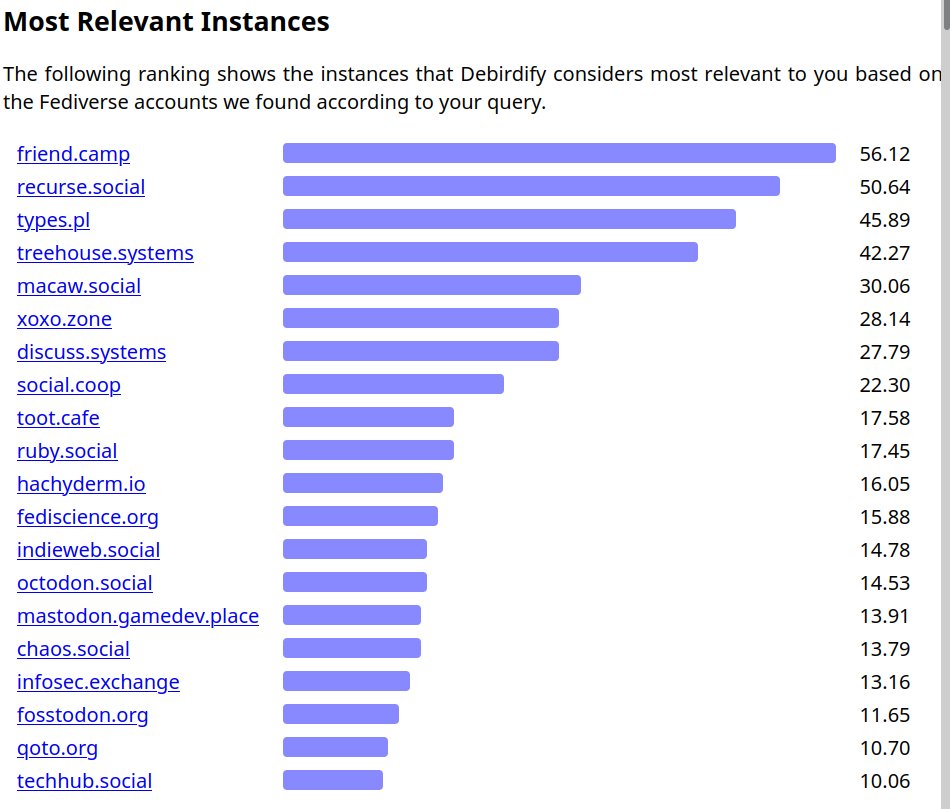
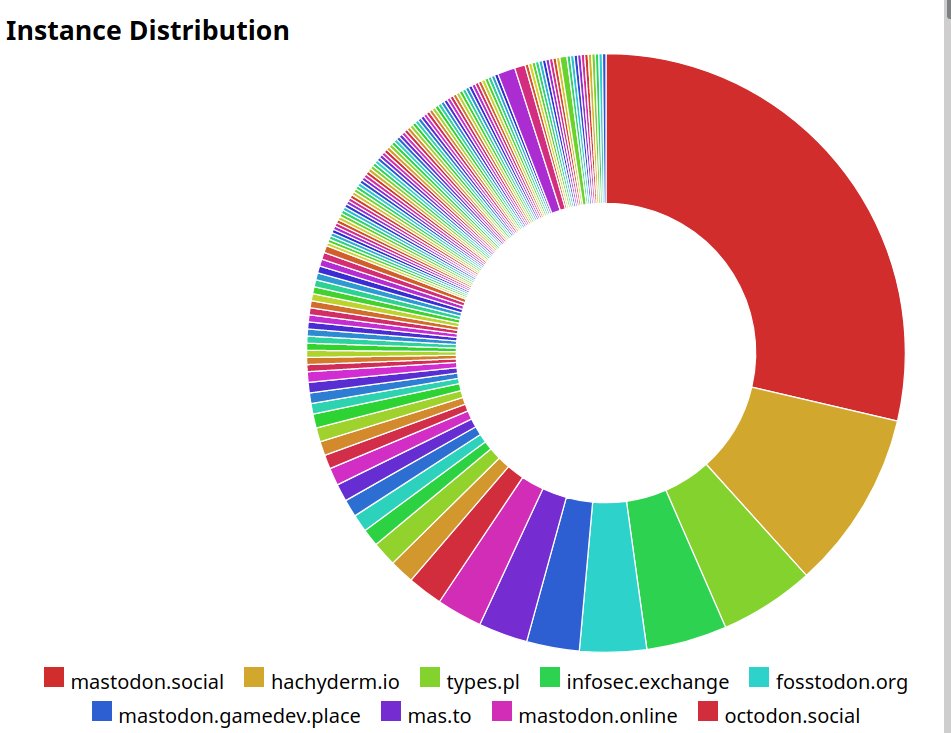
> We searched 3154 Twitter accounts and found 519 accounts with 527 Fediverse IDs, spread over 136 instances.
https://debirdify.pruvisto.org/ seems to find more users, and it also shows some interesting stats on relevant / popular instances.
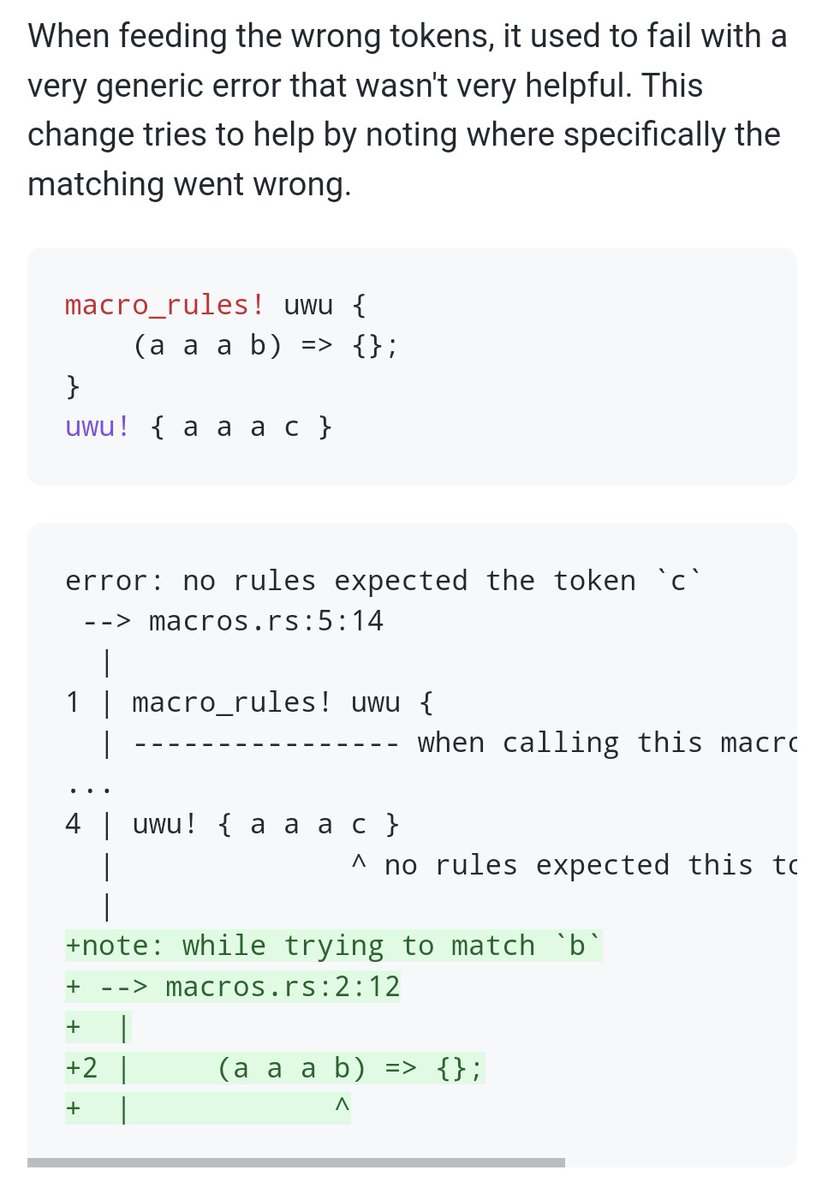
Rust macro errors are significantly improving:
I've never seen a language add a full-featured REPL later in its life. It's incredibly hard to add "update function definition" interactively.
Clojure is an interesting case. It was developed with a REPL in mind, but the JVM was not. Perhaps the VM matters less here?
https://twitodon.com/ is a neat tool for finding Mastodon people that you were already following on Twitter. It generates a CSV that Mastodon can consume.
Of the 3,154 folks I follow, it found 117 Mastodon accounts. AIUI it requires other users to use the service.
I feel like enums/variants/tagged unions are underexplored in dynamically typed languages.
As soon as you see a pattern match for a given enum variant (e.g. colour::RED), your can IDE can be helpful if the enum definition changes. Normally I only get this with static typing.
Do you think there will be a significant Twitter outage (>1 hour downtime) in the near future? If so, when?
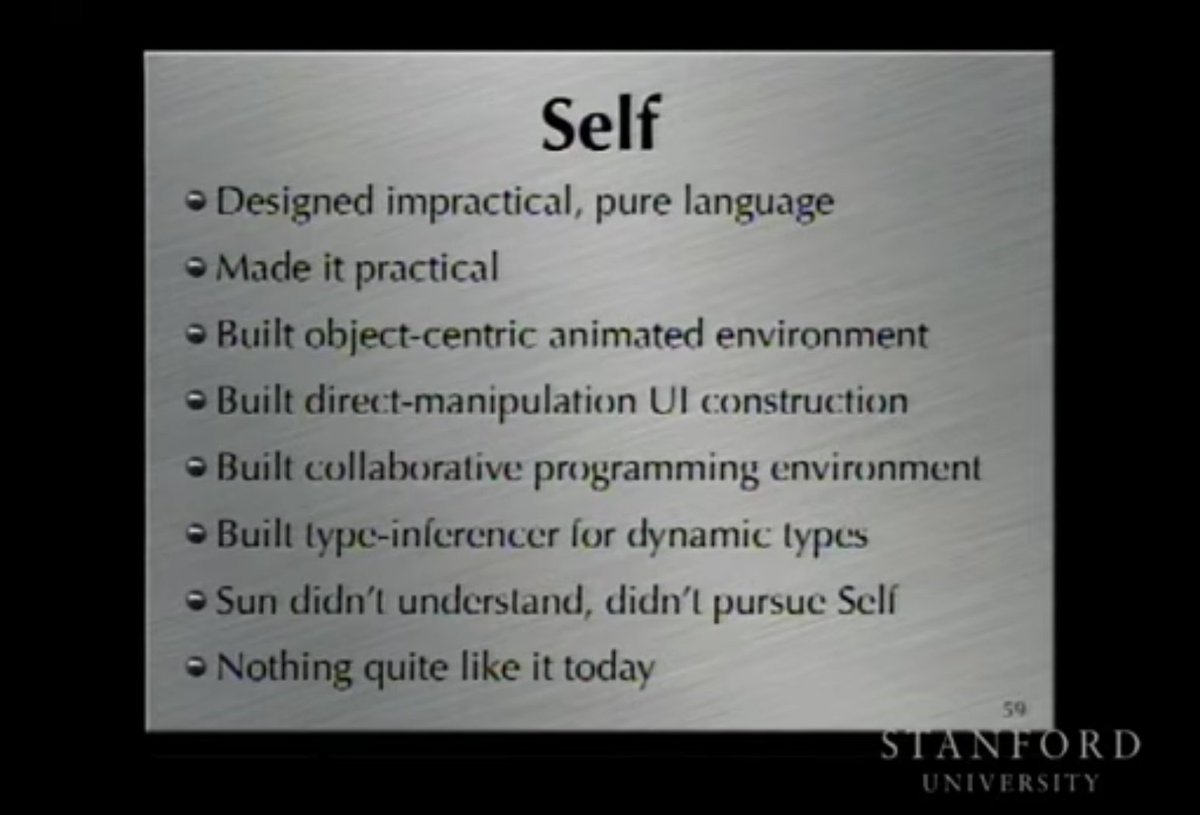
The Self programming language, the optimisation techniques they pioneered, and the emergent design principles: https://youtube.com/watch?v=3ka4KY7TMTU
(Stanford talk by one of the creators)
The Makefile problem, or how absurdly hard it is to write paths in a text file whilst supporting both *nix and Windows:
Showing 46-60 of 384 posts