If I ever bootstrap a self hosting language, I'd be really tempted to do it in JS or TS.
Not only are JS runtimes widely available, but it'd be way easier to do in-browser playgrounds!
miniblog.
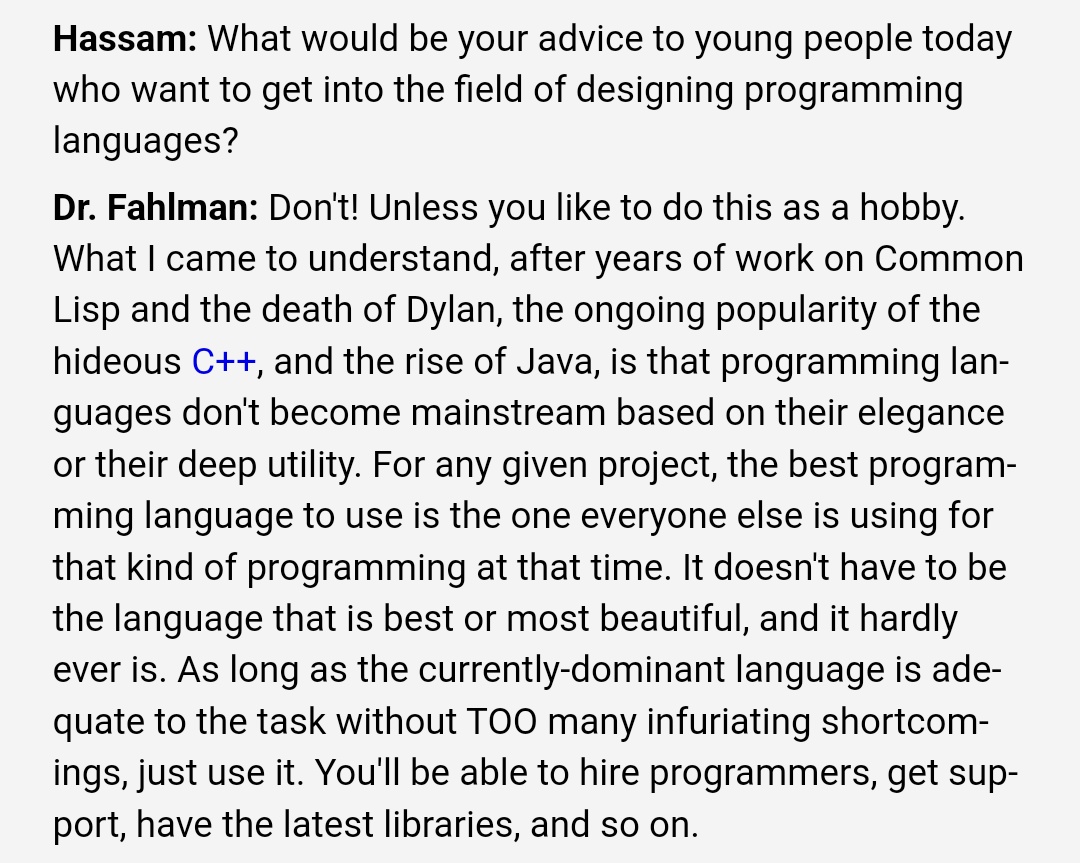
Advice from one of the authors of Common Lisp on PL work: established languages tend to win in their domain. It really helps if you enjoy working in this space.
(There is a ton of PL skill and insight in the smaller languages IME.)
https://pldb.com/posts/scottFalhmanInterview.html
I've had a ton of great conversations on Twitter: there's a bunch of programming expertise (even programming language design) here. There are niches here that don't exist elsewhere.
I've also found a great job through Twitter on two occasions.
No idea what the future will be. https://twitter.com/_wilfredh/status/1592389610457673729
If Twitter isn't available, I will be still be microblogging/tooting at https://mastodon.social/@wilfredh and you can DM me via my blog:
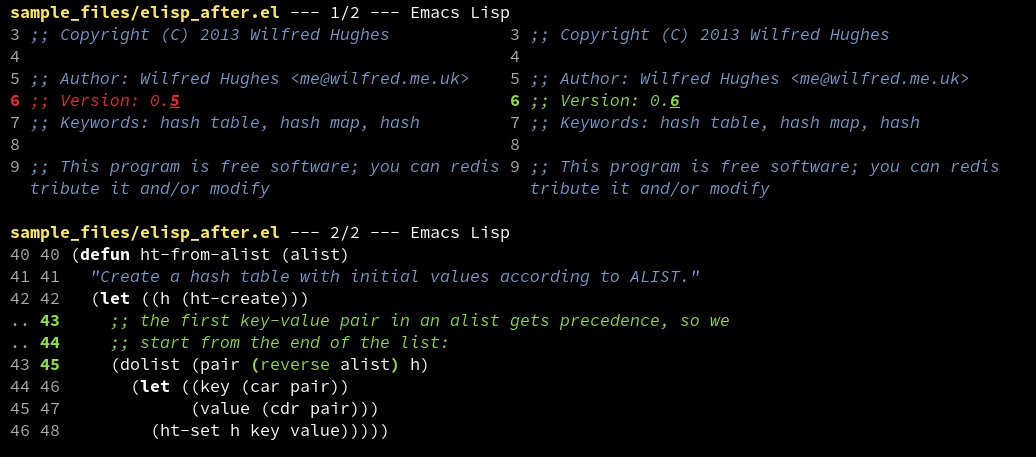
I've released difftastic 0.38! In this release:
* Better display of line numbers
* A bunch of display bugs fixed
* Better handling of parse errors in input files
Is there any way of doing tagged references in safe Rust?
I've been looking at tagged pointers (the crate https://docs.rs/tagged-pointer/latest/tagged_pointer/ looks excellent) but it gives you back a raw pointer.
I'm not sure if you can create a safe wrapper for references using tagged pointers.
When someone says "you should use the cloud", I'm never sure if they mean:
1: use a virtual server rather than running your own hardware, or
2: use hosted services rather than running your own e.g. database
2 is often surprisingly expensive IME.
Writing docs like characters in a novel: give people a purpose!
https://thenewstack.io/an-engineers-best-tips-for-writing-documentation-devs-love/
One fun side effect of lisp-style syntax: there's always a close token that corresponds to each expression. You can hover unambiguously.
(This tiny web page is at https://pl-toys.surge.sh/ if you want to play with it.)
I don't really understand Rust's `loop {}` syntax. It's syntactic sugar for `while true {}` but it feels odd to have special syntax for this case.
The name `loop` also doesn't imply 'loop with no termination condition' to me (other than break/continue).
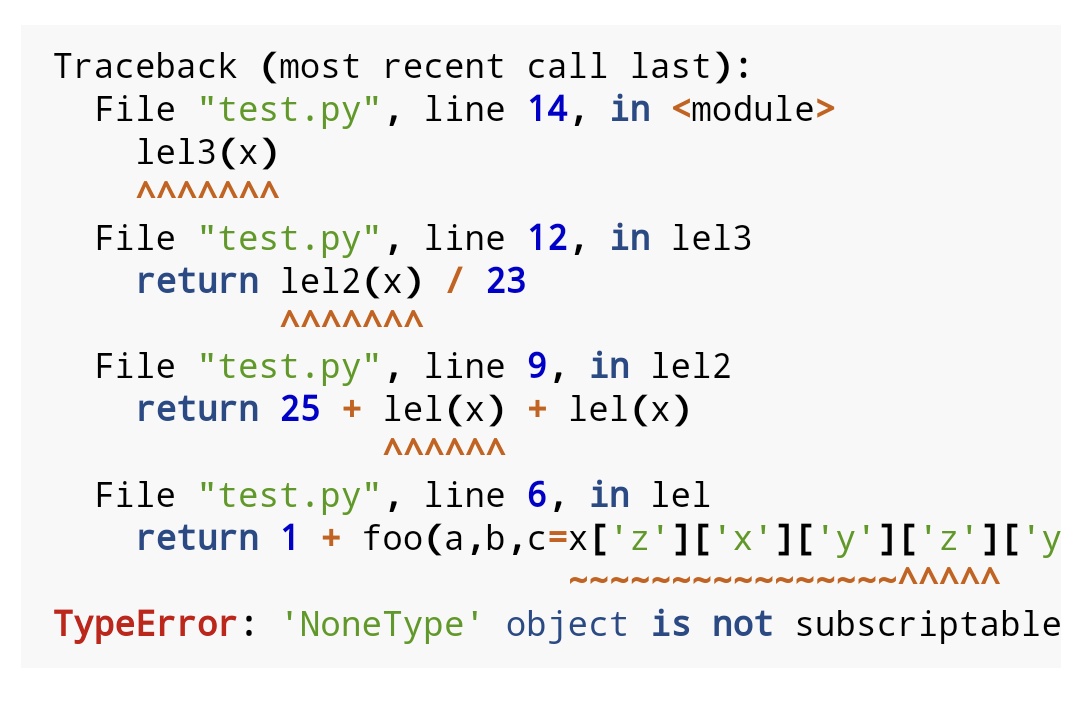
Python is adding column numbers to its exceptions, making tracebacks way more readable!

Are there any noteworthy lisp dialects that don't have macros?
Macros aren't obligatory, but I'm struggling to think of any good lisp examples that lack them.
Super impressed that the UK government does regular scanning for vulnerabilities for servers based in the UK: https://www.ncsc.gov.uk/information/ncsc-scanning-information
Preventative and good for the overall ecosystem.

A cute project that finds Clojure stdlib functions based on an example input and output: https://borkdude.github.io/re-find.web/?args=2&ret=3
Underrated perk of JSON: it's easy to programmatically make changes to a file made by a human.
Very few other formats have this advantage. `cargo add` took a bunch more implementation work than `npm install`, because preserving TOML comments takes more work.
Showing 61-75 of 384 posts