This article discussing forking sqlite draws an interesting parallel between forking and the prisoner's dilemma: forking as a solo contributor is rarely successful, unless others also wish to fork!
https://glaubercosta-11125.medium.com/sqlite-qemu-all-over-again-aedad19c9a1c
miniblog.
GNU Coreutils doesn't handle UTF-8 correctly yet: https://catgirl.ai/log/cut-c-harmful/
Re-reading Situated Software https://web.archive.org/web/20040411202042/http://www.shirky.com/writings/situated_software.html I keep wondering what tools are best suited.
If you want to create a small tool for a community you know, how do you build it?
(My current thoughts are: something you know well, probably with a GC)
I may look at support for Stable Diffusion the next time I buy a GPU. It's such an interesting tool.
(GPU prices are still a little crazy though.)
@elbosso Of course you can weigh in! :) I've used reveal.js for several presentations in the past, and I liked it.
The presentations looked great, especially with syntax highlighting.
I did find myself futzing with written HTML more than I wanted though (e.g. wanting an image caption in a specific place). It's also a little harder to share than a hosted service, especially if you want reader comments.
Definitely a great option in many cases still.
If you have a value that can be any type (the 'top type'), what operations should your language support on that value?
Equality is very common, but it's debatable. I increasingly feel that every value in a language should have some sort of debug print available.
Is there a good mnemonic for remembering borrowed : owned types in Rust?
&str : String
&[u8] : Vec<u8>
These are easy because I see them often. Knowing the owned equivalent of Path (it's PathBuf) is harder.
The motivations of YouCompleteMe, emphasising a design that requires the user to press no buttons to see completions:
The difftastic manual now has a Chinese translation! https://difftastic.wilfred.me.uk/zh-CN/
This a great example of a feature that I could have never built myself :)
I often use Quip for writing documents and I've started using Google Slides for presentations. They have fewer features than competing tools, but I like them.
They have what I need, without being overwhelming. Maybe it takes a paradigm shift (e.g. desktop->web) to drop features.
Would you rather run a formally verified application on top of a conventional kernel/compiler toolchain, or a conventional application on verified kernel/compiler toolchain? Why?
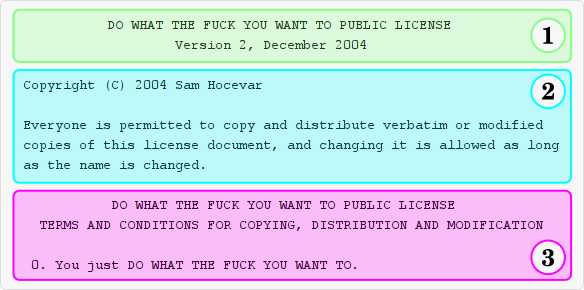
Apparently the WTF license is used in software packaged by all major distros, and the FSF considers it valid!
Today I learnt that Emacs will do a best-effort parse of expressions in comments too, unless you set parse-sexp-ignore-comments.
That's all well and good until org.el has ASCII smileys! https://github.com/bzg/org-mode/blob/4d8d7d6cb42e388572b4f5d227e9b3c9da6ca4a7/lisp/org.el#L4815-L4816 ("unbalanced paren")
A decent part of VMs being faster than AST interpreters is just memory layout AIUI.
VM instructions are largely flat arrays, so there's less pointer chasing.
Today I learnt that cc-mode in Emacs includes a demo of defining a major mode for a small C-like language: https://cc-mode.sourceforge.net/derived-mode-ex.el
"a hypothetical language called C: (pronounced "big nose") that is similar to Java" :)
Showing 106-120 of 384 posts