I'm a big fan of segmented stacks (or 'split stacks'), where stack frames are heap allocated, You can write recursive functions with less worry, and you get better tracebacks than TCO.
Go is the most popular language with this feature, to my knowledge:
miniblog.
Which programming languages are the easiest/hardest to google?
Go (a common word) and Rust (also a computer game) can both be tricky. Yet I've not seen 'rubylang' used to help Ruby searches.
Perhaps a novel word (Kotlin) or a misspelling (Perl) is a better choice for new languages?
A really nice explanation of lisp semantics, using userland code!
For example, you can define let in terms of let* and vice versa.
I've seen several companies offer a backup internet, e.g. Xfinity has "storm proof wi-fi", which is a battery powered cellular data connection. Eero Pro has something similar.
I can understand the incentive, but it competes with using a phone. It shows there's a market for data all the time!
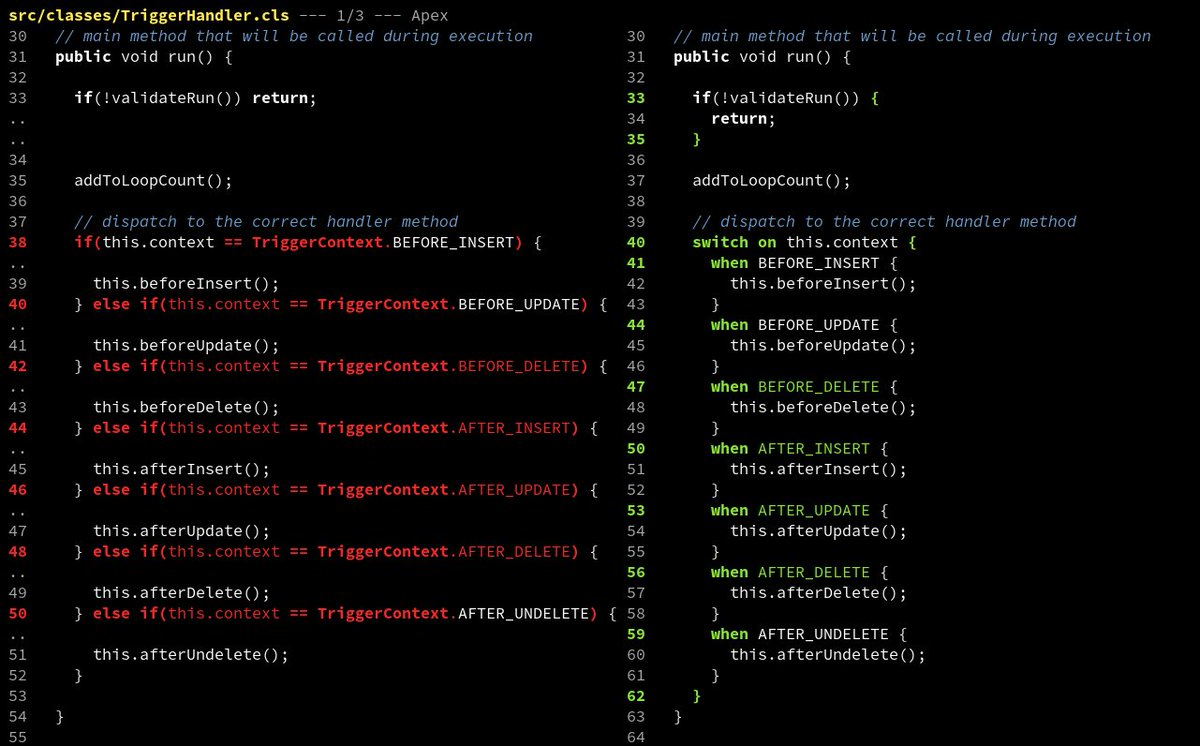
I've released difftastic 0.54! In this release:
* Added support for the Salesforce Apex programming language
* Improvements to Clojure and Haskell parsing
* Difftastic will now show if file permissions changes

Do any programming languages offer an official syntax highlighter for the web?
It feels like it would really help adoption, allowing early adopters to write readable blog posts.
@castarco I regularly use it with git! 😊
Interesting data from JetBrains on the most common rust compiler errors people encounter:
I've compiled the parser for my Garden programming language to wasm, so I can offer a web playground: https://www.garden-lang.org/
It's over 600KiB of wasm just for a function that returns a parse error message! I'm not sure if that's a lot (cf JS) or a little (cf typical binaries).
Showing 136-144 of 144 posts