I've added syntax highlighting to the prompt of my programming language!
It's not strictly necessary, but it's nice to have. It caught a bug with lexing incomplete string literals too.
One interesting aspect of collecting coins in a platformer like mario: it makes the level stateful.
You can see if you've been somewhere before based on whether there are coins present.
It's so hard to talk about probabilities. Casual conversation often conflates 'the likelihood of an event happening' with 'how strongly I believe in my assessment'.
For example, I'm very confident (say 90%) that the coin in my pocket is 50% likely to land on heads.
I see that *up has become an increasingly common name for toolchain installers: rustup, ghcup, even juliaup.
I think Rust was the first to use this terminology? I'm curious how similar the different *up tools are.
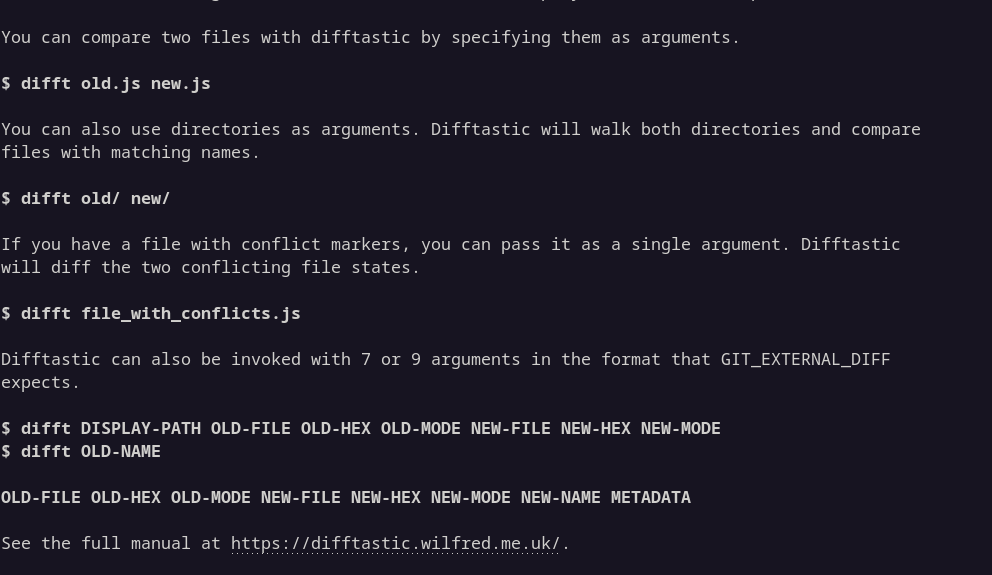
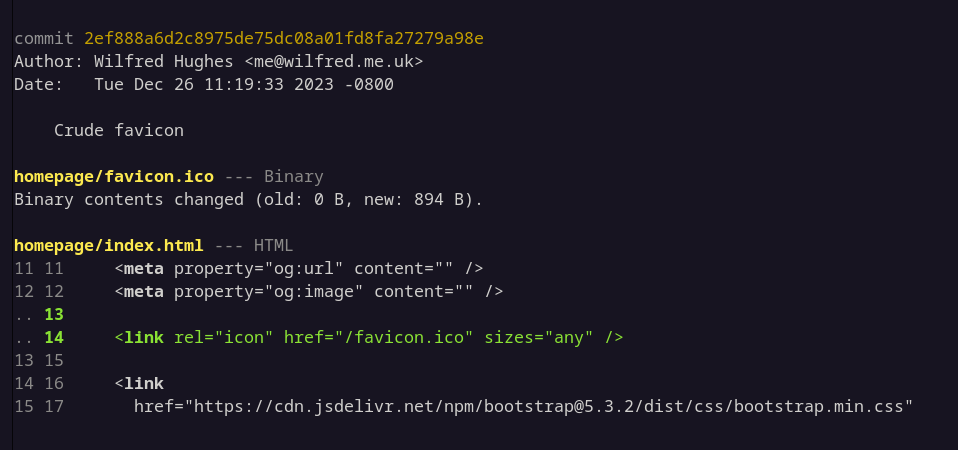
I'm trying to improve the readability of the --help output from difftastic.
I'm experimenting with making example invocations bold, so they are easier to distinguish from the text.
I'm also trying OSC 8 to make my URLs clickable.
Opinions welcome :)
I would have thought that invoking a C compiler would be a solved problem. Looking at Rust's cc crate there's a remarkable long tail of corner cases to fix.
Exotic CPUs, microarchitectures, compiler differences, operating system differences, etc.
LLMs seem to handle dependency upgrades really well.
The task is well-specified, there's usually a build/test suite to check correctness of the modifications, and there's often a changelog they can consume too.
For hobby projects, I really like software where I can do small features or tweaks. Sometimes I don't have time for anything more substantial.
Website projects are great for this. Are there other areas?
I've been writing docs for different programming language operators (+, *, == and so on). Each one gets a separate web page.
I've suddenly realised that / is much harder! docs/+ and docs/== is fine, but docs// just doesn't work as a URL in a static site.
Any ideas?
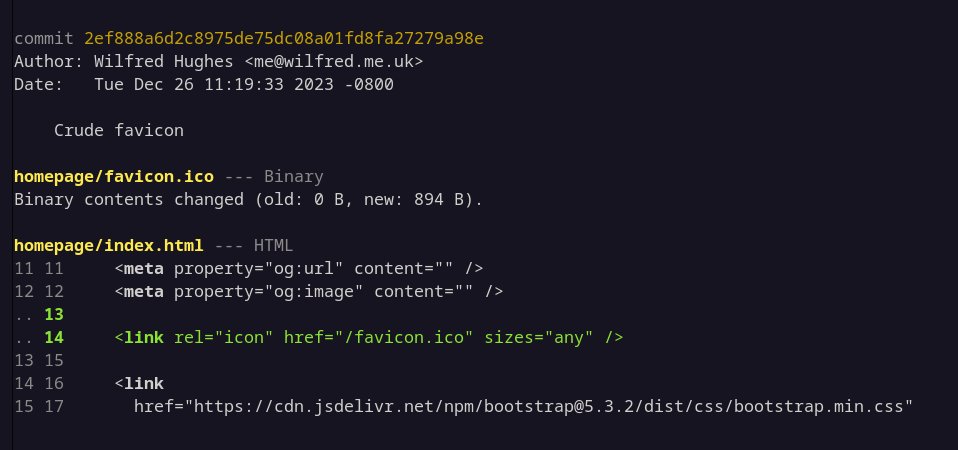
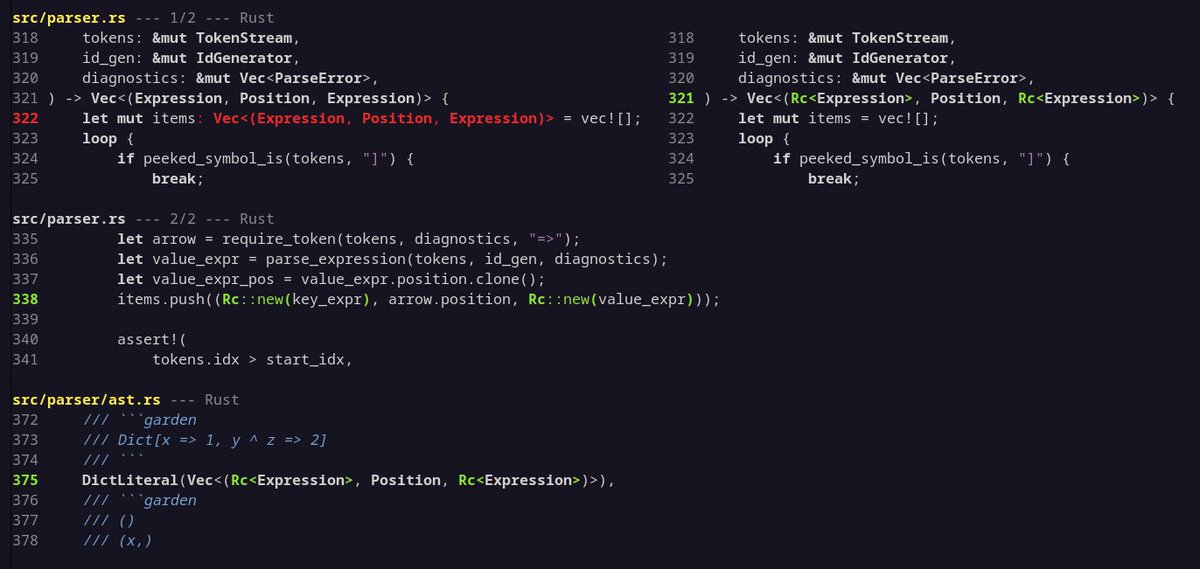
I've released difftastic 0.65! Highlights of this release:
* Better parsing of Clojure, Common Lisp, Kotlin, Rust and Zig.
* Quality of life improvements for binary files.
Text to speech systems seem to have largely avoided the uncanny valley effect. I've encountered robotic sounding voices but it's way less unsettling than bad CGI.
I'm not sure why this is. Maybe looking at faces is just way higher bandwidth so more things can go wrong?
I'm surprised by how many different weather forecasts I can get out different apps. Surely there aren't many API providers for weather predictions?
Alternative conspiracy theory: do weather apps that predict nicer weather get more downloads?
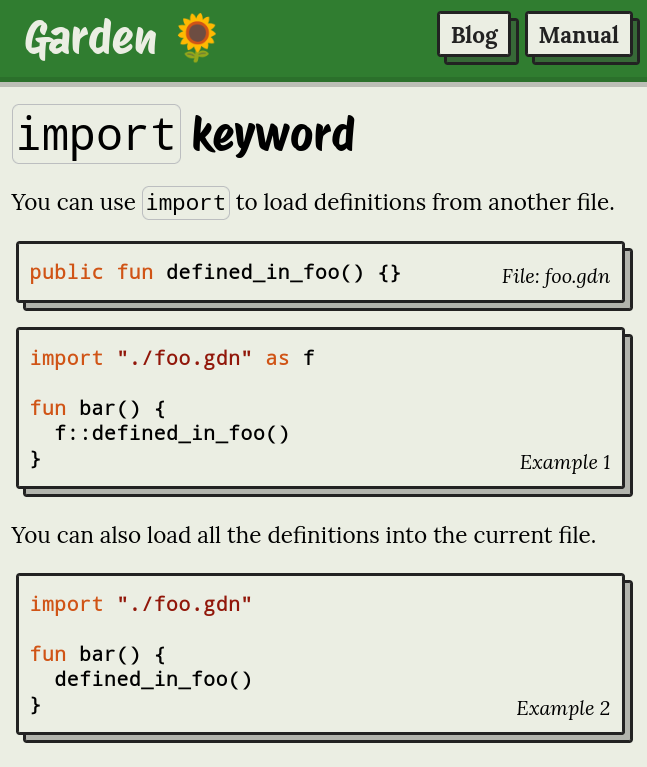
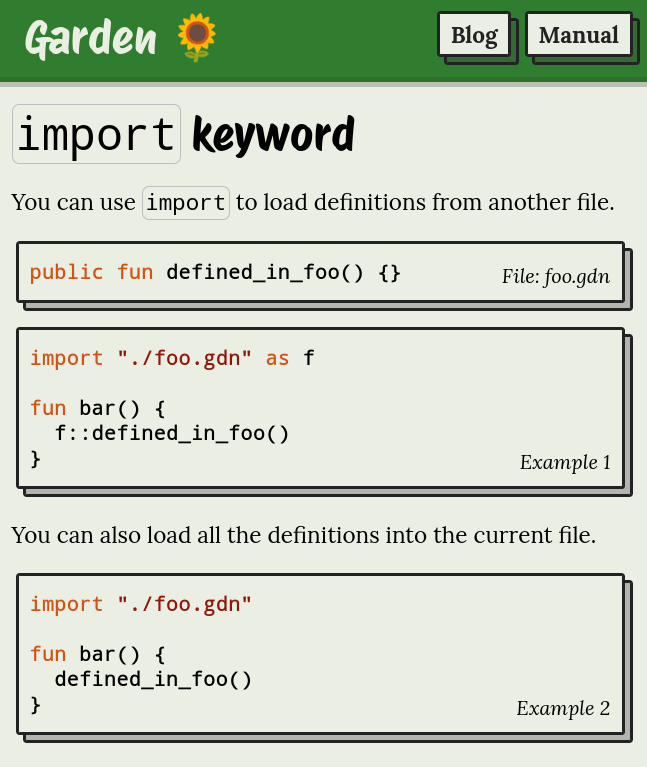
I've been playing with labels on my code blocks. Sometimes I have useful labels, other times it's just "Example 2".
It's also unclear exactly where I put the label: Inside the box? Outside?
Are there any docs sites that do this really well?