From simple IP blocks to probabilistic deep packet inspection: the evolution of web censorship technology: https://news.ycombinator.com/item?id=22659534
miniblog.
Woah, Chrome is looking at dropping the user agent entirely! https://www.infoq.com/news/2020/03/chrome-phasing-user-agent/
Feature detection is good practice anyway, so this seems like a push in the right direction.

Apparently smart thermometers are a thing, and social distancing has led to observable drops in flu prevalence:
A cute, high-performance text search engine (cf Elasticsearch), written in Rust, with a RESTful API!
JavaScript libraries are rarely updated in the wild. Cloudflare is observing increasing usage even for old versions of jQuery! https://blog.cloudflare.com/javascript-libraries-are-almost-never-updated/amp/
It'd be interesting to normalise against total web traffic size.

The Shelf is a NeXTSTEP alternative to a clipboard, but more flexible and powerful: https://en.wikipedia.org/wiki/Shelf_(computing)
You can put a source file and destination directory on the shelf, enabling a cut-and-paste style operation. You can still refer back to them afterwards!
Google offering game server hosting as a service: https://cloud.google.com/blog/products/gaming/introducing-google-cloud-game-servers
I'm surprised there's sufficient commonality between games that you can offer a generic server!
Futhark uses unification to drive its type checker, but has different logic to produce error messages!
https://futhark-lang.org/blog/2020-03-15-futhark-0.15.1-released.html
This is a question I've faced on several occasions.
Bose has a competing product too!
https://www.bose.com/en_us/products/frames.html
Perhaps ambient computing has finally come of age.
The text file describing leap seconds is delightful. It starts with comments explaining the comment syntax, and builds from there!
https://data.iana.org/time-zones/tzdb-2018a/leap-seconds.list
The Guile contributors are some extremely talented lispers. Missing a parenthesis in lisp docs is done by every lisper once in a while though :)
Amazon is exploring smart glasses (cf Google Glass) with Alexa! https://www.amazon.com/Echo-Frames/dp/B01G62GWS4/
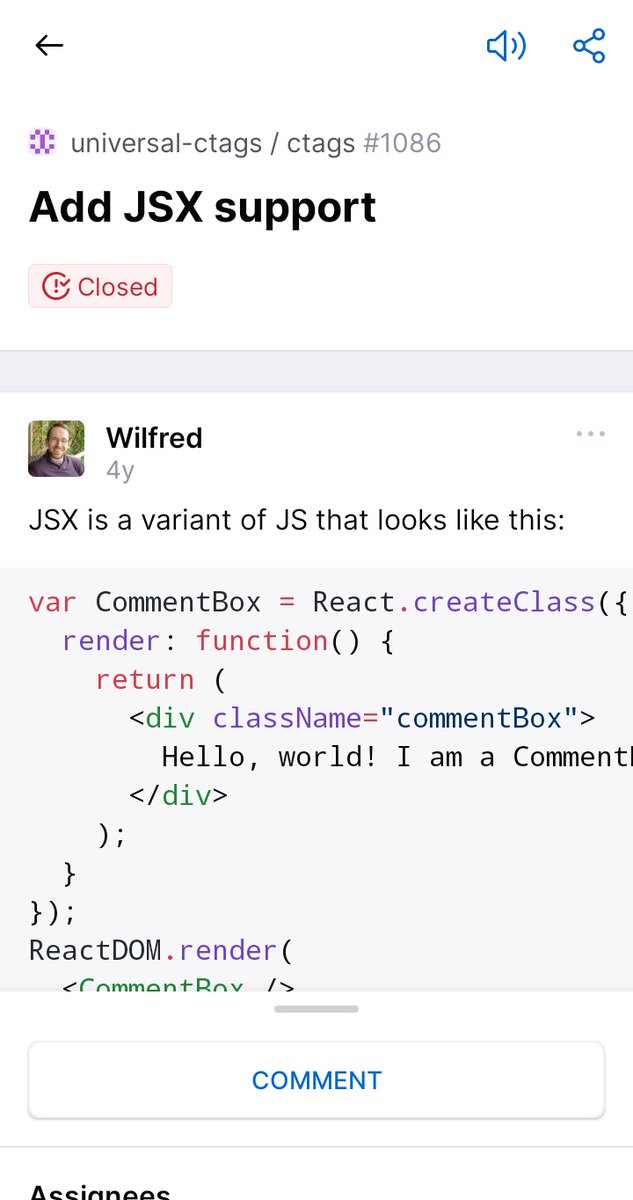
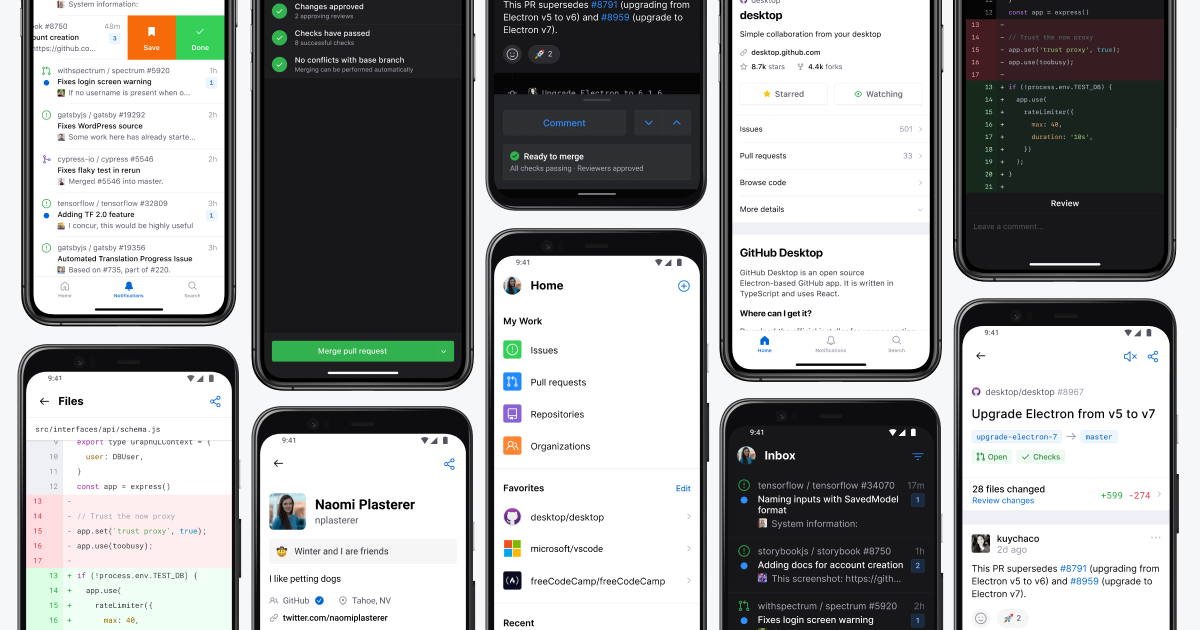
I often merge simple PRs from my phone, so it's exciting to see a native GitHub app: https://github.blog/2020-03-17-github-for-mobile-is-now-available/
UI density still seems less than the web UI though.
Cute/evil trick for writing a Rust script using a shell header that's a valid Rust comment!
https://neosmart.net/blog/2020/self-compiling-rust-code/
GitHub buying npm seems like a great outcome! I understand that npm was struggling financially, but the tooling is entrenched in the JS ecosystem.
Showing 1,651-1,665 of 7,653 posts