Facebook have launched their own static type checker for Python, as an alternative to mypy!
https://m.facebook.com/notes/protect-the-graph/pyre-fast-type-checking-for-python/2048520695388071/
It uses the same syntax, but seems more focused on Language Server Protocol integration.
miniblog.
Rust 1.26 is out! https://blog.rust-lang.org/2018/05/10/Rust-1.26.html
In addition to some lovely language improvements, they've added a convenience function for slurping a text file given its path. It's the little things :)
I am delighted and honoured that some of the users of my Emacs packages are using them on Remacs and finding bugs!
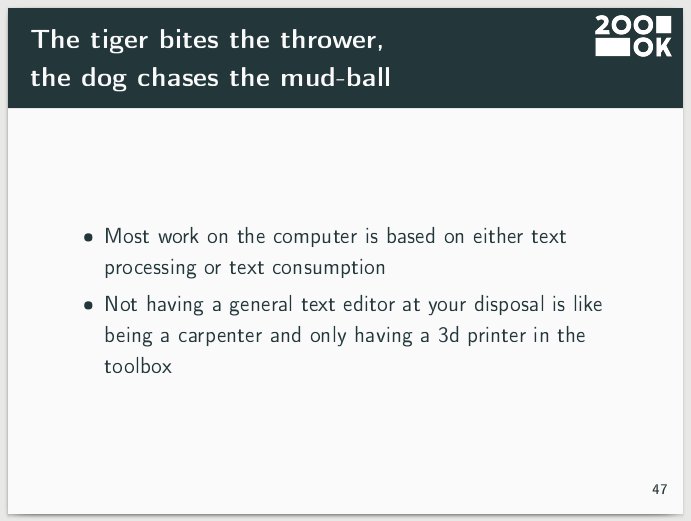
A lovely analogy from Play Emacs like an Instrument: https://200ok.ch/posts/2018-04-27_Play_Emacs_like_an_Instrument.html
3d printers are awesome, but text editors have a powerful generic utility that make them a very valuable part of your toolbox.
I'm gradually coming round to the view of the Discourse developers that comment trees are harmful. If I have a long discussion with someone, our comments get very narrow.
Nonetheless, understanding the structure of conversation is valuable. I wish I knew of better tools.
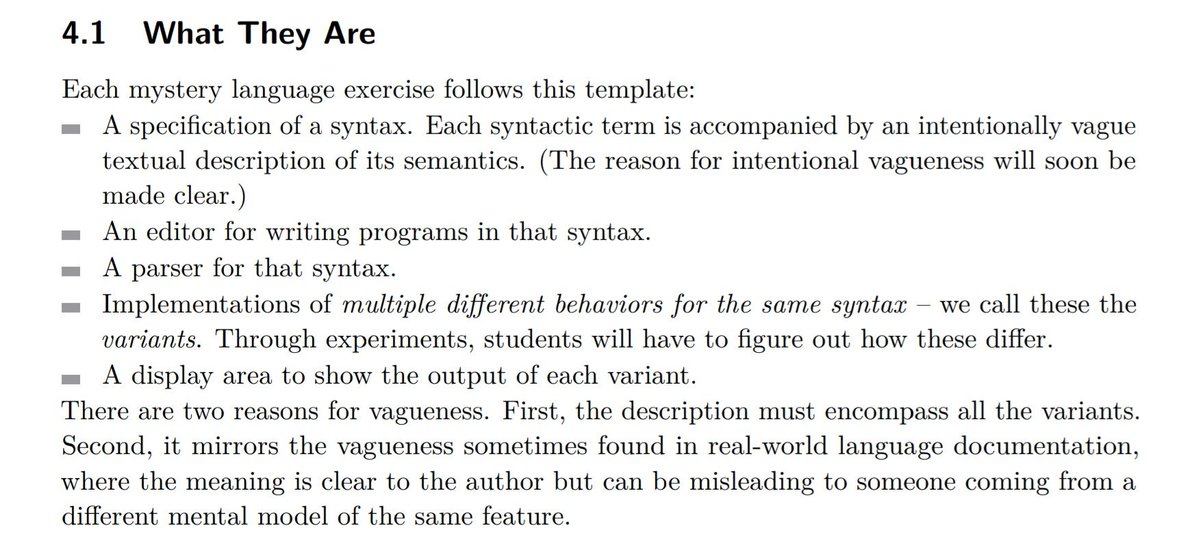
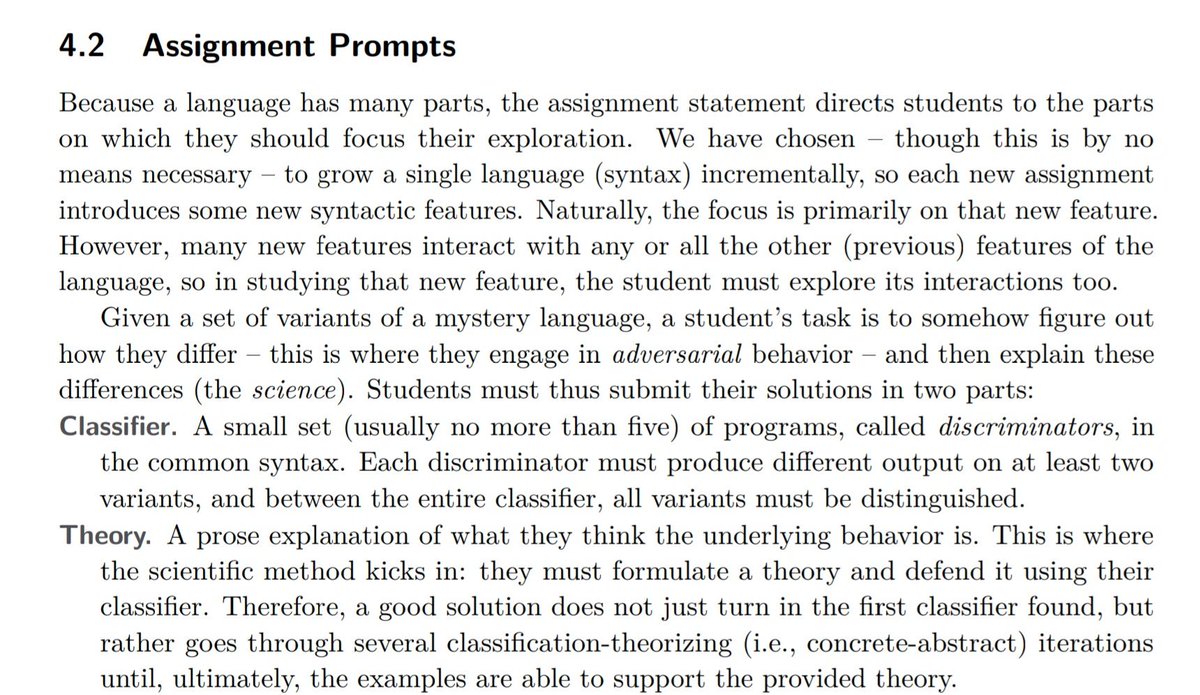
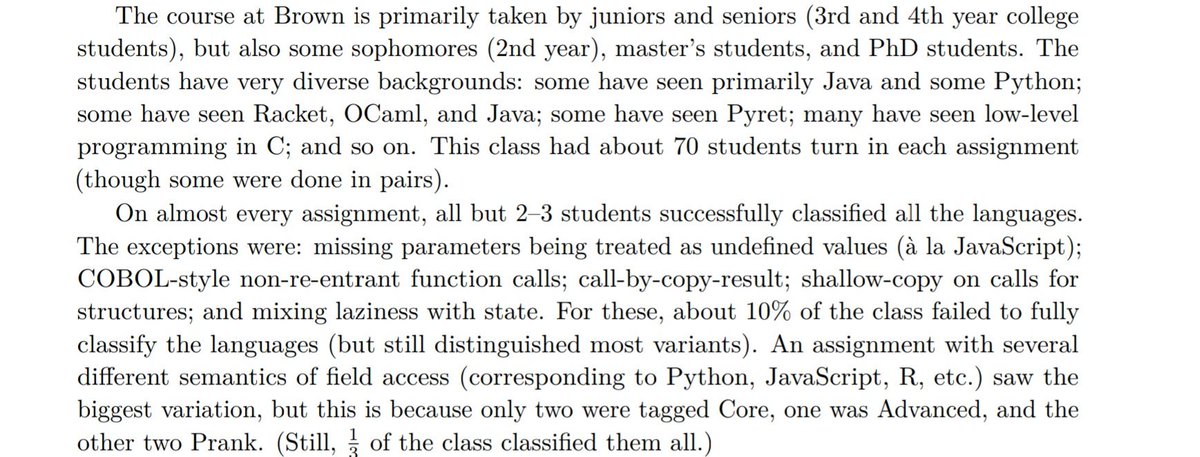
Teaching Programming Languages by Experimental and Adversarial Thinking: https://cs.brown.edu/~sk/Publications/Papers/Published/pkf-teach-pl-exp-adv-think/
A fascinating approach to teaching programming paradigms. Implement different language semantics in the same syntax, and ask students to write programs that distinguish between them!
It's relatively common to see a backlash against something online, leading to far more attention to the original act.
At what point do we say "that's just an individual with an odd worldview" rather than "this is a viewpoint that I want to discuss/dissect"?
Anchor: https://anchor.fm/ is a podcast app with social features, analytics, *and* provides the ability to create your own podcasts.
It's nice to see apps that promote content creation on mobile devices, not just consumption.
Villages: building social networks that are smaller, but have explicit shared values:
Donating money to charity every time a build fails: https://medium.com/football-whispers-engineering-and-data-sci/failed-builds-cost-more-than-just-time-4e7c196cc8bc
(Also a nice example of the @monzo API)
https://www.virtuouscode.com/2015/07/08/ruby-is-defined-by-terrible-tools/
Despite the title, this is a good article on the relationship between programming languages, tooling, the resulting ecosystems and our mental models.
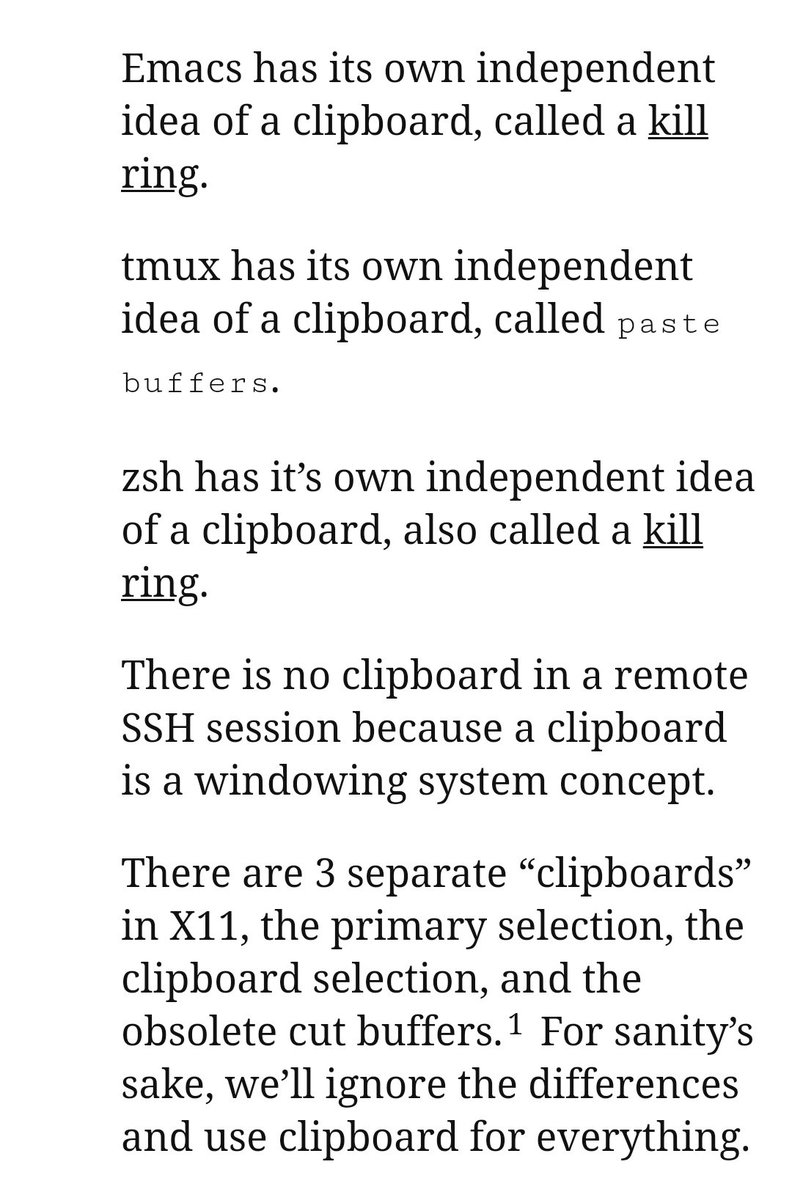
Wow, it's remarkable how many apps have their own option of a clipboard. It's a shame platforms don't offer a multiple entry clipboard by default.
From
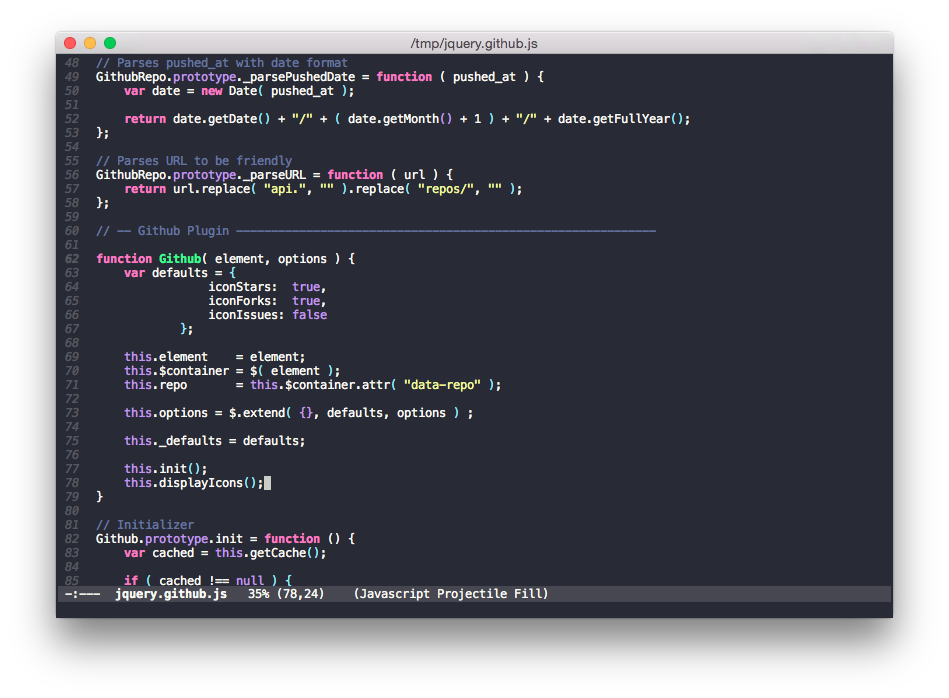
I'm very much enjoying the Emacs Dracula theme. It's pretty and has colours for a ton of different Emacs packages.

Oni is an interesting editor project I've not seen before. It pitches itself as "combining the best bits of NeoVim, Atom and VSCode" https://www.onivim.io/ and looks pretty polished.
On making metrics actionable:
Medical trials in the US are required to publish their results, but many trials do not currently obey this requirement. Rather than only measuring it, a live tool encourages researchers to publish and see the results!
https://ebmdatalab.net/our-fdaaa-trialstracker-is-already-helping-to-get-new-trials-reported/
Showing 451-465 of 657 posts